









Chemical products
  • Sodium Gluconate CAS 527-07-1

Sodium Gluconate CAS 527-07-1

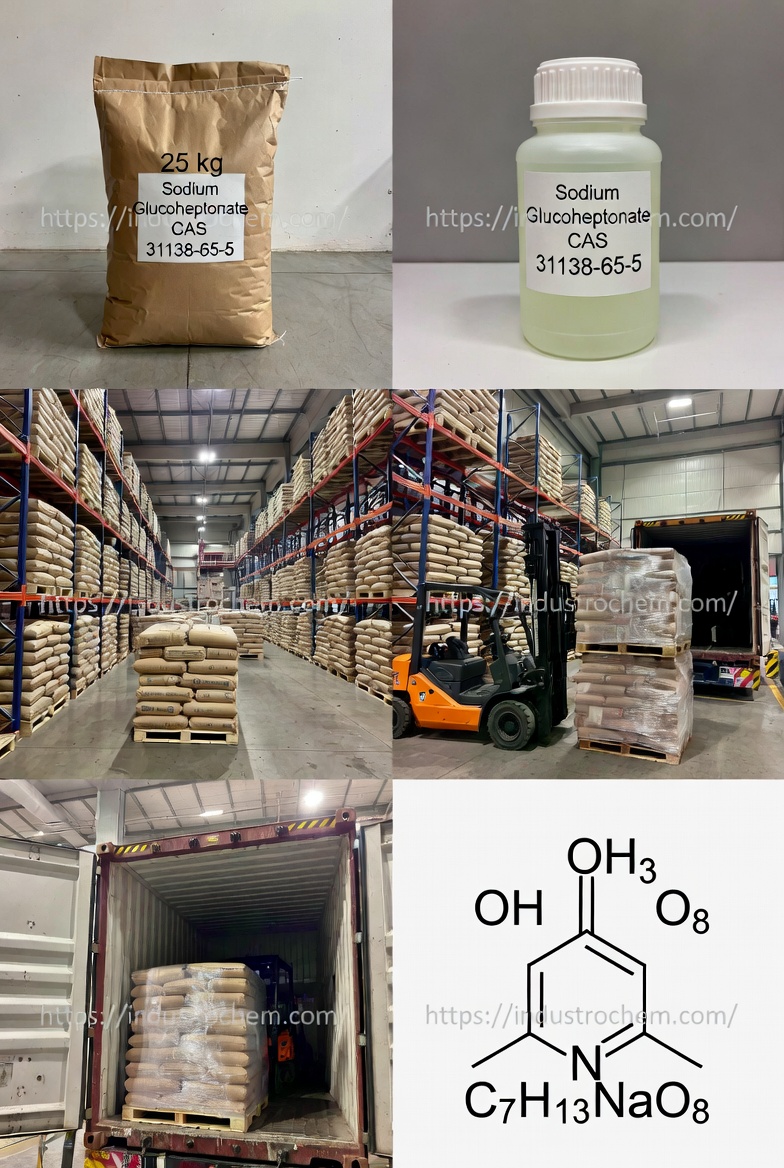
Sodium Gluconate, CAS 527-07-1, also known as sodium D-gluconate, is an industrial chelating and set-retarding material for concrete admixtures and mortar systems. Sodium Glucoheptonate is a related chelating salt for high-alkalinity formulation systems. It is supplied as a water-soluble powder for formulation and dry-mix production, where compatibility must be confirmed with the cement and admixture package. COA, TDS and SDS are available for the offered lot; assay, moisture, chloride, sulfate and packing are matched to the required specification. Calcium Formate is a related construction-additive raw material to compare where a cement-setting accelerator is required instead of a gluconate retarder.

  • CAS: 527-07-1
  • Synonyms: Sodium D-Gluconate; D-Gluconic Acid Monosodium Salt; Sodium Gluconate
  • Einecs: 208-407-7
  • Molecular Formula: C6H11NaO7
  • Grade: Industrial Grade
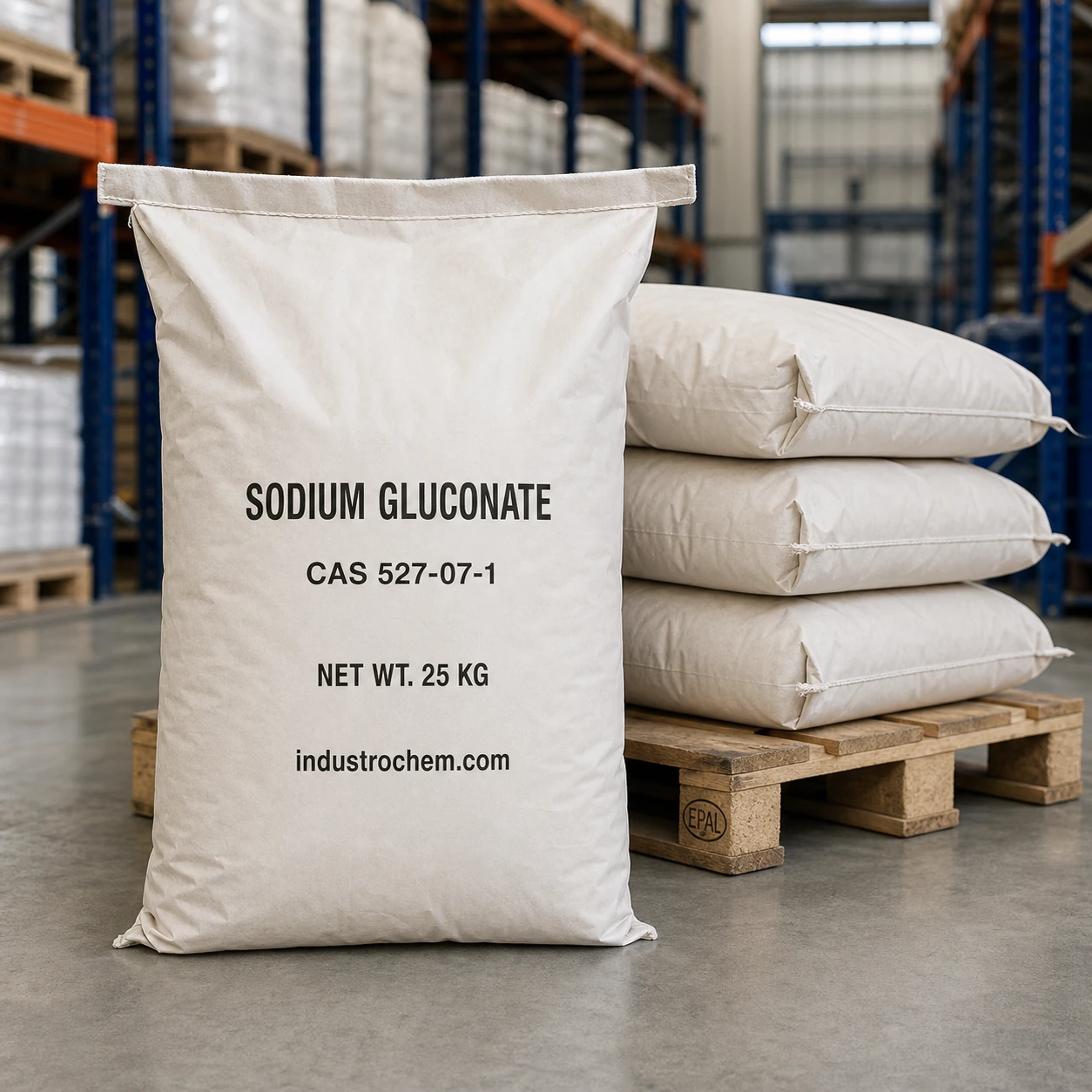
  • Package: 25 kg PE-lined kraft bags; 1,000 kg FIBCs
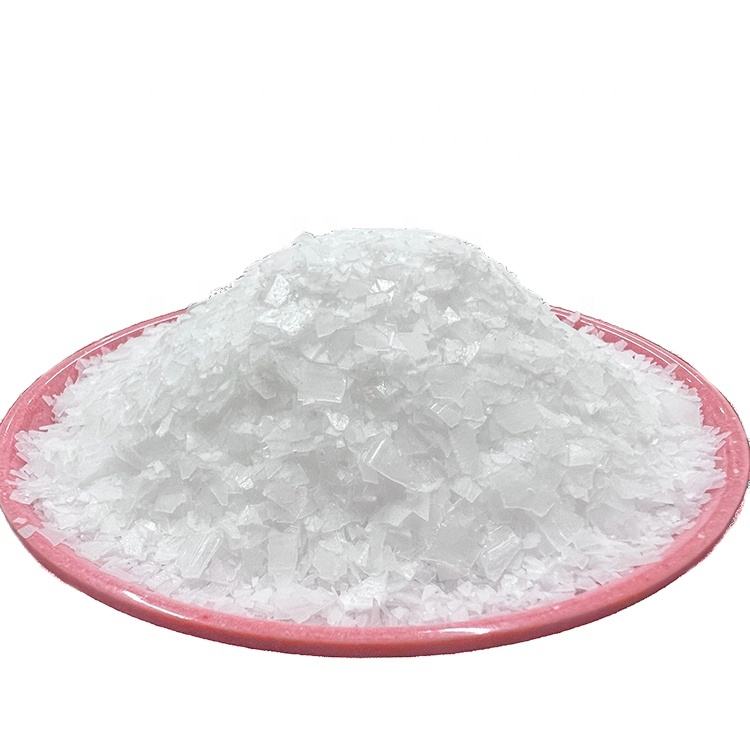
  • Appearance: White crystalline powder
  • Assay: ≥98.0%
  • Moisture: ≤0.50%
  • Chloride (Cl−): ≤0.05%
Request a quote
Share:

Product Description

Product Introduction

Sodium Gluconate (CAS 527-07-1) is a water-soluble raw material supplied for concrete admixture manufacture and industrial chelation. The listed powder grade is used in dry-mix mortar and liquid-admixture production; it is not a finished, ready-to-use concrete additive.

Applications

  • Set-retarding and water-reducing concrete admixture formulations
  • Dry-mix mortar systems requiring a controlled cement-set profile
  • Cement-processing and mineral systems using sodium gluconate for metal-ion control
  • Industrial cleaning and water-based formulations that use a biodegradable chelating salt

Grade and Documentation

For an order, the intended concrete admixture or chelation application determines the agreed sodium gluconate assay, moisture, pH, solubility and particle form; chloride or sulfate limits are included where the formulation requires them. A batch COA, together with the applicable TDS and SDS, is available for the quoted grade. Packaging and order quantity follow the agreed specification rather than the CAS number alone.

For related concrete-admixture and chelation raw material pages, review Sodium Glucoheptonate, Sodium Lignosulfonate, and Polycarboxylate Ether Monomer.

FAQ - Technical & Supply Chain

  • Q:

    Is Sodium Gluconate the same as gluconic acid?

    A: No. Sodium Gluconate is the sodium salt of gluconic acid. They have different physical forms and neutralisation states, so an industrial process should confirm the specified material rather than substitute one for the other.
  • Q:

    Is Sodium Gluconate used in concrete admixtures?

    A: It is commonly used as a set-retarding and water-reducing component in concrete and mortar systems. Actual dosage and performance depend on cement type, other admixture components and site conditions.
  • Q:

    Which Sodium Gluconate limits should be confirmed for an industrial order?

    A: Confirm assay, moisture, chloride and sulfate limits, the intended application and bag or FIBC packing. Batch COA values should match the agreed specification before release.

Ordering & Documentation

Key information for document requests, quotations, and supply planning.

Documents

COA, TDS, SDS/MSDS and packing details are available on request.

Quotation

Send the CAS number, grade, quantity, packing preference and destination.

Sample & Supply

Support is available for samples, trial orders, bulk and repeat supply.

Storage & Shipping

Product-specific conditions are confirmed before order.

Contact Form

Use our contact form to send us your questions, suggestions or comments. We will respond as soon as possible.