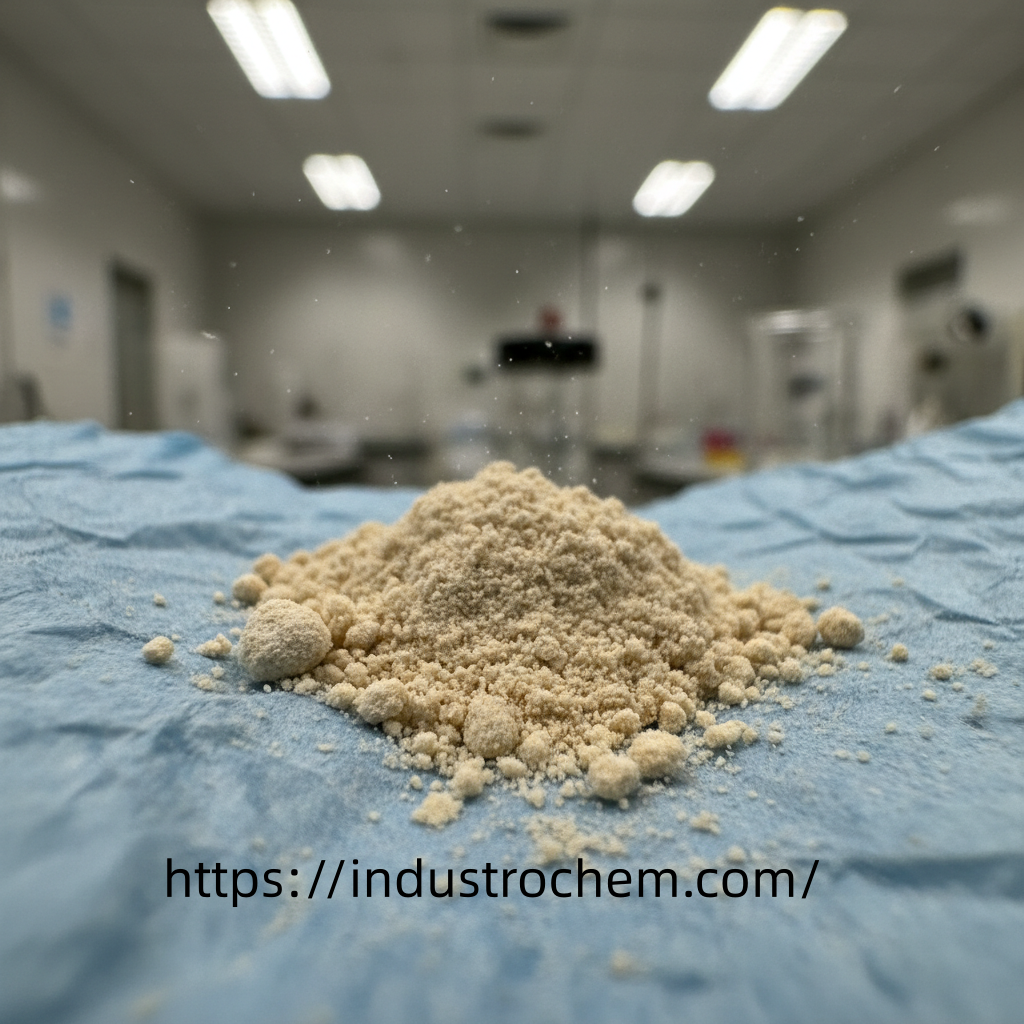










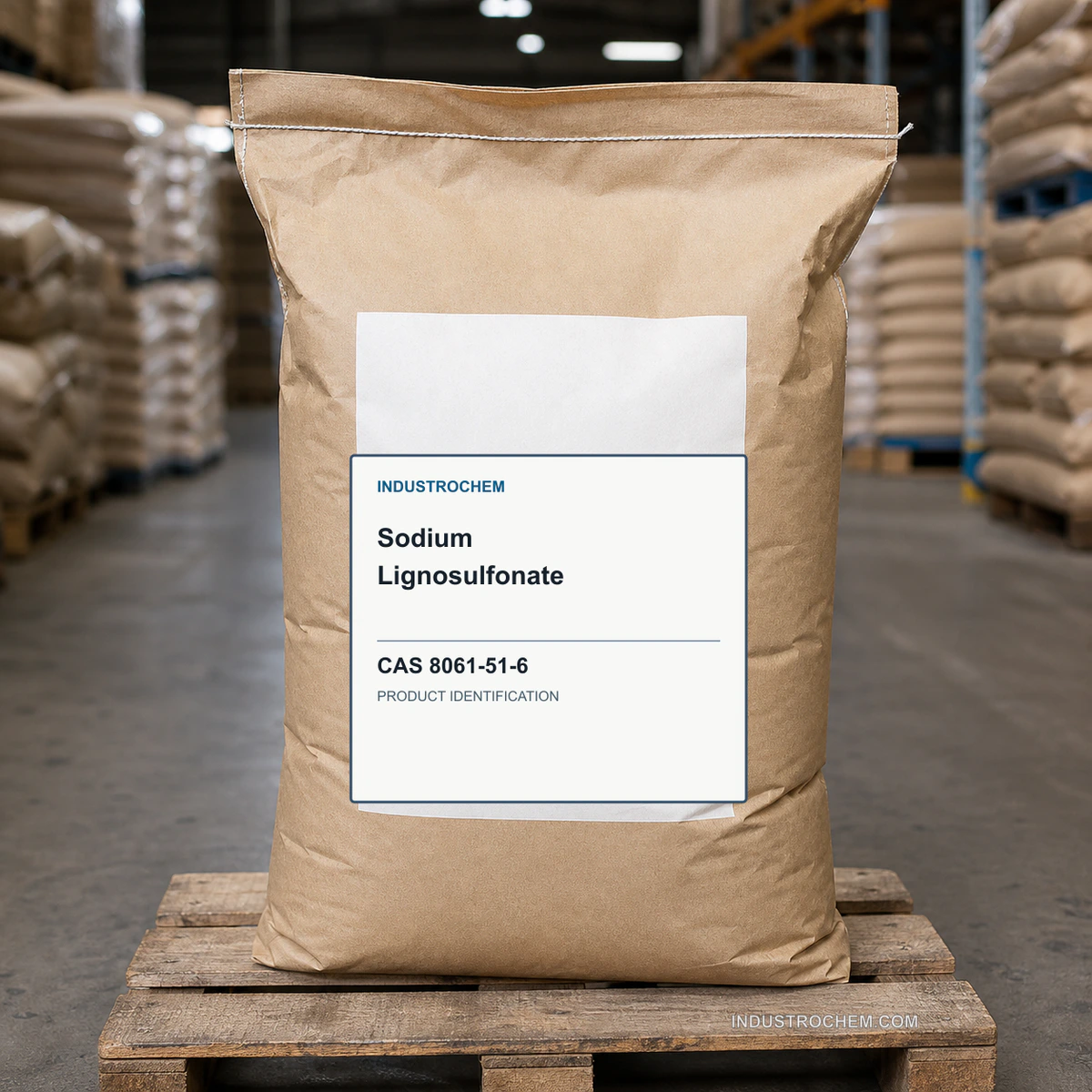
Sodium Lignosulfonate is a lignosulfonate material derived from lignin. It is evaluated as a dispersant or binder ingredient; commercial composition and physical form must be confirmed for the proposed use.
Sodium Lignosulfonate CAS 8061-51-6
- CAS: 8061-51-6
- Synonyms: Sodium lignosulfonate; Lignosulfonic acid, sodium salt; Sodium lignin sulfonate
- Molecular Formula: Not specified for a commercial lignosulfonate material; composition may vary.
- Grade: Confirm the current product-specific specification.
- Package: Confirm packaging with the requested quantity and destination requirements.
Product Description
Sodium Lignosulfonate is a water-soluble anionic polyelectrolyte derived from lignin, identified by CAS 8061-51-6.
It is a commercial lignosulfonate material rather than a single supplier-defined pure molecule; composition, molecular-weight range, and physical form vary by grade.
Synonyms: Sodium lignosulfonate; Lignosulfonic acid, sodium salt; Sodium lignin sulfonate.
CAS: 8061-51-6.
Molecular formula: Not specified for a commercial lignosulfonate material; composition may vary.
Molecular weight: Not fixed for commercial lignosulfonate material.
It is widely used as a dispersant and binder, including concrete and cement water reducers, ceramics and refractories, oilfield drilling-mud dispersion, dye and pigment formulation, agrochemical wettable powders and granulation, water treatment, and dust suppression.
Confirm whether the product is powder or liquid and check dry matter or lignin content, pH, sodium and sulfur content, molecular-weight range, reducing sugars, moisture, water insolubles, ash, and color.
The best grade depends on the target formulation and performance requirements.
Confirm the current product-specific specification.
Confirm packaging with the requested quantity and destination requirements.
Document requirements should be confirmed from the current specification, SDS, COA, or other product-specific files.
Regulated-use suitability must be confirmed separately with current product-specific documentation.
The page is an RFQ entry point and does not state stock, price, MOQ, or fixed lead time.
For an RFQ, state the intended use, required specification, quantity, packaging, destination, and document needs.
FAQ - Technical & Supply Chain
-
Q:
What is Sodium Lignosulfonate CAS 8061-51-6?
A: Sodium Lignosulfonate is a water-soluble anionic polyelectrolyte derived from lignin, identified by the broad commercial CAS 8061-51-6. It is not a single pure molecule; the composition, molecular-weight range, and physical form vary by grade. It is also called lignosulfonic acid sodium salt or sodium lignin sulfonate. -
Q:
What is Sodium Lignosulfonate mainly used for?
A: It is widely used as a dispersant and binder. Major applications include concrete and cement water reducers, ceramics and refractory processing, oilfield drilling-mud dispersion, dye and pigment formulation, agrochemical wettable powders and granulation, water treatment, and dust suppression. The best grade depends on the target formulation and performance requirements. -
Q:
What specifications and physical form should be confirmed?
A: Confirm whether the product is powder or liquid and check dry matter or lignin content, pH, sodium and sulfur content, molecular-weight range, reducing sugars, moisture, water insolubles, ash, and color. Because CAS 8061-51-6 covers multiple commercial grades, these parameters are more useful than the CAS number alone for matching an application. -
Q:
How should Sodium Lignosulfonate be stored and handled?
A: Store in tightly closed, clean containers in a cool, dry, ventilated area. Protect powder grades from moisture and caking, and avoid creating combustible dust clouds. Use appropriate PPE and normal hygiene controls when handling bulk powder or liquid.
Ordering & Documentation
Key information for document requests, quotations, and supply planning.
Documents
Tell us which documents your procurement team needs. Before an order, we will check whether the quoted source can provide them for the offered lot.
Quotation
Send the CAS number, grade, quantity, packing preference and destination.
Sample & Supply
Ask whether samples, trial quantities or repeat orders are possible. We will check each request against the sourced product and current offer.
Storage & Shipping
Product-specific conditions are confirmed before order.