










Chemical products
  • Butyl Diglyme CAS 112-73-2

Butyl Diglyme CAS 112-73-2

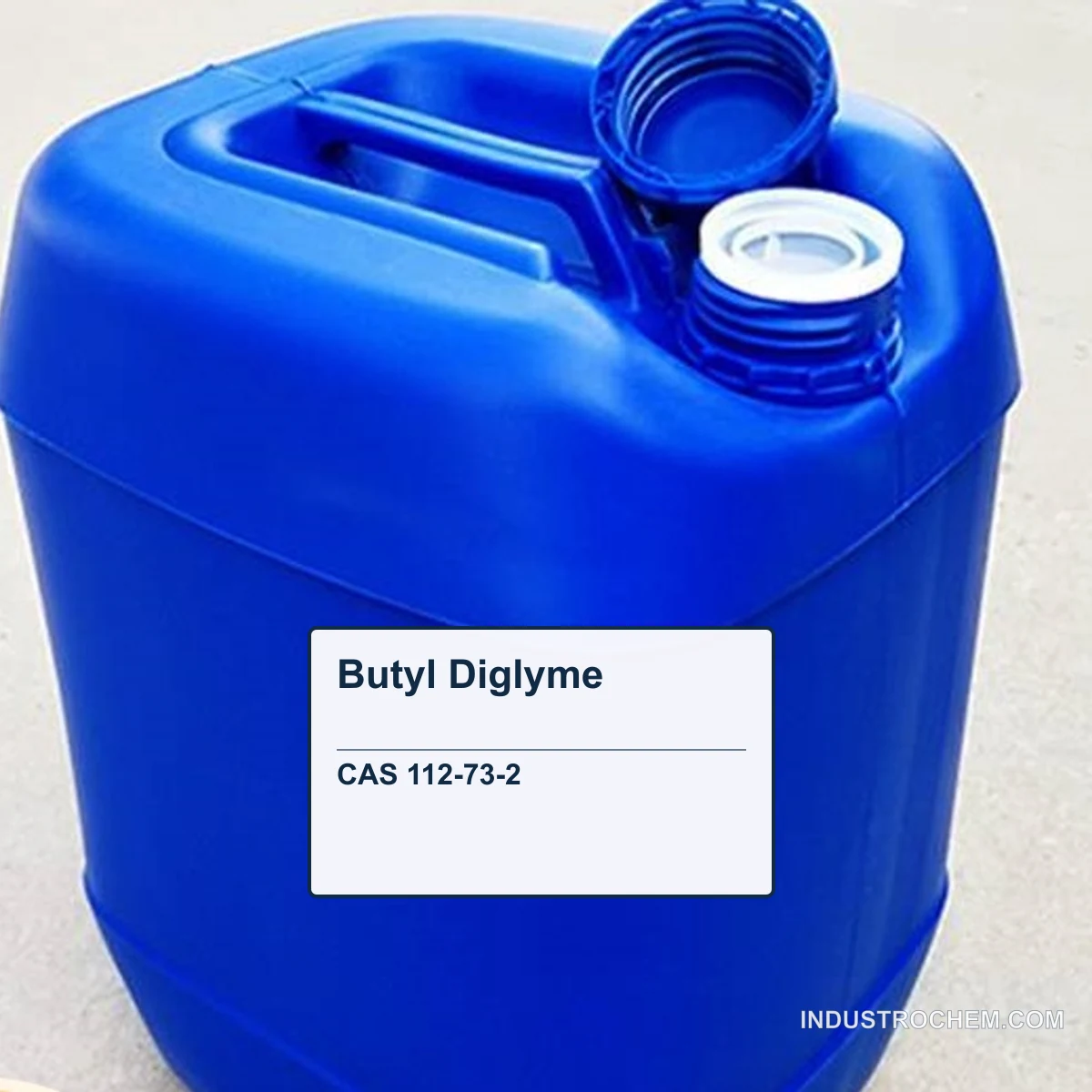
Butyl Diglyme, chemically known as diethylene glycol dibutyl ether and also called dibutyl diglyme, is a glycol ether solvent with balanced polarity and ether functionality, CAS 112-73-2. It is a high-boiling solvent for lithium battery electrolytes, precision electronics cleaning, screen-printing inks, baking enamels, resin solubilization and chemical synthesis. Confirm the GC assay, water, peroxide, acidity, colour and density specifications, packaging and documentation before ordering; COA, TDS and SDS are available on request.

  • CAS: 112-73-2
  • Synonyms: Butyl Diglyme; Diethylene Glycol Dibutyl Ether; Dibutyl Diglyme; DEG Dibutyl Ether
  • Einecs: 203-930-4
  • Molecular Formula: C₁₂H₂₆O₃
  • Grade: Industrial grade, purity ≥99.0%
  • Package: Confirm packaging compatible with the offered form and destination requirements.
Request a quote
Share:

Product Description

Physicochemical Properties

The following specifications are maintained to meet the stringent requirements of high-performance industrial applications.

ParameterSpecificationTest Method
AppearanceColorless, transparent liquidVisual Inspection
Purity (GC)≥ 99.0%Gas Chromatography
Density (20°C)0.880 – 0.890 g/cm³ASTM D1298
Boiling Point254°C – 256°CDistillation
Flash Point118°C (Open Cup)ISO 2592
Water Content≤ 0.10%Karl Fischer

Applications

Butyl Diglyme’s unique combination of high boiling point and chemical inertness makes it indispensable in several high-tech fields:

Electronics & Energy Storage

  • Battery Electrolytes: Used as a co-solvent in lithium battery electrolytes due to its high electrochemical stability and low vapor pressure.
  • Cleaning Agents: Employed in the electronics industry for precision cleaning of wafers and high-sensitivity components.

Coatings & Inks

  • High-Boiling Solvent: Ideal for screen printing inks and high-temperature baking enamels where slow evaporation and high leveling are required.
  • Resin Solubilizer: Effectively dissolves various resins, including nitrocellulose, ethyl cellulose, and acrylics.

Chemical Synthesis

  • Reaction Medium: Acts as an inert solvent for Grignard reactions and organometallic synthesis.
  • Phase Transfer Catalyst: Facilitates reactions between immiscible phases in organic synthesis.

Quality Assurance (QA/QC)

We adhere to rigorous quality control standards to ensure the highest performance for our international clients:

  • Advanced Detection: Every batch is verified using GC (Gas Chromatography) to ensure purity and identify trace impurities.
  • Peroxide Monitoring: Given the nature of ethers, we perform strict peroxide testing to ensure safety and shelf-life stability.
  • Standardized Production: Batch-to-batch consistency is maintained with full documentation traceability.

For related glycol-ether solvent raw materials, see Diethylene Glycol Monobutyl Ether and Diethylene Glycol Monoethyl Ether.

Storage & Safety

Storage Conditions

  • Atmospheric Control: Store in a cool, dry, well-ventilated warehouse. It is recommended to store under a nitrogen blanket to prevent the formation of peroxides over time.
  • Container Integrity: Keep containers tightly sealed when not in use. Avoid contact with strong oxidizers and acids.
  • Shelf Life: Recommended re-test after 12 months of storage.

Safety Handling & PPE

While Butyl Diglyme has lower volatility than many solvents, standard safety protocols apply:

  • Eye & Skin Protection: Wear chemical safety goggles and Nitrile or PVC gloves to prevent prolonged skin contact.
  • Respiratory Protection: Ensure adequate ventilation. In confined spaces, use an organic vapor respirator.
  • Handling: Avoid breathing vapors or mists. Wash thoroughly after handling.

FAQ - Technical & Supply Chain

  • Q:

    Are Butyl Diglyme and Diethylene Glycol Dibutyl Ether the same solvent?

    A: Yes. Both names identify CAS 112-73-2, also called bis(2-butoxyethyl) ether or dibutyl diglycol. It has no terminal hydroxyl group and is different from diethylene glycol monobutyl ether, CAS 112-34-5, and from methyl diglyme. Use the CAS number and the intended application.
  • Q:

    What is Butyl Diglyme used for?

    A: It is used as a high-boiling solvent in lithium battery electrolytes, precision electronics cleaning, screen-printing inks, high-temperature baking enamels, resin solubilization and chemical synthesis. The intended application should be stated because water, peroxide and metal limits can differ.
  • Q:

    Which specifications should be agreed for Butyl Diglyme?

    A: Agree GC assay, appearance and APHA colour, water by Karl Fischer, acidity, peroxide content, suspended matter, refractive index and density with the methods. Ether solvents can accumulate peroxides, so the limit and test date matter for storage and process use.
  • Q:

    What storage and peroxide controls are required?

    A: Store in tightly closed, compatible containers away from heat, light and oxidizers, and follow a peroxide-monitoring program. Confirm manufacturing date, stabilizer status if applicable and the supplier's shelf-life basis before accepting the material.
  • Q:

    What are the key physical properties of Butyl Diglyme?

    A: Butyl diglyme CAS 112-73-2 is a colorless, high-boiling liquid with a melting point around -60 C, a boiling point near 254-256 C and density about 0.880-0.890 g/cm3. Its flash point is around 118 C open cup, and water solubility is very low, which supports its use in battery electrolytes and precision solvent applications.

Ordering & Documentation

Key information for document requests, quotations, and supply planning.

Documents

COA, TDS, SDS/MSDS and packing details are available on request.

Quotation

Send the CAS number, grade, quantity, packing preference and destination.

Sample & Supply

Support is available for samples, trial orders, bulk and repeat supply.

Storage & Shipping

Product-specific conditions are confirmed before order.

Contact Form

Use our contact form to send us your questions, suggestions or comments. We will respond as soon as possible.