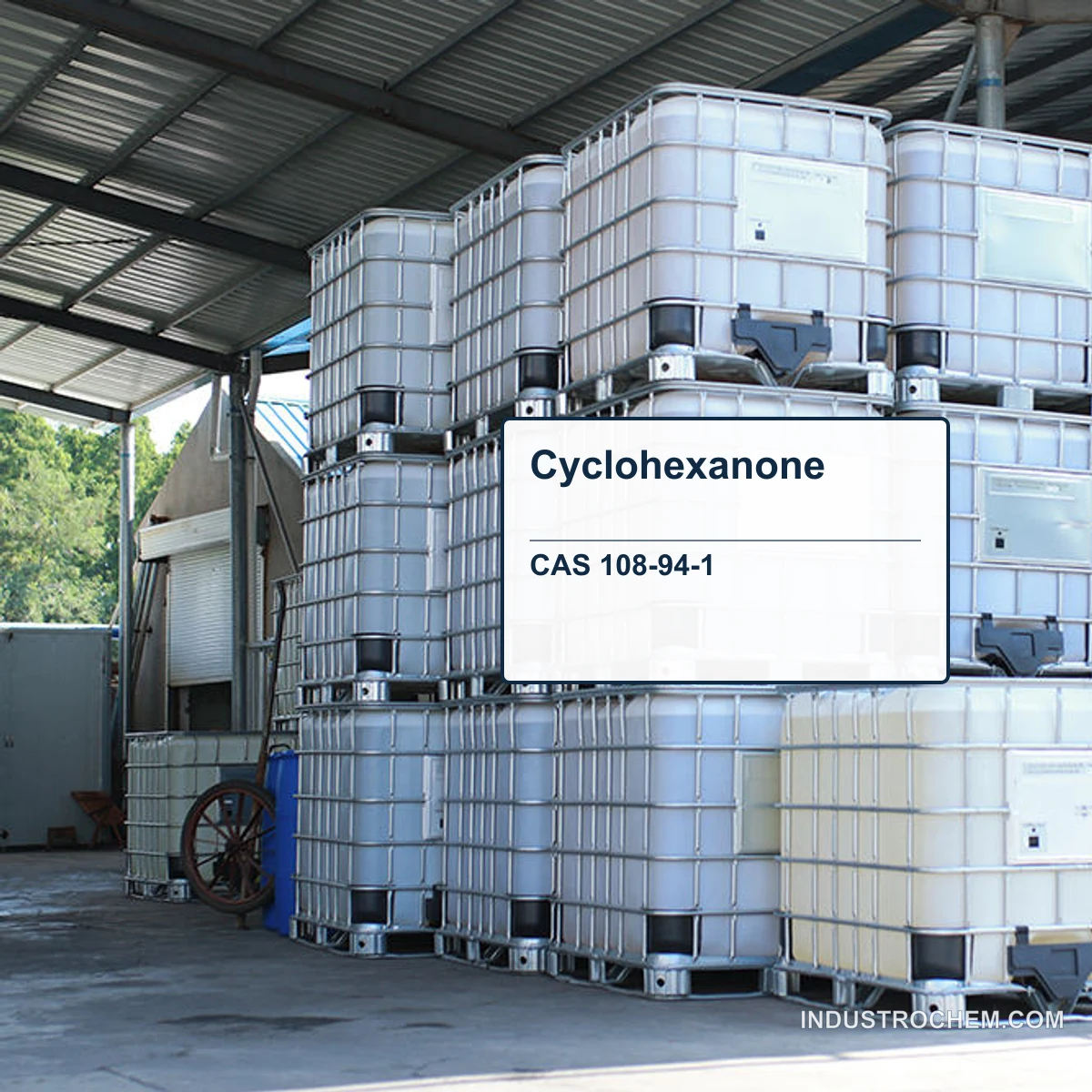










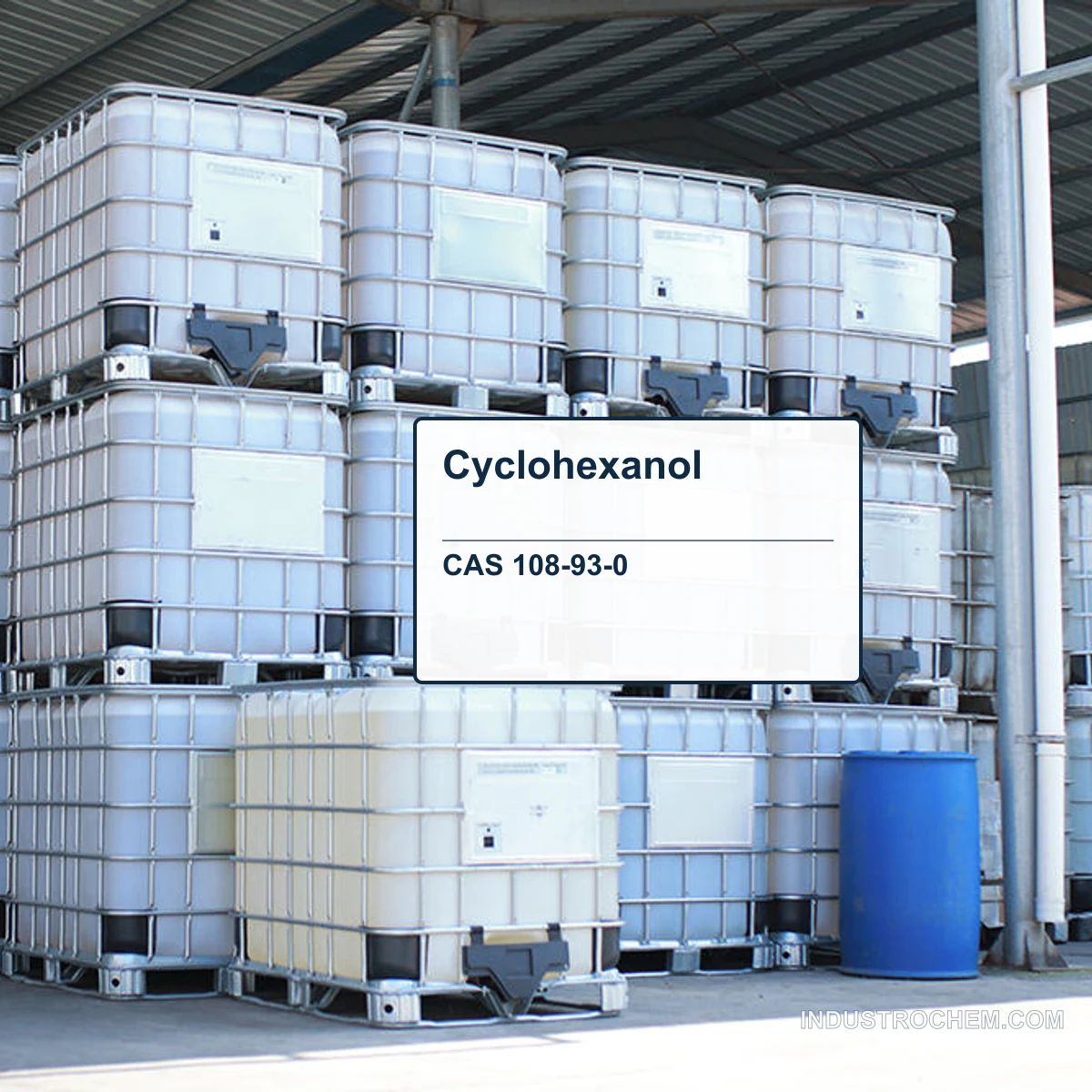
Cyclohexanol, CAS 108-93-0, is also known as hexahydrophenol or cyclohexyl alcohol. It is a saturated alicyclic alcohol used as an intermediate for adipic acid and caprolactam, and as a solvent or feedstock for esters, plasticizers and coatings. This colorless, viscous liquid can solidify near ambient temperature, so confirm the offered form, assay and impurity limits, packaging and documentation before ordering.
Cyclohexanol CAS 108-93-0
- CAS: 108-93-0
- Synonyms: Cyclohexanol; Hexahydrophenol; Cyclohexyl Alcohol
- Einecs: 203-630-6
- Molecular Formula: C₆H₁₂O
- Grade: Industrial grade, purity ≥99%
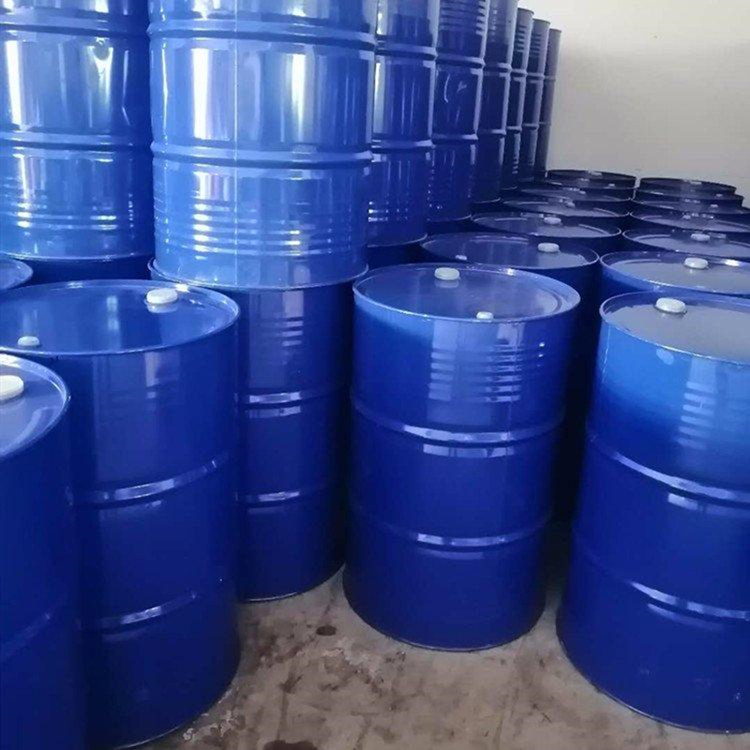
- Package: Drum, IBC or tank with temperature control as required; confirm net weight and unloading conditions.
Product Description
Cyclohexanol
Synonyms: Hexahydrophenol; Cyclohexyl alcohol
CAS number: 108-93-0
Molecular formula: C₆H₁₂O
Molecular weight: 100.16
Appearance: Colorless crystals or liquid with a camphor-like odour
Melting point: 25.9 °C
Boiling point: 160.8 °C
Relative density (water = 1): 0.9624
Relative vapor density (air = 1): 3.45
Saturated vapor pressure: 0.13 kPa (21 °C)
FAQ - Technical & Supply Chain
-
Q:
Is Cyclohexanol the same product as Cyclohexanone or KA Oil?
A: No. Cyclohexanol, CAS 108-93-0, is the alcohol. Cyclohexanone has a different CAS number, while KA Oil is a controlled cyclohexanone-cyclohexanol mixture. -
Q:
What is Cyclohexanol used for?
A: It is mainly used as an intermediate for adipic acid, caprolactam and nylon production, and as a solvent or feedstock for esters, plasticizers, coatings and specialty chemicals. -
Q:
What are the key specifications and physical properties of Cyclohexanol?
A: Industrial cyclohexanol is usually colourless with purity >=99%, melting point near 25.9 C, boiling point about 160.8 C and density about 0.9624. Agree GC assay, cyclohexanone and other impurities, water, colour, acidity and refractive index with the methods. -
Q:
What temperature controls are needed for Cyclohexanol delivery?
A: Cyclohexanol can solidify near normal ambient temperature, so confirm the offered form, loading temperature, insulated or heated drum, IBC or tank arrangement, net quantity and receiving temperature. Solidification alone does not mean the product is off-specification.
Ordering & Documentation
Key information for document requests, quotations, and supply planning.
Documents
Tell us which documents your procurement team needs. Before an order, we will check whether the quoted source can provide them for the offered lot.
Quotation
Send the CAS number, grade, quantity, packing preference and destination.
Sample & Supply
Ask whether samples, trial quantities or repeat orders are possible. We will check each request against the sourced product and current offer.
Storage & Shipping
Product-specific conditions are confirmed before order.