









• Cyclohexane CAS 110-82-7

Cyclohexane CAS 110-82-7

Cyclohexane is a saturated cyclic hydrocarbon used as a fundamental chemical raw material in industrial processing systems. Commonly referred to as hexahydrobenzene or cyclohexyl hydride, this compound is characterized by its non‑polar structure and chemical stability, making it suitable for use in extraction, reaction media, and controlled processing environments. Identified by CAS 110-82-7, it is typically applied as a chemical process solvent, where low reactivity and consistent physical properties are required for downstream chemical operations.
For industrial supply, this product is available with competitive factory pricing, customized specifications, complete documentation including MSDS, TDS, COA, and supports bulk supply requirements.

  • CAS: 110-82-7
  • Synonyms: Hexahydrobenzene, Cyclohexyl hydride
  • Einecs: 203-806-2
  • Molecular Formula: C₆H₁₂
  • Grade: Industrial grade 99%
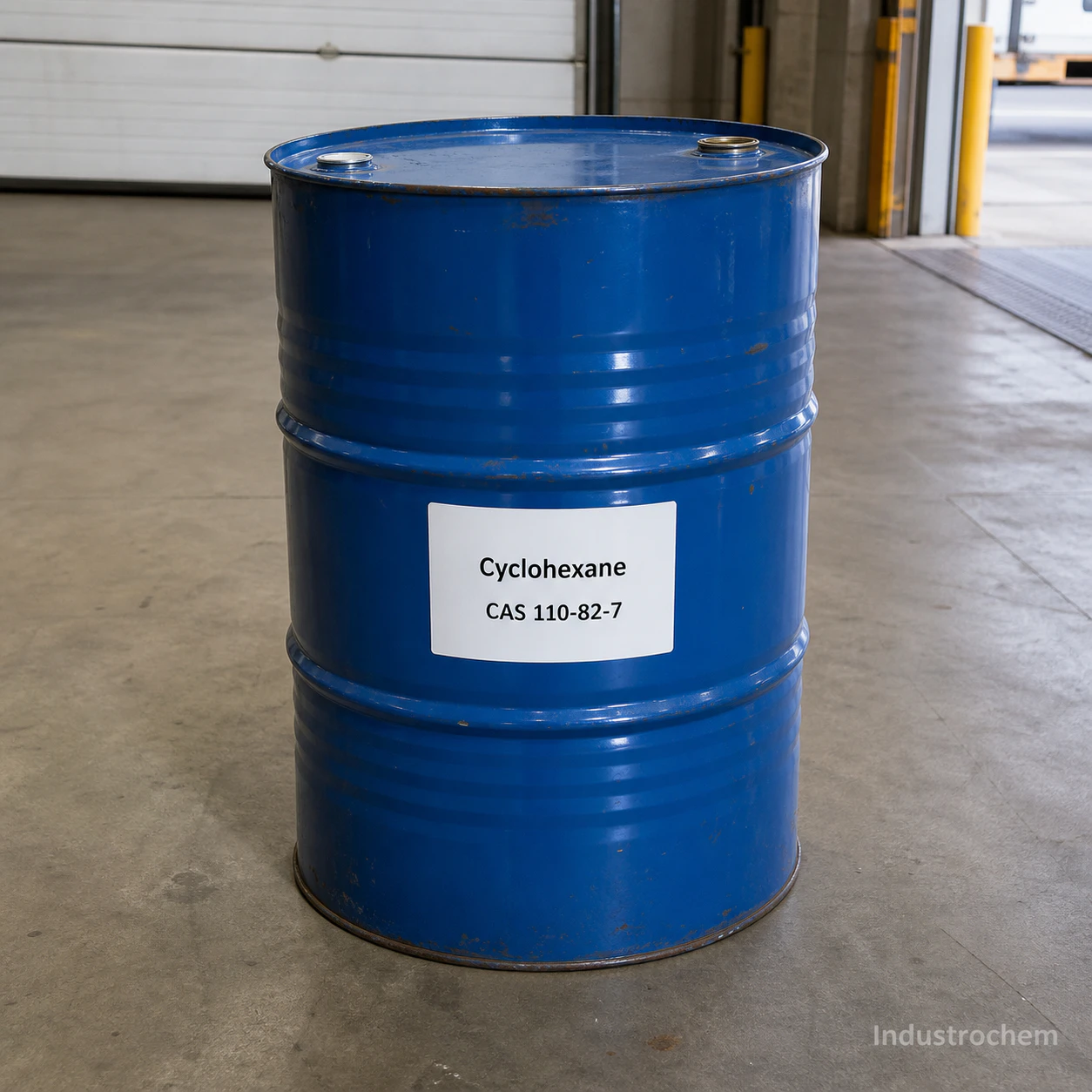
  • Package: 200kg iron drum or 50kg plastic drum packaging
Request a quote
Share:

Product Description

Physicochemical properties

PropertyDescription
Chemical NameCyclohexane
SynonymsHexahydrobenzene, Cyclohexyl Hydrocarbon
Molecular FormulaC₆H₁₂
Molecular Weight84.16 g/mol
AppearanceColorless liquid
OdorCharacteristic odor, slightly pungent
Boiling Point80.7 °C (177.3 °F)
Melting Point6.5 °C (43.7 °F)
Density0.78 g/cm³ at 20 °C
SolubilityInsoluble in water; soluble in organic solvents such as ethanol, ether, benzene, and acetone
Viscosity0.98 mPa·s at 20 °C
Vapor Pressure12.7 kPa at 20 °C
Flash Point-18 °C (closed cup)
Autoignition Temperature245 °C
Explosive LimitsLower: 1.3% (v/v); Upper: 8.4% (v/v)
StabilityStable under normal conditions; reacts violently with strong oxidizers, strong acids, strong bases, and halogens
ReactivityNon-reactive with acids and bases under normal conditions; can undergo oxidation, nitration, and dehydrogenation reactions under specific conditions

Application Areas

Industrial raw materials: mainly used for the production of nylon precursors such as adipic acid and caprolactam.
Solvent and extractant: used as solvents for rubber, coatings, and varnishes, and diluents for adhesives. Used for oil extraction, chromatographic analysis of standard substances, and organic synthesis.
Other uses: Widely used in industrial coatings, adhesives, organic synthesis and other fields

Storage conditions

Environmental requirements: Store in a cool, ventilated warehouse, away from sources of fire and heat. The storage temperature should not exceed 30 ℃, and the container should be kept sealed.
Isolation storage: Store separately from oxidants and prohibit mixing storage.
Safety facilities: Explosion proof lighting and ventilation equipment are used. Equip with leak emergency response equipment and firefighting equipment.

Safety precautions

Fire and explosion risks: Avoid contact with fire sources and prevent static electricity accumulation during transportation.
Health hazards: Long term exposure may cause damage to the central nervous system (headaches, dizziness, etc.) and skin and eye irritation. Wear protective equipment (such as gas masks and oil resistant gloves) during operation.
Emergency measures: ventilation and emergency treatment shall be taken immediately in case of leakage, and foam and carbon dioxide fire extinguishers shall be used in case of fire. Empty containers may contain harmful substances that need to be properly disposed of

FAQ - Technical & Supply Chain

  • Q:

    Are cyclohexane and hexahydrobenzene the same chemical substance?

    A: Yes. Cyclohexane and hexahydrobenzene are alternative names for the same compound and correspond to a single CAS registry entry.
  • Q:

    Is cyclohexane intended for industrial solvent use rather than laboratory-only applications?

    A: Cyclohexane is commonly supplied for industrial processing, where it functions as a solvent or process medium rather than being limited to laboratory research use.
Documents

Documents and Product Support

For product review and sourcing evaluation, supporting documents can be coordinated according to the product type, inquiry stage, and order requirements.

  • COA for batch-based quality reference
  • TDS for key physical and chemical information
  • SDS / MSDS for handling, storage, and safety reference
  • Packing information for sample, trial, and bulk orders
  • Technical communication based on application and specification requirements
Quotation

Information to Confirm Before Quotation

Clear sourcing information helps reduce specification mismatch and allows a more accurate quotation before sample or bulk order discussion.

  • Product name and CAS number
  • Application or intended end use
  • Required purity, grade, or specification
  • Sample quantity, trial order, or bulk demand
  • Preferred packing form or net weight
  • Destination country or port
  • Required documents or compliance expectations
Storage & Handling

Packaging, Storage, and Handling Notes

Packaging form, storage conditions, shelf life, and shipment arrangements should be confirmed according to the product characteristics, package size, and destination requirements.

Before order confirmation, buyers are advised to review the corresponding product documents and confirm whether any special storage, labeling, or handling requirements apply.

Supply Support

Sample, Bulk Order and Repeat Supply Support

Support can be arranged for sample discussion, bulk supply planning, packaging confirmation, and routine sourcing communication based on the actual product and order requirements.

For repeat-use formulations or long-term procurement plans, buyers may discuss specification consistency, packaging preferences, delivery expectations, and document coordination in advance.

Contact Form

Use our contact form to send us your questions, suggestions or comments. We will respond as soon as possible.