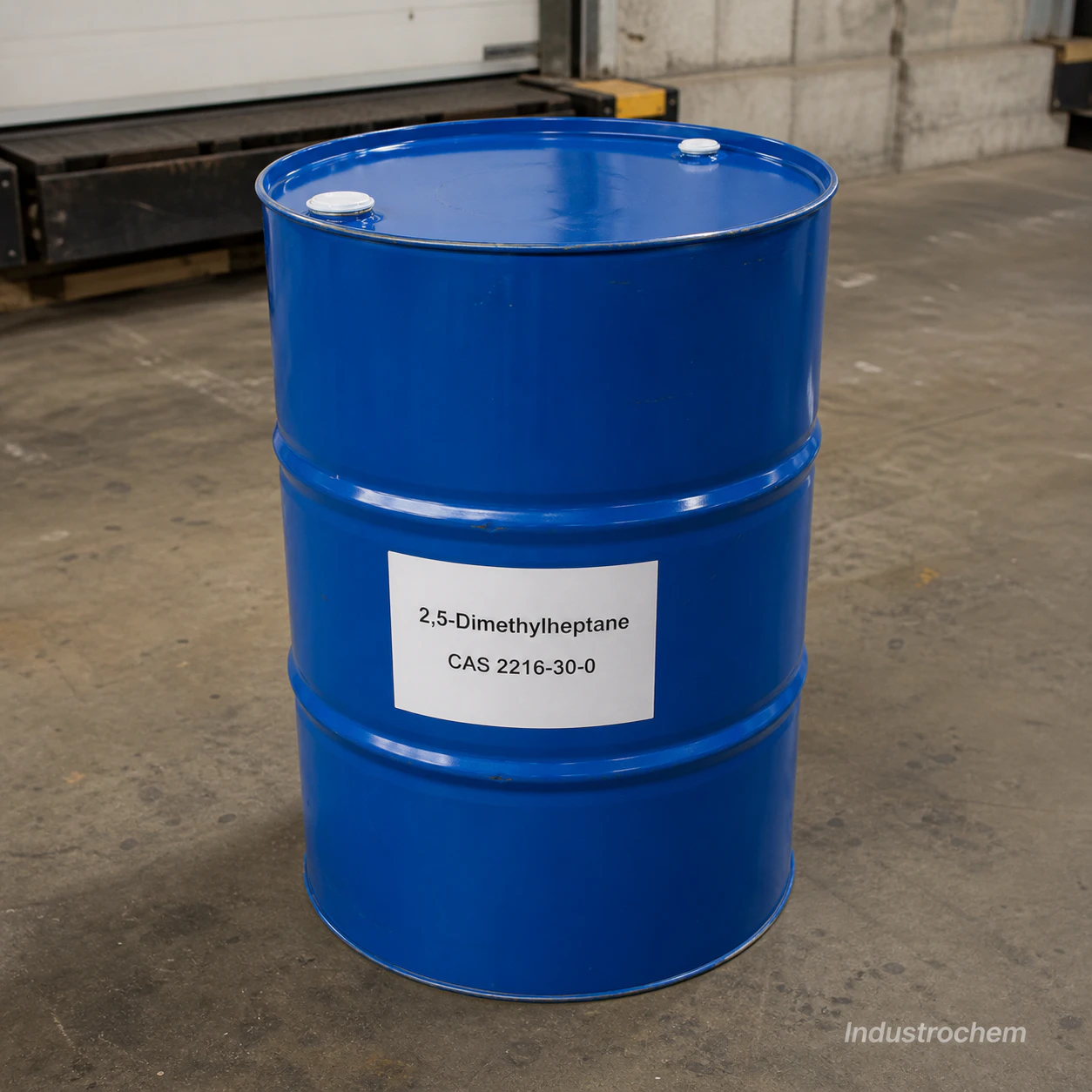
• 2,5‑Dimethylheptane CAS 2216‑30‑0

2,5‑Dimethylheptane CAS 2216‑30‑0

2,5‑Dimethylheptane is a branched aliphatic hydrocarbon used as a chemical raw material in industrial hydrocarbon processing systems. Also known in technical contexts as 2,5‑dimethylheptane or dimethylheptyl alkane, this compound is characterized by a saturated carbon framework with defined branching, resulting in predictable volatility and combustion behavior. Identified by CAS 2216‑30‑0, it is typically applied as a fuel blending component, where controlled hydrocarbon composition is required for formulation and process evaluation.
For industrial supply, this product is available with competitive factory pricing, customized specifications, complete documentation including MSDS, TDS, COA, and supports bulk supply requirements.

  • CAS: 2216-30-0
  • Synonyms: 2,5-dimethylheptane, Dimethylheptyl alkane
  • Einecs: 218‑641‑2
  • Molecular Formula: C9H20
  • Grade: Industrial grade 99%
  • Package: 200kg iron drum or 50kg plastic drum packaging
Request a quote
Share:

Product Description

Physicochemical properties

PropertyValue
IUPAC Name2,5-Dimethylheptane
CAS Number2216-30-0
Molecular FormulaC9H20
Molecular Weight128.26 g/mol
AppearanceColorless liquid
Density0.72 g/mL (at 20 °C)
Boiling Point136 °C (at 760 mmHg)
Melting PointNot determined
Flash Point23 °C
Refractive Index1.4033
SolubilityInsoluble in water, soluble in alcohol, ether, and benzene
Vapor Pressure9.42 mmHg (at 25 °C)
StabilityStable under normal conditions; keep away from fire sources, heat sources, and direct sunlight
Safety InformationFlammable liquid; may form explosive mixtures with air; keep container sealed and store in a cool, well-ventilated place

Application Areas

Organic solvents: Due to their good lipid solubility and chemical inertness, they can be used as non-polar organic solvents to dissolve hydrophobic substances such as oils, waxes, resins, and rubber. They are suitable for extraction, cleaning, or dilution processes in fine chemicals (such as coating diluents and precision instrument cleaning agents).
Fuel and fuel additives: 2,5-dimethylheptane can be used as a model compound to study the combustion characteristics of branched alkanes, such as combustion efficiency and detonation performance, providing data support for fuel formulation optimization; It can also be used as a fuel additive to improve the fluidity or stability of fuel.
Chemical synthesis raw materials: Under high temperature or catalyst conditions, dehydrogenation, halogenation and other reactions can occur, which are used to synthesize intermediates such as olefins and halogenated alkanes, and further prepare fragrances, lubricants or surfactants.

Storage conditions

Conventional conditions: It is recommended to store in a cool, dry, well ventilated warehouse and avoid direct sunlight.
Special requirement: It needs to be stored separately from oxidants, acids, bases, etc. to prevent chemical reactions. Containers need to be leak proof, it is recommended to use leak proof trays to reduce environmental risks

Safety precautions

Health hazards:
Skin contact: May cause irritation, rinse immediately with clean water.
Inhalation/ingestion: Quickly transfer to fresh air and seek medical attention if necessary.
Leakage handling:
Small leakage: Absorb with inert materials (such as sand, activated carbon) and collect in a closed container
Massive leakage: Wear protective equipment to prevent the leaked material from entering water bodies or sewers.
Firefighting measures:
Extinguishing agent: dry powder, foam or carbon dioxide, avoid direct water fire extinguishing

FAQ - Technical & Supply Chain

  • Q:

    Does 2,5‑Dimethylheptane correspond to a single CAS number?

    A: Yes. 2,5‑Dimethylheptane refers to a specific branched alkane structure and corresponds to one unique CAS registry number.
  • Q:

    Is 2,5‑Dimethylheptane used as an industrial hydrocarbon rather than a laboratory-only material?

    A: This substance is commonly supplied for industrial and process-related applications, such as fuel formulation and hydrocarbon system evaluation, rather than being limited to laboratory research use.
Documents

Documents and Product Support

For product review and sourcing evaluation, supporting documents can be coordinated according to the product type, inquiry stage, and order requirements.

  • COA for batch-based quality reference
  • TDS for key physical and chemical information
  • SDS / MSDS for handling, storage, and safety reference
  • Packing information for sample, trial, and bulk orders
  • Technical communication based on application and specification requirements
Quotation

Information to Confirm Before Quotation

Clear sourcing information helps reduce specification mismatch and allows a more accurate quotation before sample or bulk order discussion.

  • Product name and CAS number
  • Application or intended end use
  • Required purity, grade, or specification
  • Sample quantity, trial order, or bulk demand
  • Preferred packing form or net weight
  • Destination country or port
  • Required documents or compliance expectations
Storage & Handling

Packaging, Storage, and Handling Notes

Packaging form, storage conditions, shelf life, and shipment arrangements should be confirmed according to the product characteristics, package size, and destination requirements.

Before order confirmation, buyers are advised to review the corresponding product documents and confirm whether any special storage, labeling, or handling requirements apply.

Supply Support

Sample, Bulk Order and Repeat Supply Support

Support can be arranged for sample discussion, bulk supply planning, packaging confirmation, and routine sourcing communication based on the actual product and order requirements.

For repeat-use formulations or long-term procurement plans, buyers may discuss specification consistency, packaging preferences, delivery expectations, and document coordination in advance.

Contact Form

Use our contact form to send us your questions, suggestions or comments. We will respond as soon as possible.