









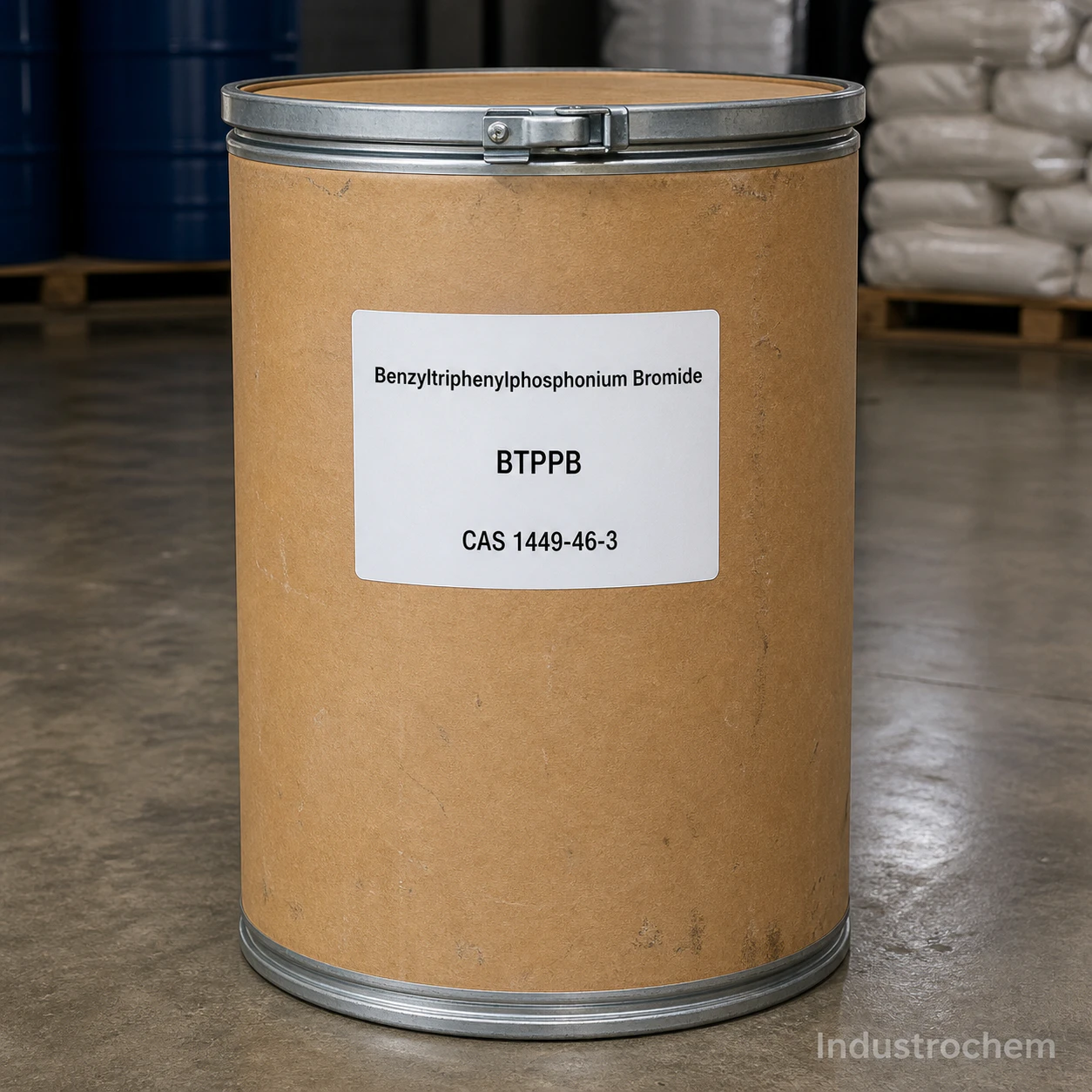
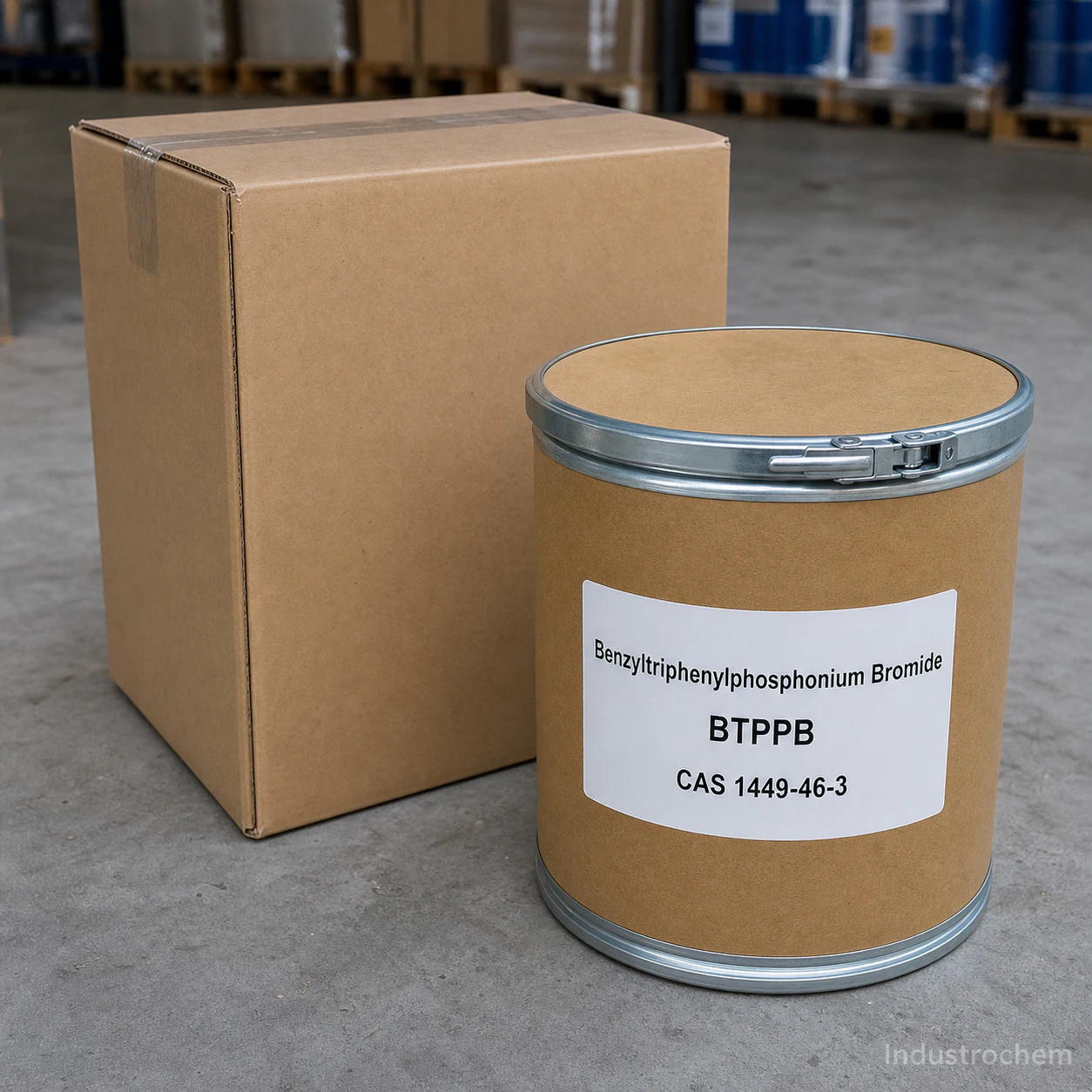
Benzyltriphenylphosphonium Bromide (BTPPB) is an organophosphonium salt used as a chemical intermediate in synthetic reaction systems. Commonly referred to as benzyl triphenyl phosphonium bromide or triphenylphosphonium benzyl bromide, this compound contains a stabilized phosphonium center that enables ylide formation under basic conditions, supporting carbon–carbon bond construction. Identified by CAS 1449‑46‑3, it is typically applied as a Wittig reagent intermediate in controlled organic synthesis and formulation workflows.
For industrial supply, this product is available with competitive factory pricing, customized specifications, complete documentation including MSDS, TDS, COA, and supports bulk supply requirements.
Benzyltriphenylphosphonium Bromide (BTPPB) CAS 1449-46-3
- CAS: 1449-46-3
- Synonyms: Benzyl triphenyl phosphonium bromide, Triphenylphosphonium benzyl bromide, BTPPB
- Einecs: 215-908-4
- Molecular Formula: C25H22BrP
- Grade: Industrial grade 99%
- Package: 200kg iron drum or 50kg plastic drum packaging
Product Description
Physicochemical properties
| Property | Value |
|---|---|
| IUPAC Name | Benzyltriphenylphosphonium bromide |
| Synonyms | – Triphenyl(phenylmethyl)phosphonium bromide – Benzytriphenyl Phosphonium Bromide – Phosphonium, triphenyl(phenylmethyl)-, bromide |
| CAS Number | 1449-46-3 |
| EINECS Number | 215-908-4 |
| Molecular Formula | C25H22BrP |
| Melting Point | 295-298 °C (lit.) |
| Solubility | Soluble in water and methanol |
| Stability | Stable under recommended storage conditions; avoid contact with oxidizing agents |
| Storage Conditions | Keep container sealed and store in a cool, dry place with good ventilation |
Application Areas
Phase transfer catalyst: As a quaternary phosphonium salt phase transfer catalyst in organic synthesis, it promotes the reaction between aqueous and organic phases, improves reaction efficiency and product yield
Storage conditions
Standard conditions: Store in a cool, dry, well ventilated warehouse and keep away from sources of fire.
Special requirement: It needs to be stored separately from the oxidant to avoid mixing storage. Containers should be moisture-proof and leak proof, and it is recommended to use inert gas (such as nitrogen) for protection.
Safety precautions
Operation protection:
Wear a dust mask (to prevent inhalation of solid powder), nitrile gloves (to avoid skin contact), and goggles (to prevent powder from splashing into the eyes) during operation, and conduct the experiment in a well ventilated laboratory or fume hood.
Avoid mixing with strong oxidants (such as hydrogen peroxide) and strong bases (such as sodium hydroxide) to prevent chemical reactions from producing toxic gases (such as hydrogen bromide).
Leakage disposal: Collect a small amount of leakage with clean dry cloth or filter paper, and put it in a sealed bag (marked as “hazardous waste”); A large amount of leakage needs to be covered with sand to avoid dust, and then transferred to a dedicated container for disposal. It is prohibited to flush into the sewer.
FAQ - Technical & Supply Chain
-
Q:
Do Benzyltriphenylphosphonium Bromide and BTPPB refer to the same substance?
A: Yes. BTPPB is an abbreviated name for Benzyltriphenylphosphonium Bromide, and both refer to the same compound with a single CAS number. -
Q:
Is Benzyltriphenylphosphonium Bromide used as an intermediate rather than a finished formulation?
A: This material is typically supplied as an intermediate intended for use in organic reaction systems, where it functions as a precursor rather than a final formulated product.
Documents and Product Support
For product review and sourcing evaluation, supporting documents can be coordinated according to the product type, inquiry stage, and order requirements.
- COA for batch-based quality reference
- TDS for key physical and chemical information
- SDS / MSDS for handling, storage, and safety reference
- Packing information for sample, trial, and bulk orders
- Technical communication based on application and specification requirements
Information to Confirm Before Quotation
Clear sourcing information helps reduce specification mismatch and allows a more accurate quotation before sample or bulk order discussion.
- Product name and CAS number
- Application or intended end use
- Required purity, grade, or specification
- Sample quantity, trial order, or bulk demand
- Preferred packing form or net weight
- Destination country or port
- Required documents or compliance expectations
Packaging, Storage, and Handling Notes
Packaging form, storage conditions, shelf life, and shipment arrangements should be confirmed according to the product characteristics, package size, and destination requirements.
Before order confirmation, buyers are advised to review the corresponding product documents and confirm whether any special storage, labeling, or handling requirements apply.
Sample, Bulk Order and Repeat Supply Support
Support can be arranged for sample discussion, bulk supply planning, packaging confirmation, and routine sourcing communication based on the actual product and order requirements.
For repeat-use formulations or long-term procurement plans, buyers may discuss specification consistency, packaging preferences, delivery expectations, and document coordination in advance.