










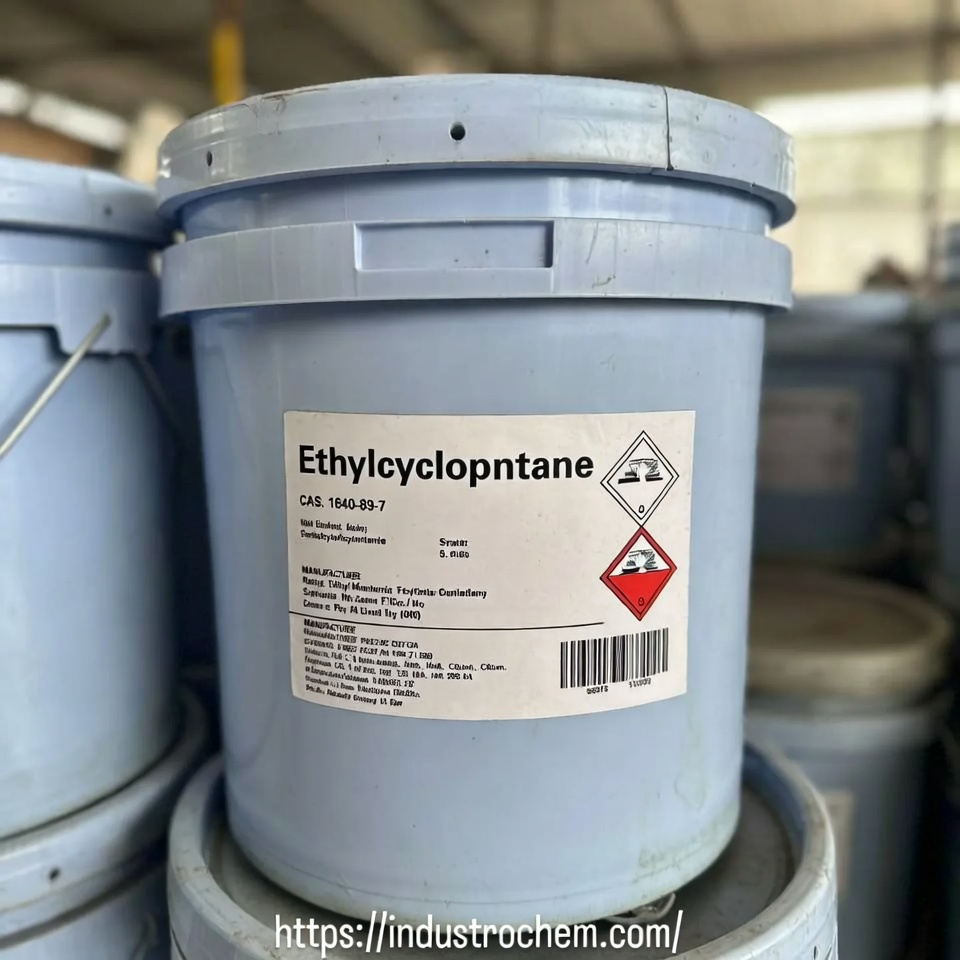
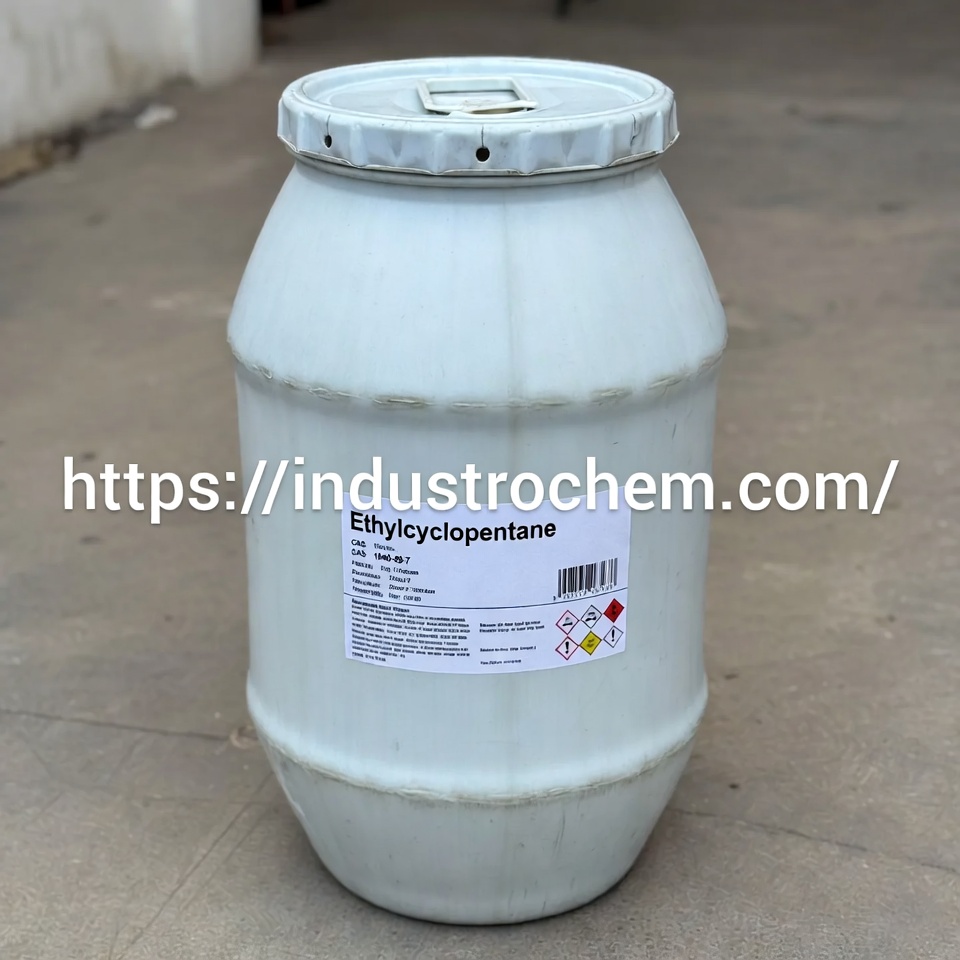
Ethylcyclopentane, CAS 1640-89-7 and EC 216-686-1, is an alkyl-substituted cycloalkane with formula C₇H₁₄ and molecular weight 98.19 g/mol. Procurement should focus on structural identity, GC assay, methylcyclohexane and other C₇H₁₄ hydrocarbons, distillation range, water, sulfur, color and nonvolatile residue. Ethylidenecyclopentane is a distinct C₇H₁₂ substance with CAS 2146-37-4 and must not be treated as a C₇H₁₄ isomer.
Ethylcyclopentane CAS 1640-89-7
- CAS: 1640-89-7
- Synonyms: Ethylcyclopentane, Cyclopentane ethyl-, Ethyl cyclopentane
- Einecs: 216-686-1
- Molecular Formula: C₇H₁₄
- Grade: Confirm identity, assay method, water or residual solvents, product-specific impurities and physical form against the current COA; no end-use grade is assumed.
- Package: State the required quantity and destination; confirm the hydrocarbon-compatible container, headspace, closure, fill quantity, bonding and grounding requirements, transport classification and receiving capability against the current SDS.
Product Description
Identity and specification
| Item | Verified purchasing information |
|---|---|
| Product | Ethylcyclopentane |
| CAS / EC | 1640-89-7 / 216-686-1 |
| Formula / molecular weight | C₇H₁₄ / 98.19 g/mol |
| Chemical class | Alkyl-substituted cycloalkane |
Ethylcyclopentane must be distinguished from methylcyclohexane and other C₇H₁₄ hydrocarbons. Ethylidenecyclopentane is a separate C₇H₁₂ substance, CAS 2146-37-4, not an isomer of Ethylcyclopentane. A chromatographic identity profile is more useful for purchasing than a generic purity label alone.
Quality controls for purchasing
- Request GC assay with named limits for cyclopentane-related and other C7 hydrocarbon isomers.
- Define distillation range, density, water, sulfur, color and nonvolatile residue for the intended use.
- Confirm package headspace, transport classification and sampling procedure for a volatile flammable liquid.
Applications and grade selection
Ethylcyclopentane may be evaluated as a hydrocarbon standard, research material, solvent component or synthesis feed where its properties fit the process. Application suitability must be demonstrated through solvency, reaction, evaporation or analytical testing.
Storage and handling
Store in a tightly closed hydrocarbon-compatible container with ventilation, ignition control, bonding and grounding. Keep away from oxidizers and heat. Follow the current SDS and dangerous-goods requirements for transfer, storage and shipment.
Documentation and quotation details
State GC assay and isomer limits, distillation range, water and residue requirements, quantity, package, destination and schedule. Request a lot COA, SDS and transport information before order confirmation.
FAQ - Technical & Supply Chain
-
Q:
How is Ethylcyclopentane distinguished from other C7 hydrocarbons?
A: Confirm CAS 1640-89-7, the saturated C₇H₁₄ structure and an agreed GC or spectroscopic identity result. Ethylidenecyclopentane is an unsaturated C₇H₁₂ compound, while methylcyclohexane and other C₇H₁₄ hydrocarbons are constitutional isomers that may require chromatographic separation. -
Q:
Which specifications matter when purchasing Ethylcyclopentane?
A: Define GC assay, identified C7 hydrocarbon impurities, distillation range, density or refractive index, water, sulfur, color and nonvolatile residue. State quantity, package and destination, and use the current SDS for flammable-liquid transport, storage and transfer requirements.
Ordering & Documentation
Key information for document requests, quotations, and supply planning.
Documents
COA, TDS, SDS/MSDS and packing details are available on request.
Quotation
Send the CAS number, grade, quantity, packing preference and destination.
Sample & Supply
Support is available for samples, trial orders, bulk and repeat supply.
Storage & Shipping
Product-specific conditions are confirmed before order.


