









Agricultural Emulsifier 603, chemically identified as Tristyrylphenol Ethoxylate (TSPE) with a specific degree of ethoxylation, is a high-performance non-ionic surfactant essential for agrochemical formulations. Frequently referenced in technical data sheets as Polyoxyethylene tristyrylphenyl ether or Ethoxylated tristyrylphenol, this viscous liquid or semi-solid functions as a primary emulsifier in Emulsifiable Concentrates (EC), Suspension Concentrates (SC), and Microemulsions (EW) for pesticides and herbicides. We offer bulk supply of this specialized surfactant with competitive factory pricing, customized specifications for ethylene oxide (EO) mole content, and comprehensive regulatory documentation including MSDS, TDS, COA.
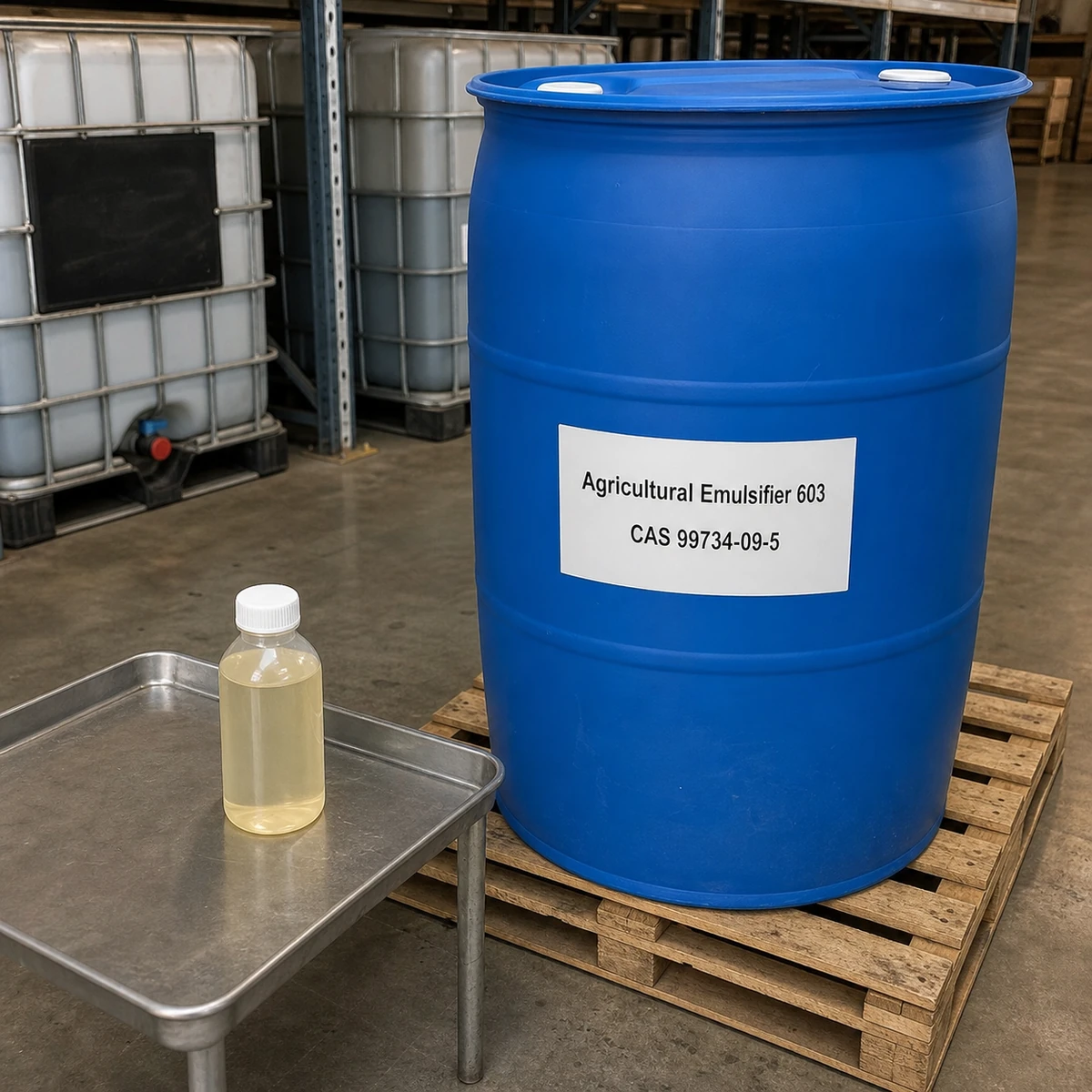
Agricultural Emulsifier 603 CAS 99734-09-5
- CAS: 99734-09-5
- Synonyms: Pesticide Emulsifier 603, Fatty acids C18-unsaturated dimers polymers with castor oil ethoxylated, Polymeric Castor Oil Ethoxylate, Agrochemical Surfactant 603, Crop Protection Emulsifier.
- Grade: Industrial grade 99%
- Package: 200kg iron drum or 50kg plastic drum packaging
Product Description
Physicochemical properties
| Property | Description |
|---|---|
| Appearance | Light yellow to amber viscous liquid or solid (depending on EO units) |
| pH Value | 5.0-7.0 (neutral to weakly acidic) |
| Cloud Point | 90-95°C (stable at high temperatures) |
| Solubility | Easily soluble in water, methanol, and solvent oils; forms homogeneous solutions |
| HLB Value | >17 (high hydrophilicity, suitable for oil-in-water emulsions) |
| Molecular Structure | Contains polyoxyethylene chains, providing excellent emulsifying properties |
| Viscosity | Viscous liquid (varies with temperature and EO content) |
| Stability | Stable under normal conditions; resistant to hard water and electrolytes |
| Storage Conditions | Store in a dry, ventilated place away from fire sources; avoid direct sunlight |
Application Areas
Pesticide formulations are widely utilized in the preparation of emulsions for organophosphate insecticides (such as dichlorvos and phoxim), herbicides (such as glufosinate-ammonium), and fungicides.
In other sectors, they can serve as leveling agents for high-temperature and high-pressure dyeing of disperse dyes, or as components in industrial cleaning agents and textile auxiliaries.
Storage conditions
Temperature: It is recommended to store in a cool, dry, well ventilated warehouse or canopy, avoiding high temperature environments (such as storage temperatures exceeding 35 ℃).
Light exposure: Store in the dark to prevent direct sunlight from causing product deterioration.
Isolation requirements: Keep away from sources of fire, heat, and oxidants, and do not store or transport with acids, edible chemical raw materials, etc.
Shelf life: Under the above storage conditions, the shelf life is usually 1-2 years (subject to the data provided by the supplier).
Regular inspection: During storage, it is necessary to regularly check the integrity of the packaging and the condition of the product. Any abnormalities found should be dealt with in a timely manner
Safety precautions
Non hazardous chemicals, but protective gloves and goggles should be worn during operation to avoid contact with skin and eyes.
Waste disposal must comply with local environmental regulations to prevent pollution of water bodies and soil.
FAQ - Technical & Supply Chain
-
Q:
What is the main application of Agricultural Emulsifier 603?
A: It is primarily used in the formulation of chemical pesticides, specifically Emulsifiable Concentrates (EC). It helps dissolve the active pesticide ingredient in an organic solvent and ensures that when the farmer mixes the product with water, it forms a stable, milky white emulsion without phase separation. -
Q:
What kind of pesticides is CAS 99734-09-5 suitable for?
A: Due to its unique polymeric structure, it is highly effective for emulsifying organophosphorus insecticides, organochlorines, and various herbicides that are difficult to stabilize with standard surfactants.
Documents and Product Support
For product review and sourcing evaluation, supporting documents can be coordinated according to the product type, inquiry stage, and order requirements.
- COA for batch-based quality reference
- TDS for key physical and chemical information
- SDS / MSDS for handling, storage, and safety reference
- Packing information for sample, trial, and bulk orders
- Technical communication based on application and specification requirements
Information to Confirm Before Quotation
Clear sourcing information helps reduce specification mismatch and allows a more accurate quotation before sample or bulk order discussion.
- Product name and CAS number
- Application or intended end use
- Required purity, grade, or specification
- Sample quantity, trial order, or bulk demand
- Preferred packing form or net weight
- Destination country or port
- Required documents or compliance expectations
Packaging, Storage, and Handling Notes
Packaging form, storage conditions, shelf life, and shipment arrangements should be confirmed according to the product characteristics, package size, and destination requirements.
Before order confirmation, buyers are advised to review the corresponding product documents and confirm whether any special storage, labeling, or handling requirements apply.
Sample, Bulk Order and Repeat Supply Support
Support can be arranged for sample discussion, bulk supply planning, packaging confirmation, and routine sourcing communication based on the actual product and order requirements.
For repeat-use formulations or long-term procurement plans, buyers may discuss specification consistency, packaging preferences, delivery expectations, and document coordination in advance.