









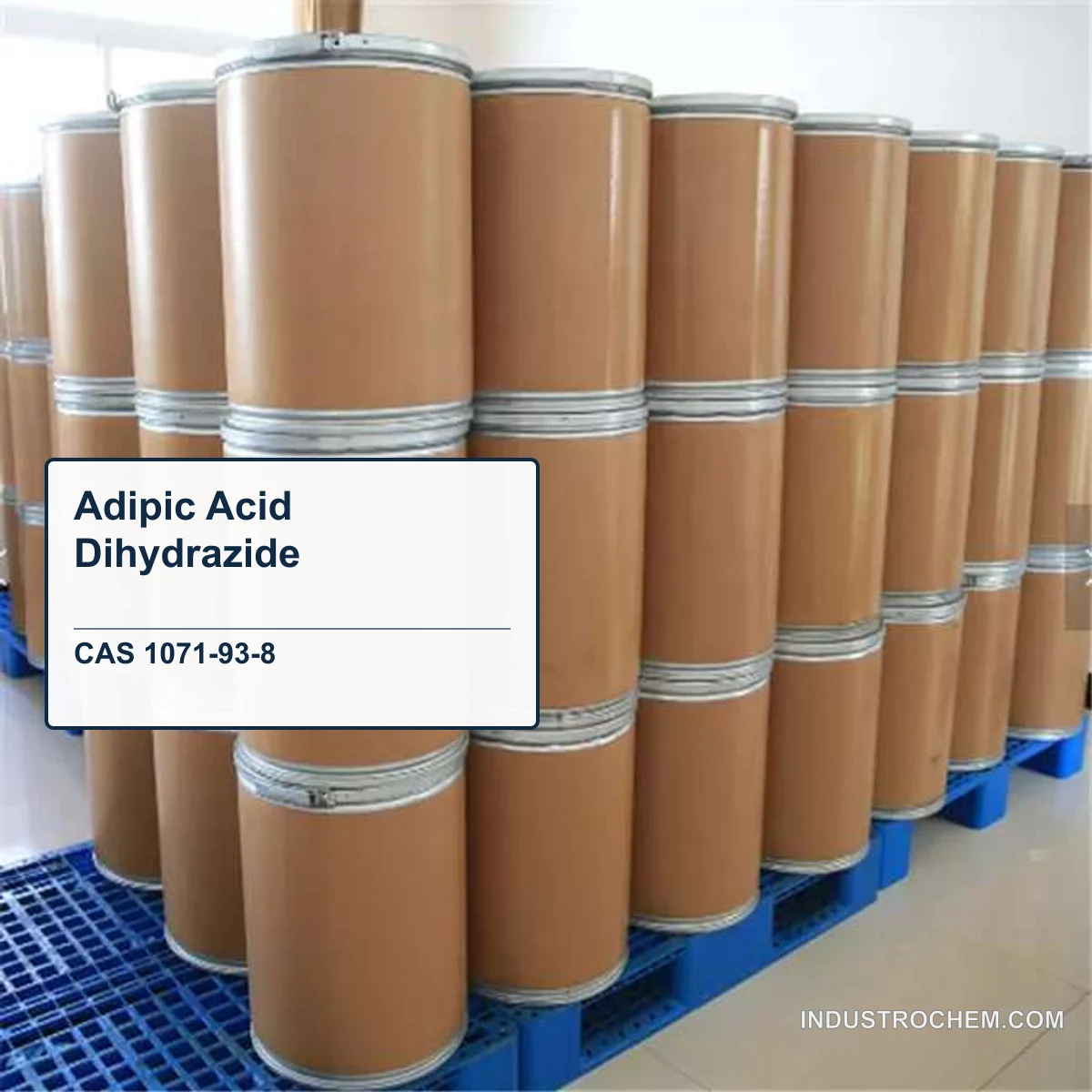
Adipic Acid Dihydrazide (ADH), CAS 1071-93-8, is a dihydrazide that can react with carbonyl-containing materials in crosslinking systems. Before an RFQ, confirm: the carbonyl-containing formulation or process, required form, and relevant assay or impurity limits; quantity, packaging, destination and document availability.
Adipic Acid Dihydrazide (ADH) CAS 1071-93-8
- CAS: 1071-93-8
- Synonyms: Adipic Acid Dihydrazide; Adipic Dihydrazide; ADH; Hexanedihydrazide
- Einecs: 213-999-5
- Molecular Formula: C₆H₁₄N₄O₂
- Grade: ADH grade; confirm purity, melting range, drying loss and inorganic impurity limits.
- Package: Polyethylene-lined carton or equivalent moisture-resistant package; confirm net weight.
Product Description
Identity and procurement review
Adipic Acid Dihydrazide (ADH), CAS 1071-93-8, is a dihydrazide that can react with carbonyl-containing materials in crosslinking systems. Before an RFQ, confirm: the carbonyl-containing formulation or process, required form, and relevant assay or impurity limits; quantity, packaging, destination and document availability.
| Field | Current product-specific specification |
| Chemical identity | Adipic Acid Dihydrazide (ADH); CAS 1071-93-8 |
| Molecular formula | C₆H₁₄N₄O₂ |
| Molar mass | 174.20 g/mol |
| Offered physical form | Confirm the offered physical form in the current product-specific specification. |
| Grade and assay | Confirm the required value in the current product-specific specification. |
| Impurity limits | Confirm the required value in the current product-specific specification. |
| Physical data | Confirm the required value in the current product-specific specification. |
Application boundary
Adipic Acid Dihydrazide (ADH) is a dihydrazide that can react with carbonyl-containing materials in crosslinking systems. ADH is the established abbreviation for Adipic Acid Dihydrazide. Confirm product-specific assay, particle-size and document requirements in the current specification.
- Adipic Acid Dihydrazide (ADH) is a dihydrazide that can react with carbonyl-containing materials in crosslinking systems. ADH is the established abbreviation for Adipic Acid Dihydrazide. Confirm product-specific assay, particle-size and document requirements in the current specification.
- Confirm the offered physical form in the current product-specific specification.
- Confirm the required value in the current product-specific specification.
- In the RFQ, state: the carbonyl-containing formulation or process, required form, and relevant assay or impurity limits; quantity, packaging, destination and required documents.
Procurement information
In the RFQ, state: the carbonyl-containing formulation or process, required form, and relevant assay or impurity limits; quantity, packaging, destination and required documents.
- Request current product-specific specifications, packaging details and document availability.
- Confirm packaging compatible with the offered form and destination requirements.
- State the required form, quantity, intended use, packaging, destination and document needs in the RFQ.
Handling and safety review
For a related diacetone-acrylamide raw material, see Diacetone Acrylamide.
Storage review
Use the current product-specific SDS and specification to review handling, storage and local regulatory suitability.
Safety review
- Use the current product-specific SDS and specification to review handling, storage and local regulatory suitability.
- Request current product-specific specifications, packaging details and document availability.
- State the required form, quantity, intended use, packaging, destination and document needs in the RFQ.
- Confirm the required value in the current product-specific specification.
FAQ - Technical & Supply Chain
-
Q:
Are ADH and Diacetone Acrylamide (DAAM) interchangeable in a waterborne crosslinking system?
A: No. Adipic Acid Dihydrazide, CAS 1071-93-8, is the difunctional hydrazide crosslinker; DAAM is the carbonyl-functional vinyl monomer incorporated into the polymer. The two are complementary rather than interchangeable. State the polymer carbonyl content and the desired ADH stoichiometry. -
Q:
What is Adipic Acid Dihydrazide used for?
A: ADH is used as a post-polymerization crosslinker for carbonyl-functional acrylic, styrene-acrylic and vinyl-acetate emulsions. It can also be used in coatings, inks and adhesives, and as a hydrazide building block where a difunctional amine-like reagent is required. -
Q:
Which batch specifications should be agreed for Adipic Acid Dihydrazide?
A: Agree purity and method, appearance, melting range, loss on drying, iron, chloride, sulfate and any particle-size or dissolution requirement. Published commercial grades use different purity and impurity limits, so put the test methods and acceptance limits in the quotation and purchase order. -
Q:
How should ADH be packed and approved for delivery?
A: Confirm a sealed polyethylene-lined carton or equivalent moisture-resistant package, net weight, manufacturing date, storage conditions, sampling and dissolution test where required. ADH is normally supplied as a crystalline powder and should be protected from moisture and incompatible oxidizing or strongly acidic materials. -
Q:
What are the typical physical properties of Adipic Acid Dihydrazide?
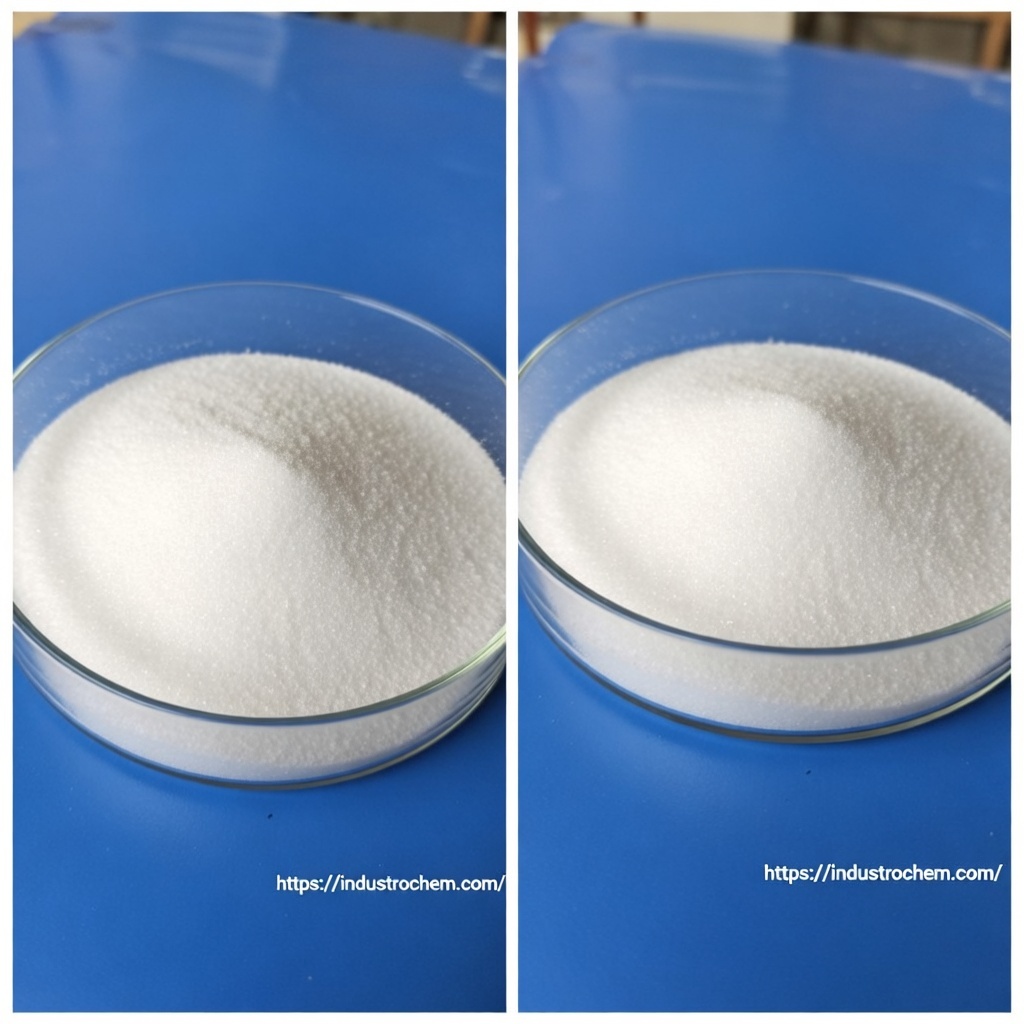
A: ADH is usually a white to slightly yellow crystalline powder with melting range around 178-185 C and good solubility in water and polar solvents. Compare the offered lot data against the agreed specification, including particle size and dissolution for your application.
Ordering & Documentation
Key information for document requests, quotations, and supply planning.
Documents
COA, TDS, SDS/MSDS and packing details are available on request.
Quotation
Send the CAS number, grade, quantity, packing preference and destination.
Sample & Supply
Support is available for samples, trial orders, bulk and repeat supply.
Storage & Shipping
Product-specific conditions are confirmed before order.

