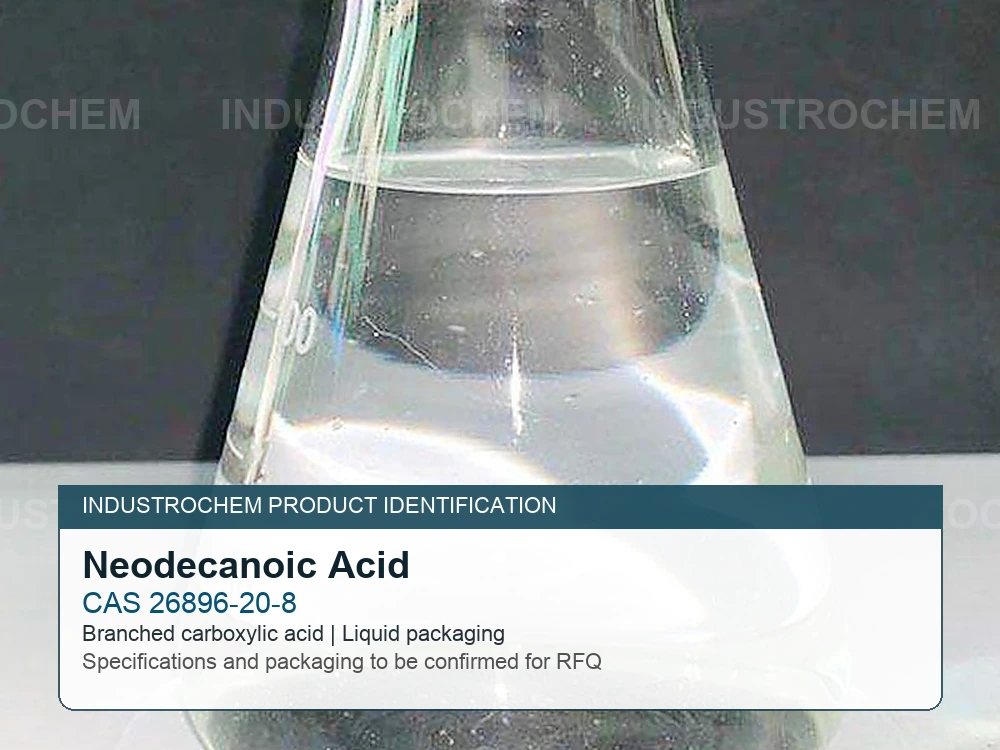









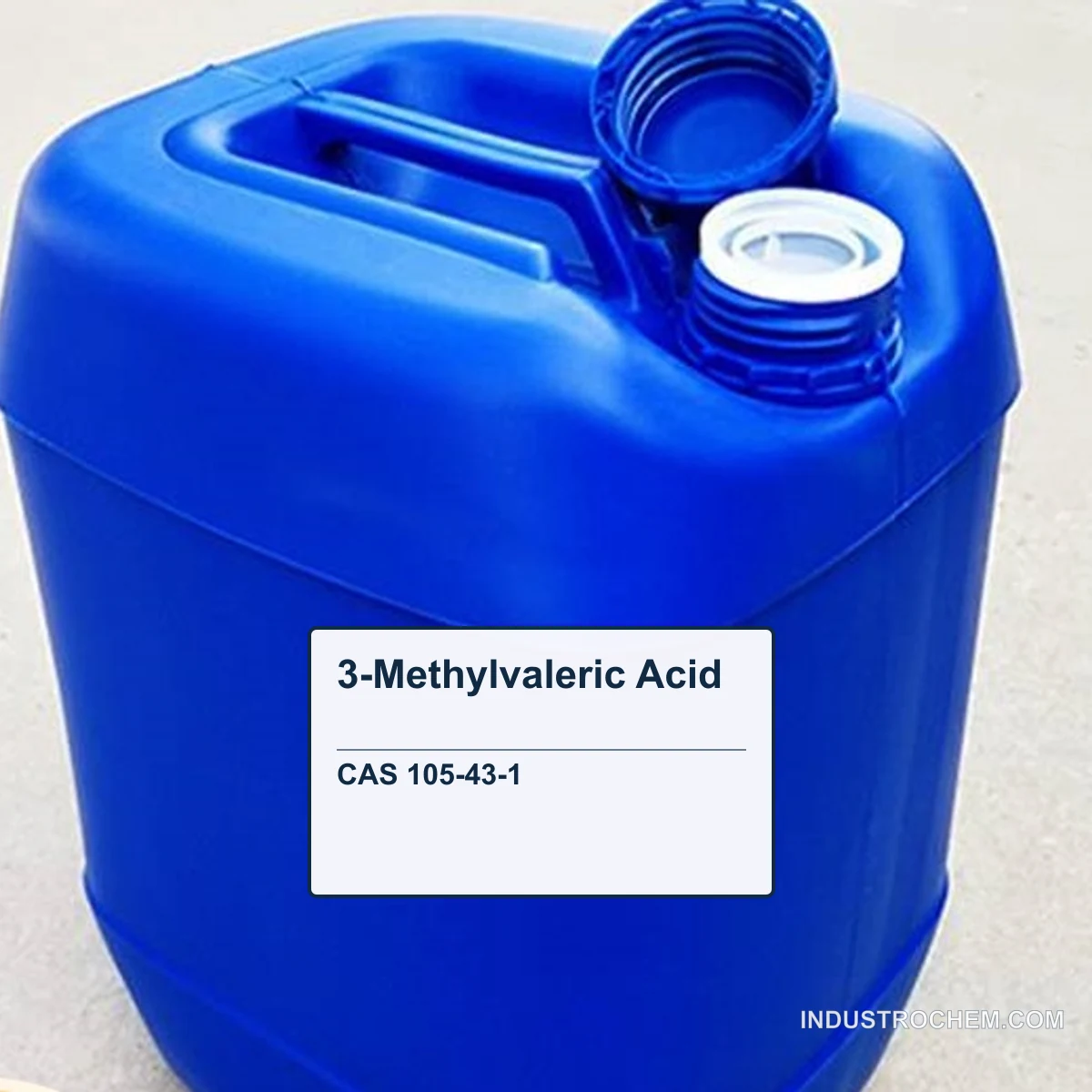
3-Methylvaleric Acid, CAS 105-43-1, is also known as 3-methylpentanoic acid. It is a branched-chain C6 carboxylic acid used as an organic-synthesis intermediate. Confirm the exact isomer identity, required physical form or analytical limits, intended technical process, quantity, packaging, destination and document availability before ordering.
3-Methylvaleric Acid CAS 105-43-1
- CAS: 105-43-1
- Synonyms: 3-Methylvaleric Acid; 3-Methylpentanoic Acid; beta-Methylvaleric Acid
- Einecs: 203-297-7
- Molecular Formula: C₆H₁₂O₂
- Grade: Confirm current product specification
- Package: Confirm packaging for the offered form
Product Description
Identity and procurement review
| Field | Current product-specific specification |
| Chemical identity | 3-Methylvaleric Acid; CAS 105-43-1 |
| Molecular formula | C₆H₁₂O₂ |
| Molar mass | 116.16 g/mol |
| Offered physical form | Confirm the offered physical form in the current product-specific specification. |
| Grade and assay | Confirm the required value in the current product-specific specification. |
| Impurity limits | Confirm the required value in the current product-specific specification. |
| Physical data | Confirm the required value in the current product-specific specification. |
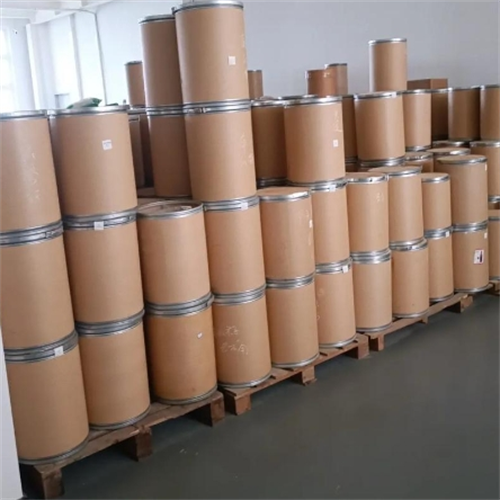
| Packaging | Confirm packaging compatible with the offered form and destination requirements. |
Application boundary
3-Methylvaleric Acid is a branched-chain C6 carboxylic acid, also called 3-Methylpentanoic Acid. It must be distinguished from 2-Methylvaleric Acid and straight-chain Hexanoic Acid; a generic isovaleric-acid label is not precise enough.
- 3-Methylvaleric Acid is a branched-chain C6 carboxylic acid, also called 3-Methylpentanoic Acid. It must be distinguished from 2-Methylvaleric Acid and straight-chain Hexanoic Acid; a generic isovaleric-acid label is not precise enough.
- Confirm the offered physical form in the current product-specific specification.
- Confirm the required value in the current product-specific specification.
- In the RFQ, state: the exact isomer identity, required physical form or analytical limits, and intended technical process; quantity, packaging, destination and required documents.
Procurement information
In the RFQ, state: the exact isomer identity, required physical form or analytical limits, and intended technical process; quantity, packaging, destination and required documents.
- Request current product-specific specifications, packaging details and document availability.
- Confirm packaging compatible with the offered form and destination requirements.
- State the required form, quantity, intended use, packaging, destination and document needs in the RFQ.
- Confirm the required value in the current product-specific specification.
Handling and safety review
Storage review
Use the current product-specific SDS and specification to review handling, storage and local regulatory suitability.
Safety review
- Use the current product-specific SDS and specification to review handling, storage and local regulatory suitability.
- Request current product-specific specifications, packaging details and document availability.
- State the required form, quantity, intended use, packaging, destination and document needs in the RFQ.
- Confirm the required value in the current product-specific specification.
FAQ - Technical & Supply Chain
-
Q:
How should 3-Methylvaleric Acid be distinguished from other C6 carboxylic-acid isomers?
A: Use 3-Methylvaleric Acid or 3-Methylpentanoic Acid with CAS 105-43-1. It is not 2-Methylvaleric Acid, 4-Methylvaleric Acid, Hexanoic Acid or Isovaleric Acid; those isomers have different CAS numbers and physical profiles. Put the CAS number and full positional name on the order. -
Q:
What is 3-Methylvaleric Acid used for?
A: It is used as a branched C6 carboxylic-acid building block for esters, flavors, fragrances, pharmaceuticals, agrochemicals and specialty surfactants. The branched structure can modify volatility, solubility and hydrolytic stability compared with straight-chain hexanoic acid. -
Q:
Which specification and delivery details should be agreed for 3-Methylvaleric Acid?
A: Agree GC assay and isomer profile, water, color, acidity or acid value, density, refractive index and any high-boiling residue with the methods. Confirm the offered package, net quantity, compatible closure, transport classification, manufacturing date and storage conditions. -
Q:
What should be confirmed about the offered physical form?
A: Confirm whether the material is supplied as liquid, low-melting solid or another form, and check the corresponding packaging, heating or transfer requirements. 3-Methylvaleric Acid should be stored in closed, corrosion-resistant containers away from moisture and incompatible oxidizers. -
Q:
What are the typical physical properties of 3-Methylvaleric Acid?
A: 3-Methylvaleric Acid is usually a liquid at room temperature, with boiling point around 196-198 C, density about 0.93 g/mL and flash point near 85 C. Compare offered lot data against the agreed specification and confirm whether temperature control is needed for shipping.
Ordering & Documentation
Key information for document requests, quotations, and supply planning.
Documents
Tell us which documents your procurement team needs. Before an order, we will check whether the quoted source can provide them for the offered lot.
Quotation
Send the CAS number, grade, quantity, packing preference and destination.
Sample & Supply
Ask whether samples, trial quantities or repeat orders are possible. We will check each request against the sourced product and current offer.
Storage & Shipping
Product-specific conditions are confirmed before order.