








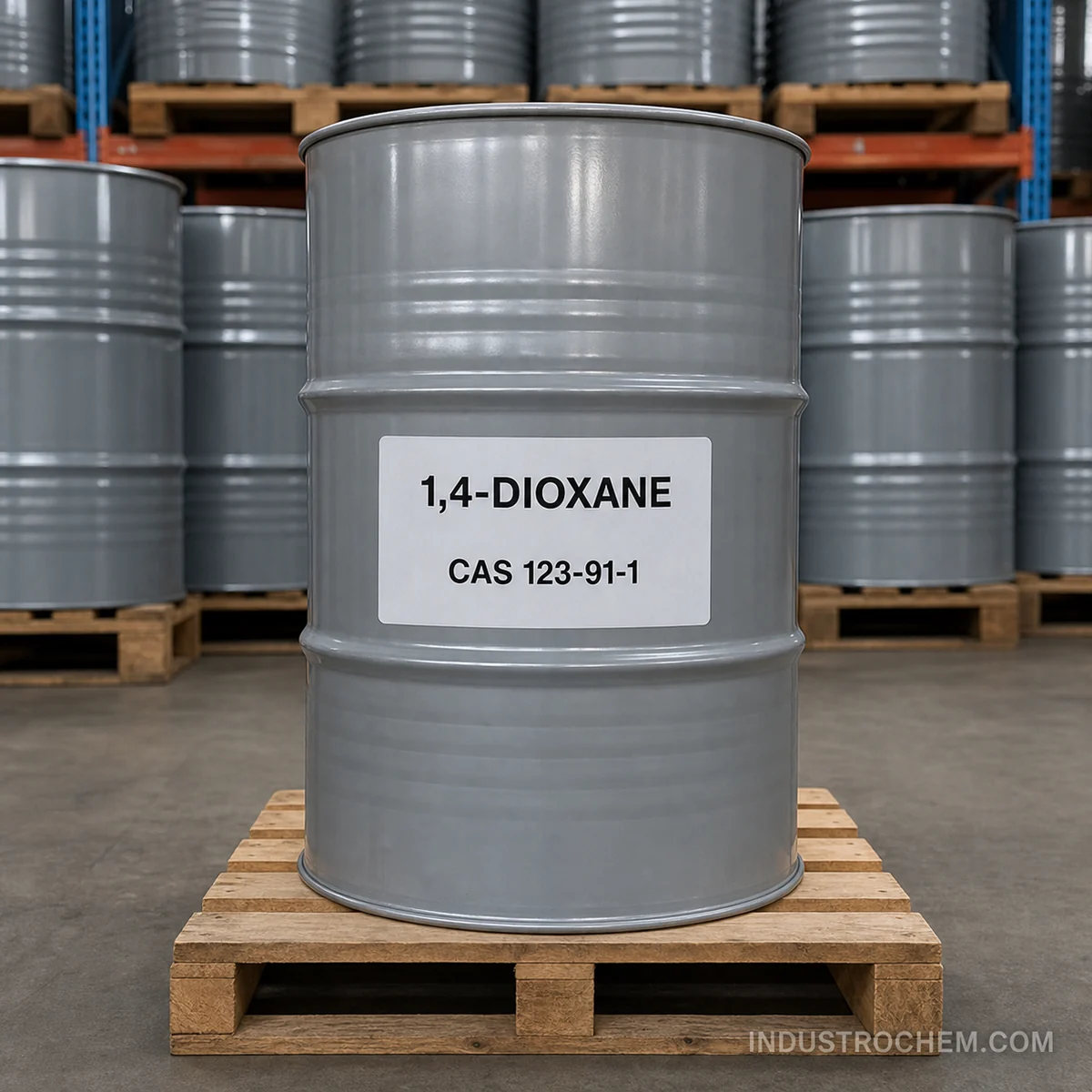
1,4-Dioxane, CAS 123-91-1, is a cyclic ether and polar aprotic solvent used in controlled industrial and process applications. This page does not establish pharmaceutical-grade or consumer-product suitability. Confirm assay, water, peroxide value, acidity, nonvolatile residue, stabilization or storage requirements, packaging compatibility, and current TDS, COA, and SDS.
1,4-Dioxane CAS 123-91-1
- CAS: 123-91-1
- Synonyms: p-Dioxane, 1,4-diethylene dioxide, Diethylene dioxide, Dioxane
- Einecs: 204-661-8
- Molecular Formula: C₄H₈O₂
- Grade: Confirm assay, water, peroxide value, acidity, nonvolatile residue, and any stabilization or storage requirement
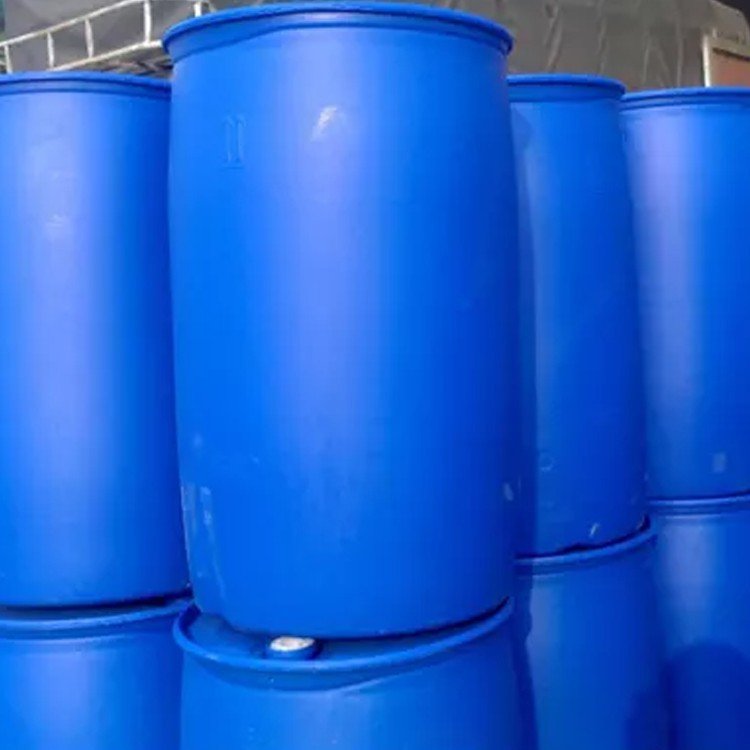
- Package: Confirm packaging compatible with the offered liquid, transport classification, and destination requirements
Product Description
Product name: 1,4-Dioxane
Recognized names: 1,4-Dioxane; p-Dioxane; diethylene dioxide; diethylene ether
Chemical identity: 1,4-Dioxane is a cyclic ether and polar aprotic solvent. It is used only in controlled industrial and process settings; this page does not establish pharmaceutical grade or consumer-product suitability.
CAS Number: 123-91-1
EINECS accession number: 204-661-8
Chemical formula: C₄H₈O₂
Molar mass: 88.11 g/mol
Melting point: 12 °C
Boiling point: 101 °C
Water solubility: miscible with water
Density: 1.033 g/cm³
Flash point: 12 °C
Technical use: solvent or process medium for selected resins, oils, waxes, and controlled chemical synthesis. Suitability must be assessed against the buyer’s process, impurity limits, exposure controls, and destination requirements.
Offered specification: confirm assay, water, peroxide value, acidity, nonvolatile residue, and stabilization or storage requirements
Packaging: confirm a compatible package for the offered solvent, transport classification, and destination requirements
FAQ - Technical & Supply Chain
-
Q:
Are 1,4-Dioxane and 1,3-Dioxolane interchangeable solvents?
A: No. 1,4-dioxane is CAS 123-91-1, while 1,3-dioxolane is a different cyclic acetal with a different CAS number and reactivity. Confirm the full name, CAS number, water content and stabilizer or inhibitor status before approving a substitute solvent. -
Q:
Which release specifications matter for 1,4-Dioxane?
A: Agree GC assay, water, peroxide value, aldehydes, acidity, nonvolatile residue, color and relevant ether or glycol-ether impurities. Peroxide control is important because ethers can form peroxides during storage. The COA should state the test methods, production date and whether the result is for stabilized material. -
Q:
What must be checked for bulk 1,4-Dioxane handling?
A: Confirm the approved package, seals, previous-cargo cleanliness, vapor control, grounding, ventilation and receiving-tank capacity. Check the current SDS and destination transport requirements before shipment. Avoid prolonged storage, contamination and heat, and document peroxide testing and container-opening controls at the receiving site.
Ordering & Documentation
Key information for document requests, quotations, and supply planning.
Documents
COA, TDS, SDS/MSDS and packing details are available on request.
Quotation
Send the CAS number, grade, quantity, packing preference and destination.
Sample & Supply
Support is available for samples, trial orders, bulk and repeat supply.
Storage & Shipping
Product-specific conditions are confirmed before order.