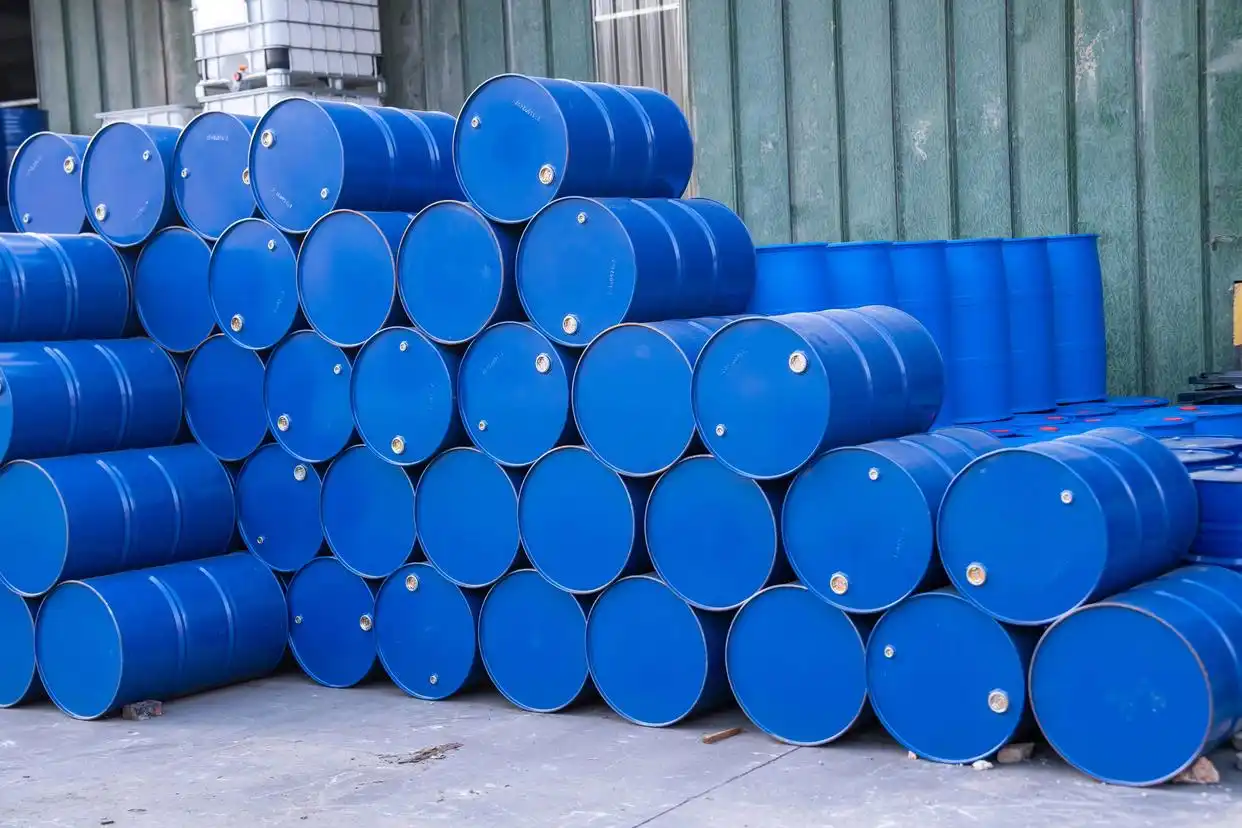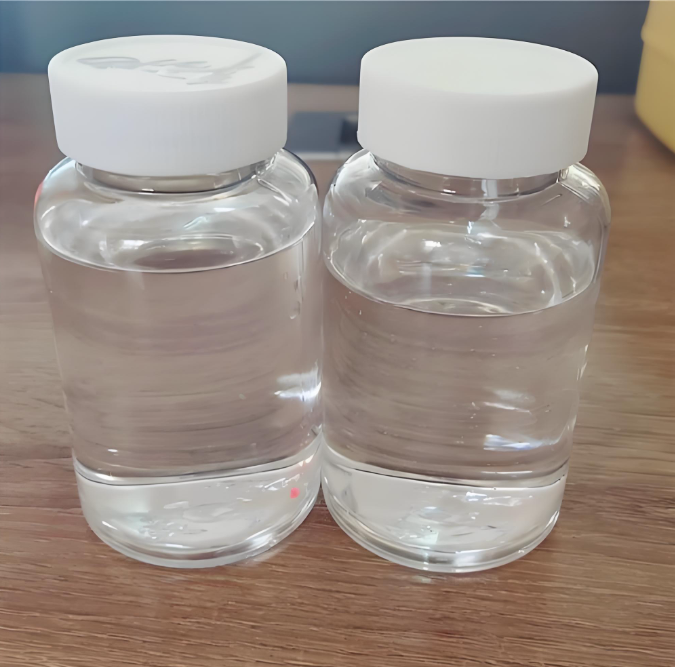
1-Octanol is a straight-chain fatty alcohol characterized by an eight-carbon saturated chain and a terminal primary hydroxyl group. This colorless, oily liquid, commonly identified as capryl alcohol or n-octyl alcohol, functions as a powerful surface-tension reducer and surfactant intermediate, a reaction mechanism that enables it to act as an effective defoaming agent in industrial aqueous systems by disrupting stable foam membranes. Primarily utilized in the production of ester-based plasticizers and synthetic lubricants, this C8 alcohol serves as a critical industrial supply for the synthesis of octyl phthalates and various specialty esters used in the polymer industry. Its amphiphilic nature also makes it an essential standard in pharmaceutical and environmental sciences for determining the octanol-water partition coefficient , which predicts the lipophilicity and bioaccumulation of chemical substances. We provide competitive factory pricing for high-purity volumes to meet customized specifications, ensuring reliable bulk supply supported by complete technical documentation including MSDS, TDS, COA.
1-Octanol CAS 111-87-5
- CAS: 111-87-5
- Synonyms: n-Octanol, Capryl alcohol, Octyl alcohol, Alcohol C8, n-Octyl alcohol.
- Einecs: 203-917-6
- Molecular Formula: C8H18O
- Grade: Industrial Grade / Reagent Grade
- Package: 170kg/drum or ISO tank
Product Description
Technical Data
| Property | Specification (Standard Industrial Grade) |
| Appearance | Clear, colorless liquid |
| Assay (GC) | ≥ 99.0% |
| Refractive Index (20°C) | 1.428 – 1.430 |
| Boiling Point | 194°C – 195°C |
| Flash Point | 81°C |
| Moisture Content | ≤ 0.1% |
| Acid Value (mg KOH/g) | ≤ 0.1 |
Applications
- Chemical Synthesis: Serves as a primary raw material for manufacturing phthalate plasticizers (DOP replacement) and octyl esters.
- Defoaming Agent: Widely used in the paper, textile, and oil drilling industries to control foam in large-scale aqueous processing.
- Lubricants & Greases: Employed in the production of synthetic fatty acid esters for high-performance industrial lubricants.
- Fragrance & Flavor: Acts as a base intermediate for various fruity and floral esters in the perfume and food additive sectors.
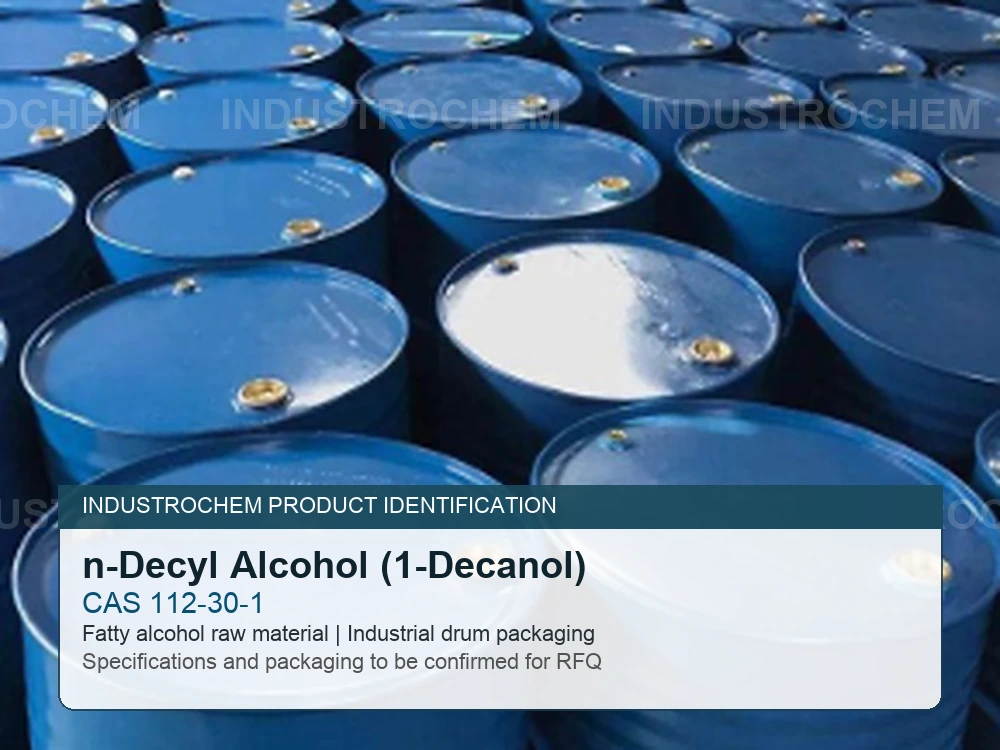
For surfactant or ester synthesis using a longer-chain fatty alcohol, n-Decyl Alcohol is a separate intermediate.
Storage & Safety
- Storage: Store in a cool, well-ventilated area away from heat, sparks, and open flames. 1-Octanol is stable under normal conditions but should be kept in tightly closed containers made of carbon steel or stainless steel to prevent contamination and evaporation.
- Safety & PPE: This substance is classified as causing skin and serious eye irritation. Industrial operators must wear chemical safety goggles, protective coveralls, and nitrile or neoprene gloves. In confined spaces, use local exhaust ventilation or an organic vapor respirator. Ensure eye wash stations are readily accessible in the handling area.
Quality Assurance
Our quality control process focuses on the strict elimination of branched isomers and moisture. Every batch of 1-Octanol is analyzed via Gas Chromatography (GC) to ensure the straight-chain purity exceeds 99% and Karl Fischer Titration for precise water content measurement. This ensures the material remains chemically stable during esterification and provides predictable partition coefficients in technical research applications.
FAQ - Technical & Supply Chain
-
Q:
What is 1-Octanol CAS 111-87-5?
A: 1-Octanol, also called n-octanol, capryl alcohol, or octyl alcohol, is a straight-chain C8 primary fatty alcohol with the molecular formula C8H18O and molecular weight about 130.23 g/mol. It is a colorless, oily liquid with a mild fatty-citrus or rose-like odor and is widely used as a chemical intermediate. -
Q:
How does 1-Octanol differ from 2-ethylhexanol?
A: 1-Octanol is the linear primary alcohol with the hydroxyl group at the end of an unbranched C8 chain. 2-Ethylhexanol is a branched C8 isomer commonly used for large-volume plasticizer production; the linear structure of 1-octanol gives different odor, solvent, esterification, and application properties. -
Q:
Which industrial applications use 1-Octanol?
A: It is used to synthesize esters for plasticizers, fragrances, and flavors; as an extraction solvent; as a defoamer in fermentation and aqueous industrial systems; and as a surfactant or coating intermediate. It is also used as a model compound for pharmaceutical partitioning studies. -
Q:
What purity, appearance, and storage conditions are typical for 1-Octanol?
A: The material is normally supplied as a clear, colorless oily liquid with minimum purity around 99% for industrial and reagent grades. It should be stored in closed containers in a cool, ventilated area away from ignition sources and oxidizing agents because it is combustible and slightly soluble in water.
Ordering & Documentation
Key information for document requests, quotations, and supply planning.
Documents
COA, TDS, SDS/MSDS and packing details are available on request.
Quotation
Send the CAS number, grade, quantity, packing preference and destination.
Sample & Supply
Support is available for samples, trial orders, bulk and repeat supply.
Storage & Shipping
Product-specific conditions are confirmed before order.