







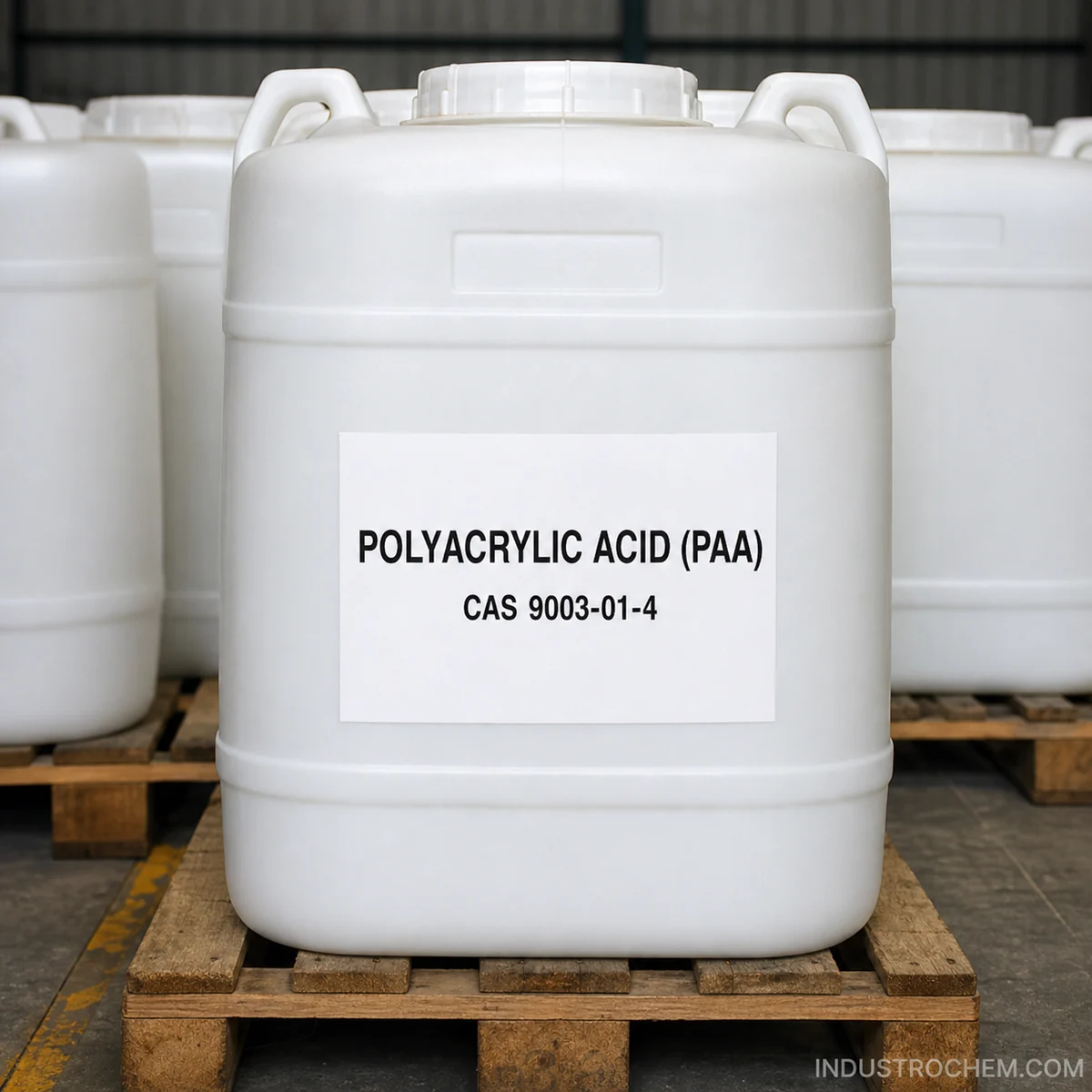
Polyacrylic Acid (PAA) CAS 9003-01-4

Release time: 2025-07-24

Physicochemical properties

PropertyDescription
Chemical NamePolyacrylic acid
CAS Number9003-01-4
Molecular Formula(C3​H4​O2​)n
Molecular WeightVariable, typically < 10,000 (can range from a few hundred to several million depending on the degree of polymerization)
AppearanceWhite solid (low molecular weight) or colorless to amber viscous liquid (aqueous solution)
DensityApproximately 1.09 g/mL (30% aqueous solution); other sources report 1.2 g/mL at 25°C
Melting PointAround 106°C (some sources report 12.5°C or undetermined)
Boiling Point116°C (at atmospheric pressure); other sources report 502.0 ± 45.0°C at 760 mmHg
ViscosityHighly viscous in aqueous solutions, viscosity increases with molecular weight and concentration
StabilityStable under normal conditions; gradually loses water upon heating, forming an anhydride above 100°C; decomposes slowly above 250°C with the release of carbon dioxide

Application Areas

Water treatment: As a scale inhibitor and dispersant, it is used in the circulating cooling water system of power plants and chemical plants to prevent scale and corrosion.
Food industry: used as thickener, gel agent and humectant for jelly, ice cream, candy and other products.
Cosmetics: used as stabilizer and humectant of lotion and facial mask.
Paper and Textile: Used as an additive to improve paper strength or enhance textile properties.
Petrochemical industry: used as a corrosion inhibitor, emulsifier, to protect equipment and reduce crude oil viscosity.
Battery field: As a binder for lithium batteries, it enhances battery safety and cycling performance.

Storage conditions

Conventional conditions: Store in a cool, dry, and well ventilated place, away from direct sunlight and high temperatures.
Special requirements:
It needs to be stored separately from acids and bases to prevent chemical reactions.
Solid products require double-layer packaging (inner polyethylene bag+outer woven bag) to prevent moisture.
Liquid products require corrosion-resistant sealed containers and regular inspections of their properties.

Safety precautions

Health protection:
Skin contact: Immediately rinse with clean water for 15 minutes.
Eye contact: Rinse and seek medical attention.
Leakage handling:
Small leakage: Absorb with inert materials and collect in a closed container.
Massive leakage: Wear protective equipment to prevent entry into water bodies.
Firefighting measures:
Extinguishing agent: dry powder, foam or carbon dioxide, avoid direct flowing water.
Firefighters are required to wear respirators and protective clothing.

Go Back

Recommended articles