










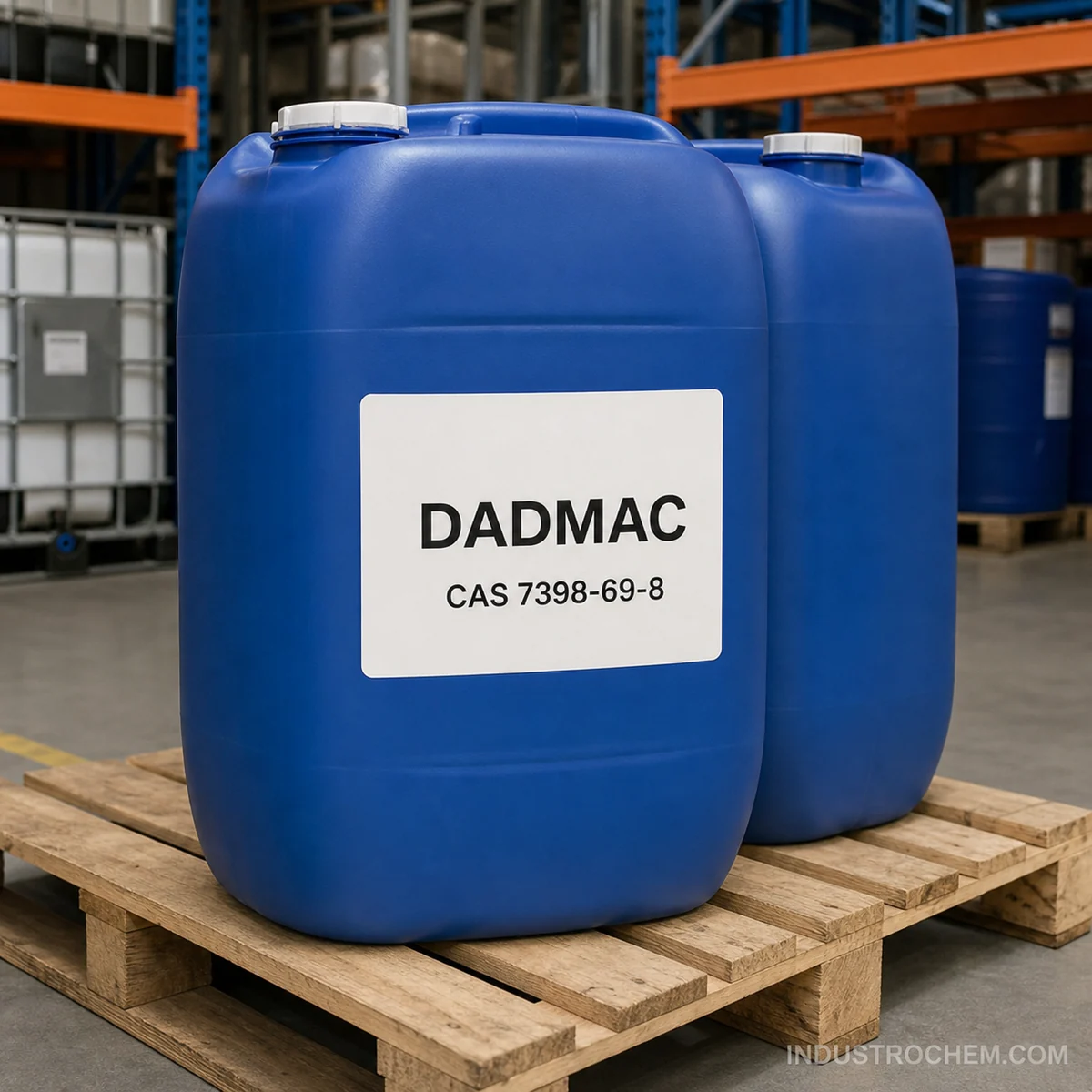
Diallyldimethylammonium Chloride (DADMAC), CAS 7398-69-8, is also known as DMDAAC. It is a quaternary-ammonium cationic monomer used to produce polyDADMAC and related copolymers for water treatment, papermaking, textiles and other industrial applications. Confirm the monomer identity, required aqueous concentration or physical form, inhibitor level, and intended polymer system before requesting specifications and quotation.
Diallyldimethylammonium Chloride (DADMAC) CAS 7398-69-8
- CAS: 7398-69-8
- Synonyms: Diallyldimethylammonium chloride; DADMAC; DMDAAC
- Einecs: 230-993-8
- Molecular Formula: C₈H₁₆ClN
- Grade: Confirm the current product-specific specification.
- Package: Confirm packaging for the offered material and destination requirements.
Product Description
Diallyldimethylammonium Chloride (DADMAC)
Molecular formula: C₈H₁₆ClN; EC Number: 230-993-8.
DADMAC is a monomer, not PolyDADMAC. PolyDADMAC is a distinct polymer with CAS 26062-79-3.
Technical context
DADMAC is a monomer for polymerization systems. The intended polymer system and any required solution concentration must be confirmed for the quoted material.
Confirm the current product-specific specification.
This page does not establish a fixed grade, assay, package, stock position, lead time, certificate or document availability.
For the corresponding cationic polymer material, see PolyDADMAC Powder.
RFQ information
Before an RFQ, confirm the monomer identity, required form or concentration, and intended polymer system.
FAQ - Technical & Supply Chain
-
Q:
Are DADMAC and Diallyldimethylammonium Chloride the same monomer?
A: Yes. DADMAC, DMDAAC and diallyldimethylammonium chloride all identify the quaternary ammonium monomer with CAS 7398-69-8 and molecular formula C8H16ClN. Do not confuse it with polyDADMAC, the cationic polymer made from this monomer, which has a different polymer CAS and much higher molecular weight. -
Q:
What is DADMAC used for?
A: It is mainly polymerized into polyDADMAC or copolymers for water treatment coagulants and flocculants, papermaking, textiles, antistatic finishes, adhesives, personal care formulations, oilfield chemistry, mining and mineral recovery. The end-use polymer and charge demand should determine the suitable monomer grade and concentration. -
Q:
Which specifications should be agreed for industrial DADMAC?
A: Confirm active DADMAC content, appearance, pH, chloride or sodium chloride limit, APHA colour, polymer content and any residual allyl or inhibitor specification. For aqueous grades, also agree concentration, density and the exact test basis so different offers can be compared on the same terms. -
Q:
What form and concentration should be specified?
A: Commercial DADMAC is commonly supplied as a colorless to light-yellow aqueous solution, often around 60% or 65% active content, rather than as a neat solid. Specify the physical form and active-content basis in the polymerization recipe, then compare quotations only after normalizing concentration, inhibitor level and impurities. -
Q:
How should DADMAC be stored and handled?
A: For aqueous DADMAC solution, keep the specified container closed and protect it from contamination and leakage. Confirm storage temperature, inhibitor status, shelf life and handling instructions against the current specification and SDS for the material being quoted; these conditions can differ by concentration and formulation. -
Q:
What should be confirmed before requesting a DADMAC quotation?
A: Confirm the exact monomer identity, required aqueous concentration or other physical form, intended polymer or application, packaging volume and destination requirements. Also confirm the current product-specific specification, inhibitor type and storage advice for the offered material before comparing suppliers.
Ordering & Documentation
Key information for document requests, quotations, and supply planning.
Documents
Tell us which documents your procurement team needs. Before an order, we will check whether the quoted source can provide them for the offered lot.
Quotation
Send the CAS number, grade, quantity, packing preference and destination.
Sample & Supply
Ask whether samples, trial quantities or repeat orders are possible. We will check each request against the sourced product and current offer.
Storage & Shipping
Product-specific conditions are confirmed before order.