










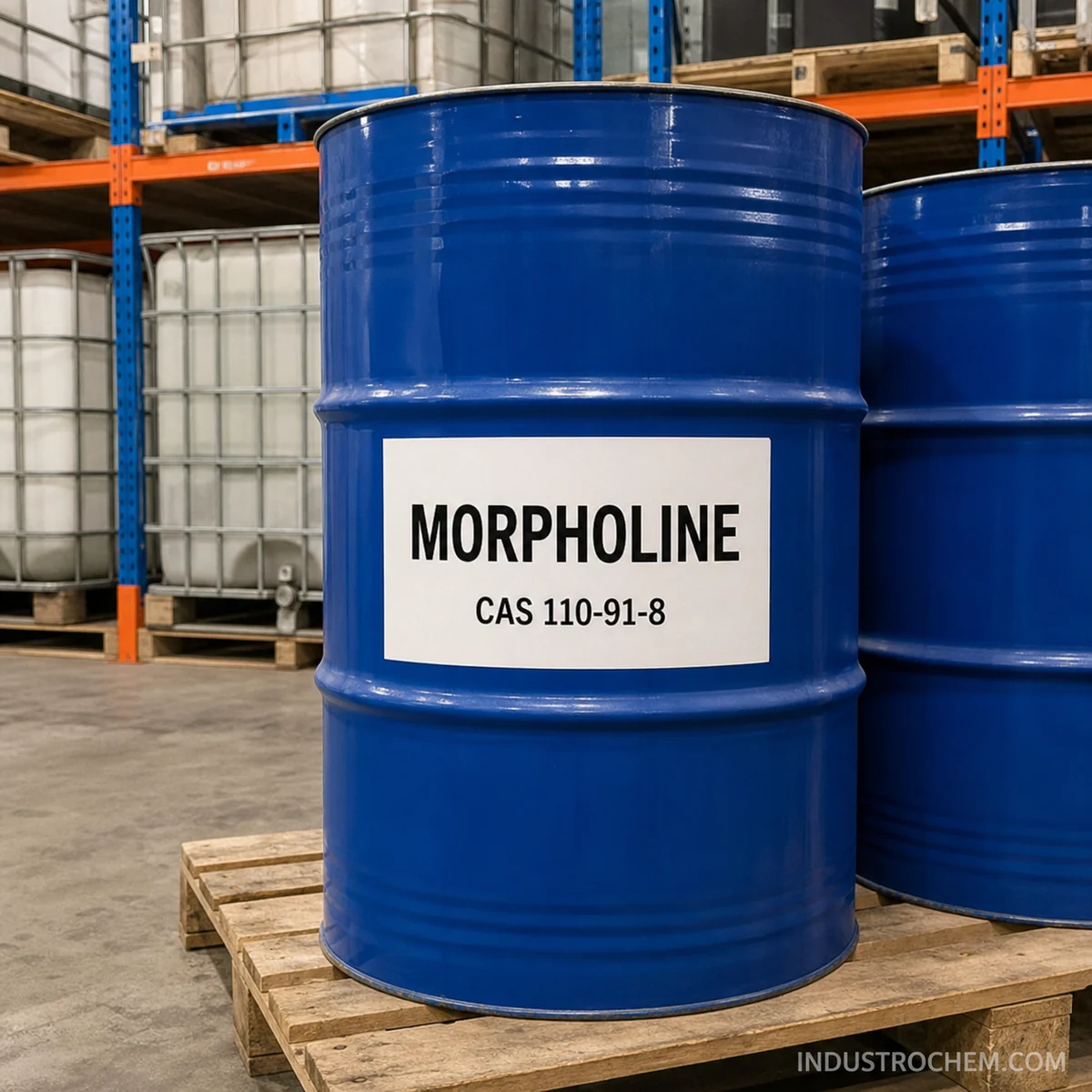
Morpholine is a heterocyclic secondary amine supplied as a chemical raw material, characterized by a six‑membered ring containing both oxygen and nitrogen atoms. Identified by CAS 110‑91‑8, it exhibits moderate basicity and high water miscibility, allowing effective pH control and buffering behavior in controlled chemical systems. It is typically applied as a neutralizing amine and functional intermediate in industrial chemical processes where stable alkalinity, solubility, and compatibility with aqueous systems are required. From a supply perspective, the material is available with competitive factory pricing, customized specifications, and supporting documentation including MSDS, TDS, COA, suitable for regulated bulk supply for industrial use.
Morpholine CAS 110‑91‑8
- CAS: 110-91-8
- Synonyms: Morpholine, Tetrahydro-1,4-oxazine, Diethylene oximide, Neutralizing amine
- Einecs: 203‑815‑1
- Molecular Formula: C4H10NO
- Grade: Industrial grade 99%
- Package: 200kg iron drum or 50kg plastic drum packaging
Product Description
Product Name:Morpholine
Chemical formula:C4H10NO
CAS Number:110-91-8
Molecular Weight (Mr): 88.1278
Physical and chemical properties: colorless oily liquid
It is mainly used in the production of rubber vulcanization accelerator, and is also used in the synthesis of surfactants, textile printing and dyeing auxiliaries, medicines, and pesticides. Morpholine is also used as a catalyst for cissosodiene polymerization, corrosion inhibitor, optical bleach, morpholine is also a dye, resin, wax, pregester, casein, etc. Due to the unique chemical properties of morpholine, it is one of the fine petrochemical products with important commercial uses, which can be used to prepare rubber vulcanization accelerators, rust inhibitors, corrosion inhibitors, detergents, descaling agents, surface activators, optical bleaches, fruit preservatives, textile printing and dyeing auxiliaries, etc., and have a wide range of uses in rubber, medicine, pesticides, dyes, coatings and other industries
FAQ - Technical & Supply Chain
-
Q:
Is morpholine different from ethanolamines or other alkanolamines?
A: Yes. Morpholine is a heterocyclic amine with a distinct ring structure, giving it different chemical and physical properties from alkanolamines. -
Q:
Is morpholine mainly supplied for industrial chemical applications?
A: It is commonly supplied as an industrial raw material and intermediate rather than as a finished end‑use product.
Documents and Product Support
For product review and sourcing evaluation, supporting documents can be coordinated according to the product type, inquiry stage, and order requirements.
- COA for batch-based quality reference
- TDS for key physical and chemical information
- SDS / MSDS for handling, storage, and safety reference
- Packing information for sample, trial, and bulk orders
- Technical communication based on application and specification requirements
Information to Confirm Before Quotation
Clear sourcing information helps reduce specification mismatch and allows a more accurate quotation before sample or bulk order discussion.
- Product name and CAS number
- Application or intended end use
- Required purity, grade, or specification
- Sample quantity, trial order, or bulk demand
- Preferred packing form or net weight
- Destination country or port
- Required documents or compliance expectations
Packaging, Storage, and Handling Notes
Packaging form, storage conditions, shelf life, and shipment arrangements should be confirmed according to the product characteristics, package size, and destination requirements.
Before order confirmation, buyers are advised to review the corresponding product documents and confirm whether any special storage, labeling, or handling requirements apply.
Sample, Bulk Order and Repeat Supply Support
Support can be arranged for sample discussion, bulk supply planning, packaging confirmation, and routine sourcing communication based on the actual product and order requirements.
For repeat-use formulations or long-term procurement plans, buyers may discuss specification consistency, packaging preferences, delivery expectations, and document coordination in advance.


