










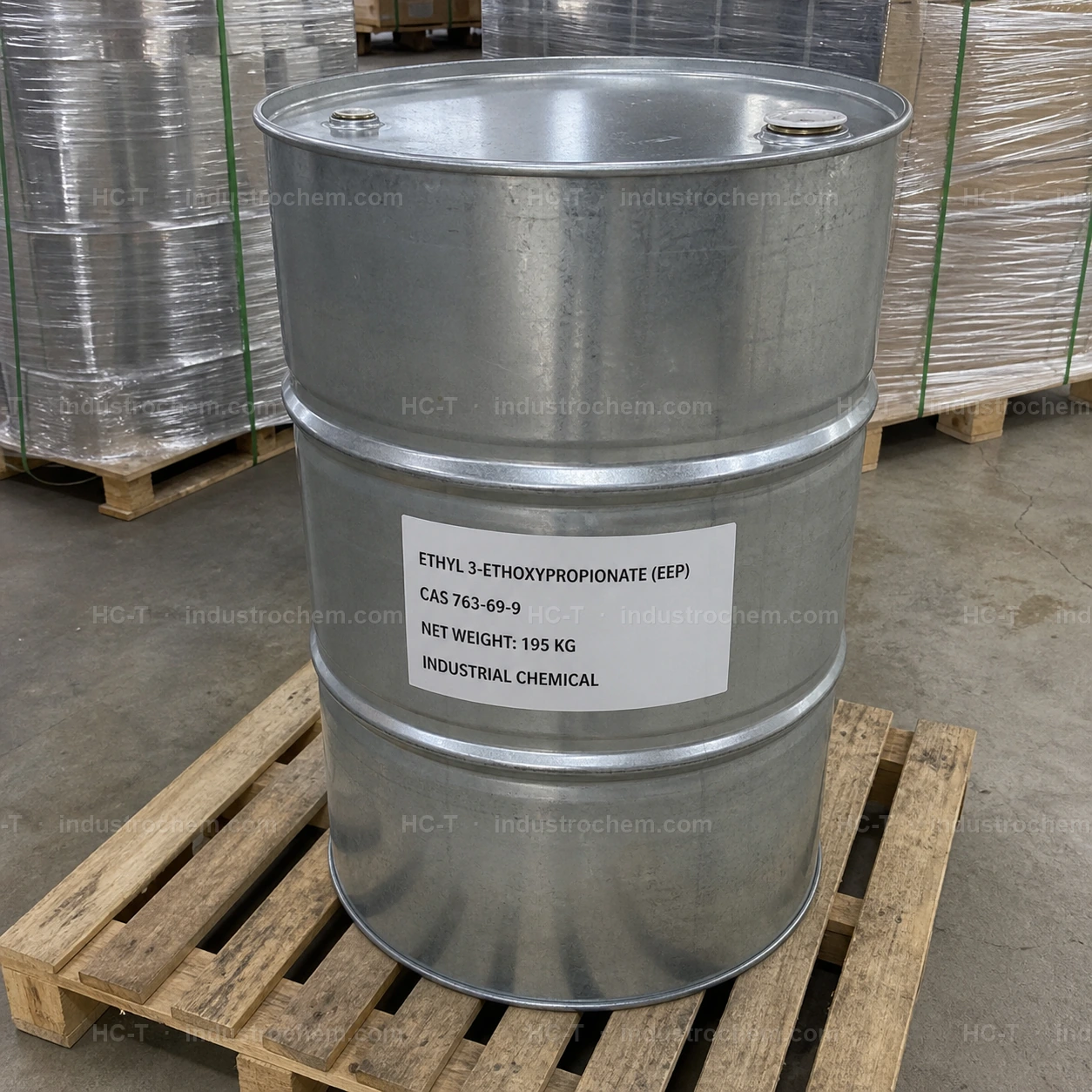
Ethyl 3-ethoxypropionate (EEP), also known as ethyl 3-ethoxypropanoate, CAS 763-69-9, is a slow-evaporating ester solvent for industrial, automotive and bake-coating formulations. Grades are controlled by purity, water, colour and acidity, with COA, TDS and SDS for the agreed coatings-solvent grade.
Ethyl 3-Ethoxypropionate (EEP) CAS 763-69-9
- CAS: 763-69-9
- Synonyms: Ethyl 3-ethoxypropionate; EEP; Ethyl 3-ethoxypropanoate
- Einecs: Not specified
- Molecular Formula: C7H14O3
- Grade: Industrial coatings-solvent grade; purity, water, colour and acidity controlled by agreed method
- Package: Steel drums or IBCs; transport and storage conditions confirmed from the current SDS
- Appearance: Clear colourless liquid
- Molecular formula: C7H14O3
- Primary role: Slow-evaporating ester solvent for coatings
- Quality controls: GC purity, water, APHA colour, acidity, density and distillation profile
- Selection basis: Resin compatibility, application method, bake schedule and film appearance
Product Description
Ethyl 3-ethoxypropionate (EEP, CAS 763-69-9) is a high-boiling ester solvent used to tune evaporation and solvency in industrial coating systems. It is most relevant where a slower solvent contribution is needed for flow, levelling or film appearance, but the final choice depends on the resin system, application method, bake schedule and VOC constraints in the target market.
Applications
- Industrial, automotive and bake-coating formulations that need a slow-evaporating ester solvent.
- Coil, can and appliance coatings after resin and cure compatibility have been checked.
- Printing inks, adhesives and composite formulations where the solvent balance supports the application process.
- Solvent blends designed to improve flow and levelling without changing the final resin package.
Specification points
Define GC purity, water content, APHA colour, acidity, density and distillation/evaporation expectations. Related solvents such as PGMEA or DPM can be part of a blend, but do not provide the same evaporation and solvency profile as EEP.
Process fit
EEP is selected for finished-formulation behaviour rather than for a generic high-boiling-solvent claim. Resin solubility, viscosity, spray response, bake conditions and final film appearance should be assessed together.
FAQ - Technical & Supply Chain
-
Q:
Why is EEP used in bake-coating formulations?
A: EEP provides a relatively slow-evaporating ester-solvent contribution that can support flow and levelling. Its value depends on the full solvent blend, resin chemistry, application method and bake schedule, so performance must be confirmed in the finished coating. -
Q:
Which specifications should be compared between EEP suppliers?
A: Compare GC purity, water, APHA colour, acidity, density and the agreed distillation or evaporation test. These properties affect storage stability, colour-sensitive systems and consistency of the final coating formulation. -
Q:
Can EEP be replaced by any high-boiling solvent?
A: Not automatically. A substitute may change resin solvency, application viscosity, flash-off behaviour, levelling and final film appearance. Replacement decisions should be supported by a controlled formulation comparison rather than by boiling point alone.
Ordering & Documentation
Key information for document requests, quotations, and supply planning.
Documents
COA, TDS, SDS/MSDS and packing details are available on request.
Quotation
Send the CAS number, grade, quantity, packing preference and destination.
Sample & Supply
Support is available for samples, trial orders, bulk and repeat supply.
Storage & Shipping
Product-specific conditions are confirmed before order.
