










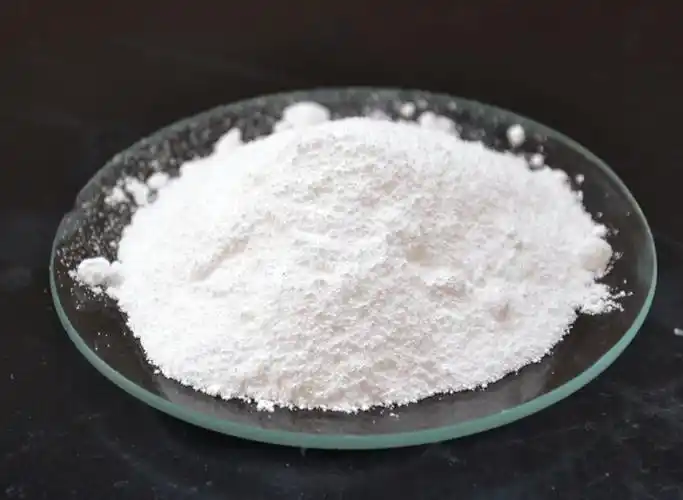
Strontium Carbonate (CAS 1633-05-2) is a high-purity inorganic compound employed as a key precursor in the production of magnetic ferrite components and PTC thermistors. Chemically designated as Carbonic acid strontium salt, this fine white powder functions to modify magnetic properties and stabilize glass formulations in display substrates. As a refined Strontium(II) carbonate material, it ensures precise stoichiometry and reactivity for sintering processes in electronic component manufacturing. We ensure bulk supply capabilities for this product, providing access to competitive factory pricing and customized specifications to meet specific particle size requirements. Full technical documentation, including MSDS, TDS, COA, is available to support compliance and quality assurance.
Strontium Carbonate CAS 1633-05-2
- CAS: 1633-05-2
- Synonyms: Carbonic acid strontium salt, Strontium(II) carbonate, Strontianite, Strontium salt of carbonic acid
- Einecs: 216-643-7
- Molecular Formula: 𝑆𝑟𝐶𝑂3
- Grade: Electronic Grade, Magnetic Grade, Industrial Grade
- Package: 25kg/bag (multi-layer paper or PP/PE), 500kg or 1000kg jumbo bags.
Product Description
Strontium Carbonate is an odorless, tasteless, white fine powder. Our Electronic Grade is produced via a specialized carbonization process that achieves a purity of ≥99.0%. Unlike standard industrial grades, the electronic grade is characterized by its strict control over alkali metals and heavy metal impurities.
In the electronics industry, it serves as a critical precursor for manufacturing PTC thermistors, multilayer ceramic capacitors (MLCC), and strontium ferrites. Its ability to absorb X-rays also makes it a vital component in specialty glass formulations. We provide various particle size distributions (D50) to meet the specific sintering requirements of different high-tech applications.
Physicochemical Properties
| Property | Electronic Grade (Standard) | High Purity Grade |
|---|---|---|
| SrCO3 Content | ≥ 99.0% | ≥ 99.5% |
| Barium (Ba) | ≤ 0.3% | ≤ 0.1% |
| Calcium (Ca) | ≤ 0.1% | ≤ 0.05% |
| Iron (Fe) | ≤ 0.001% | ≤ 0.0005% |
| Chloride (Cl) | ≤ 0.01% | ≤ 0.005% |
| Total Alkali (as Na) | ≤ 0.1% | ≤ 0.05% |
| Moisture (H2OH2O) | ≤ 0.3% | ≤ 0.2% |
| Insoluble in HCl | ≤ 0.05% | ≤ 0.02% |
| Bulk Density | 0.4 – 0.8 g/cm³ | 0.4 – 0.8 g/cm³ |
| Appearance | White Powder | White Powder |
Applications
- Electronic Components: Used in the production of PTC thermistors, varistors, and Multilayer Ceramic Capacitors (MLCC). It is a key ingredient in strontium titanate ceramics.
- Magnetic Materials: Essential for manufacturing strontium hexaferrite magnets, which are used in speakers, motors, and magnetic separators due to their high coercive force.
- Specialty Glass: Used in the production of color television glass (X-ray shielding), optical glass, and display panels to improve refractive index and chemical durability.
- Pyrotechnics: Serves as a high-quality red colorant in fireworks and flares, providing a deep, vibrant crimson flame.
- Metallurgy: Used as a flux in aluminum and magnesium smelting to remove impurities and improve alloy grain structure.
- Nanomaterials: High-purity grades are used as precursors for advanced strontium-based nanomaterials and chemical reagents.
Storage Conditions
- Ventilation: Store in a cool, dry, and well-ventilated warehouse.
- Moisture Protection: The product should be kept in original sealed packaging to prevent moisture absorption and caking.
- Segregation: Keep away from strong acids to prevent the release of carbon dioxide and the formation of soluble strontium salts.
- Handling: Palletized storage is recommended to avoid contact with damp floors.
Safety Precautions
- Inhalation: Avoid breathing dust. Use local exhaust ventilation or wear an approved N95/P2 dust mask during handling.
- Eye & Skin Contact: May cause mild mechanical irritation. Wear safety goggles and protective gloves. In case of contact, rinse thoroughly with water.
- Ingestion: Low acute toxicity, but avoid ingestion. Wash hands thoroughly after handling.
- Environmental: While strontium carbonate is not highly toxic to the environment, prevent large-scale spills from entering water systems or drainage.
FAQ - Technical & Supply Chain
-
Q:
What is the chemical classification of Strontium Carbonate CAS 1633-05-2?
A: Strontium Carbonate (CAS 1633-05-2) is an inorganic carbonate salt, chemically identified as Carbonic acid strontium salt, used as a raw material in advanced ceramic and glass industries. -
Q:
Is this material suitable for manufacturing magnetic components?
A: Yes, this product is typically applied in the production of strontium ferrite magnets and electronic ceramic components.
Documents and Product Support
For product review and sourcing evaluation, supporting documents can be coordinated according to the product type, inquiry stage, and order requirements.
- COA for batch-based quality reference
- TDS for key physical and chemical information
- SDS / MSDS for handling, storage, and safety reference
- Packing information for sample, trial, and bulk orders
- Technical communication based on application and specification requirements
Information to Confirm Before Quotation
Clear sourcing information helps reduce specification mismatch and allows a more accurate quotation before sample or bulk order discussion.
- Product name and CAS number
- Application or intended end use
- Required purity, grade, or specification
- Sample quantity, trial order, or bulk demand
- Preferred packing form or net weight
- Destination country or port
- Required documents or compliance expectations
Packaging, Storage, and Handling Notes
Packaging form, storage conditions, shelf life, and shipment arrangements should be confirmed according to the product characteristics, package size, and destination requirements.
Before order confirmation, buyers are advised to review the corresponding product documents and confirm whether any special storage, labeling, or handling requirements apply.
Sample, Bulk Order and Repeat Supply Support
Support can be arranged for sample discussion, bulk supply planning, packaging confirmation, and routine sourcing communication based on the actual product and order requirements.
For repeat-use formulations or long-term procurement plans, buyers may discuss specification consistency, packaging preferences, delivery expectations, and document coordination in advance.


