









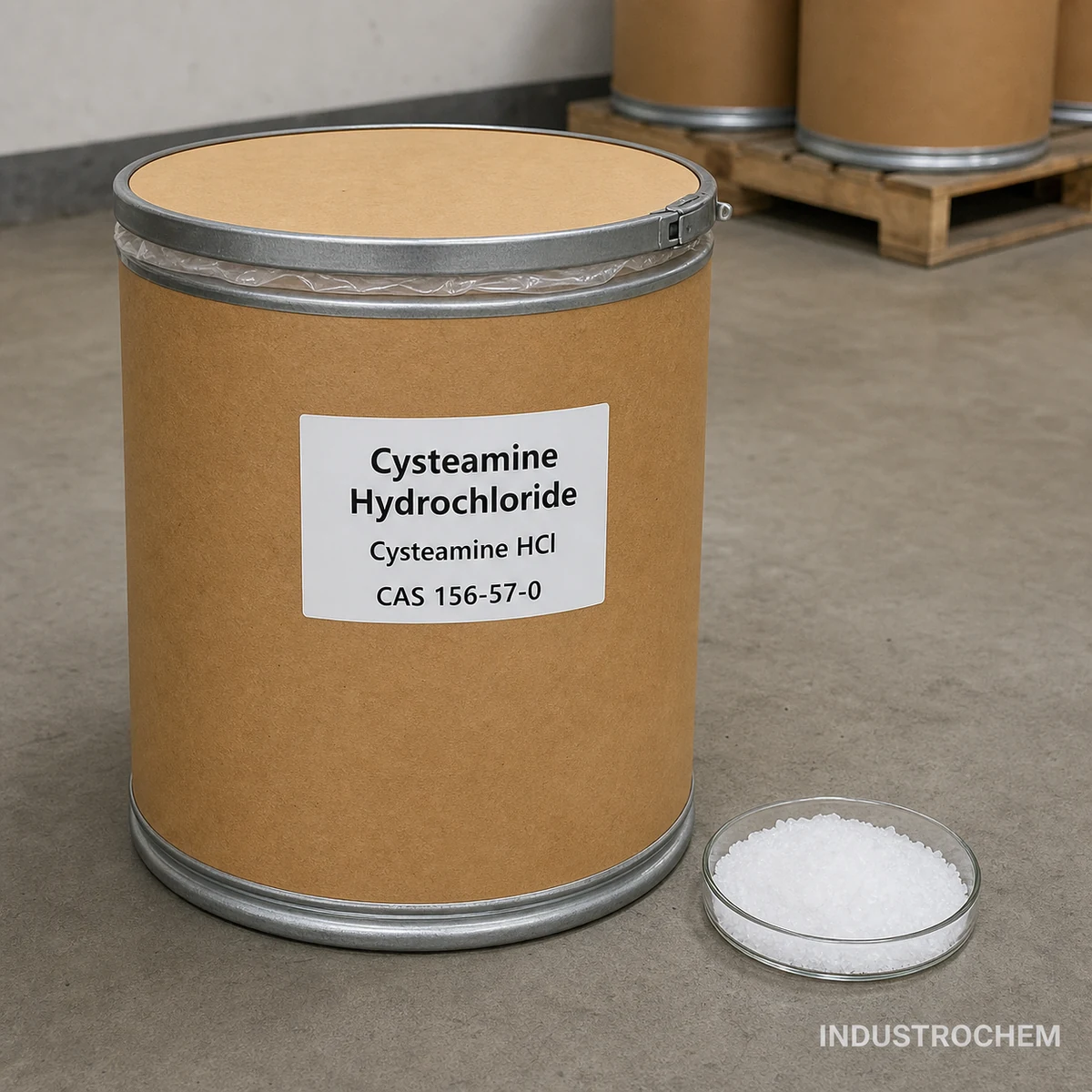
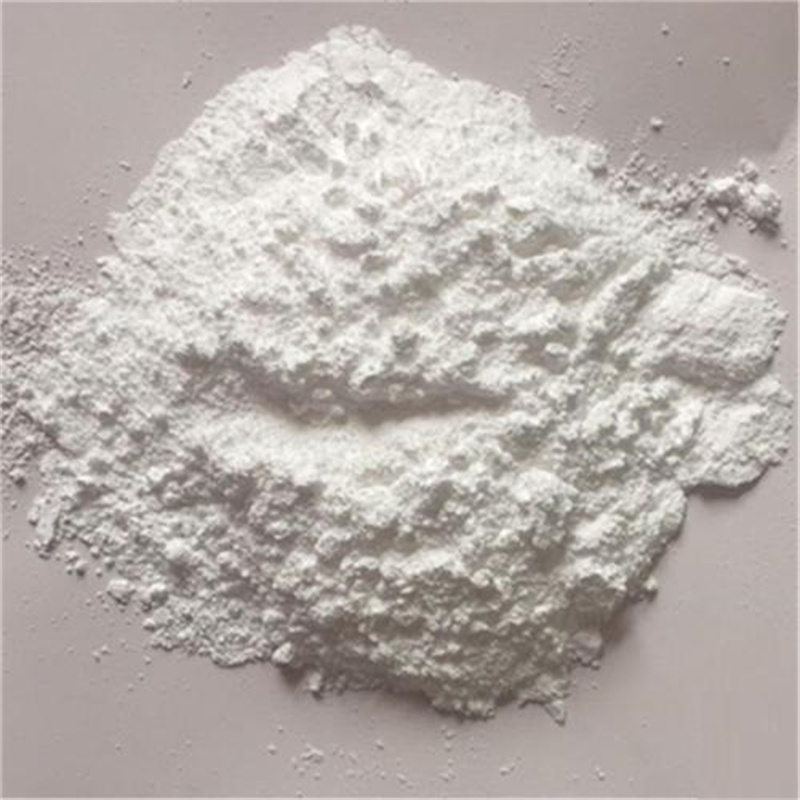
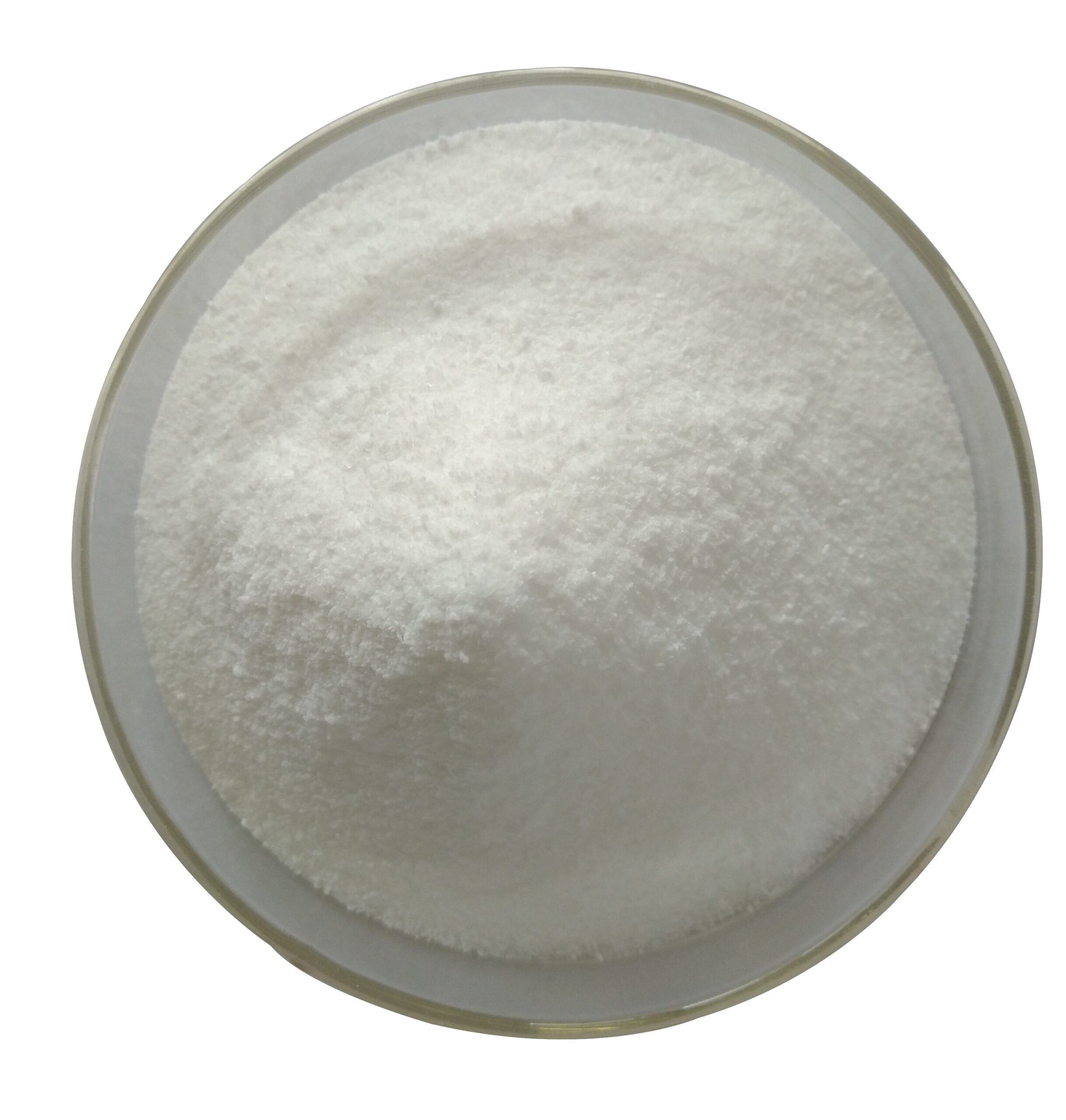
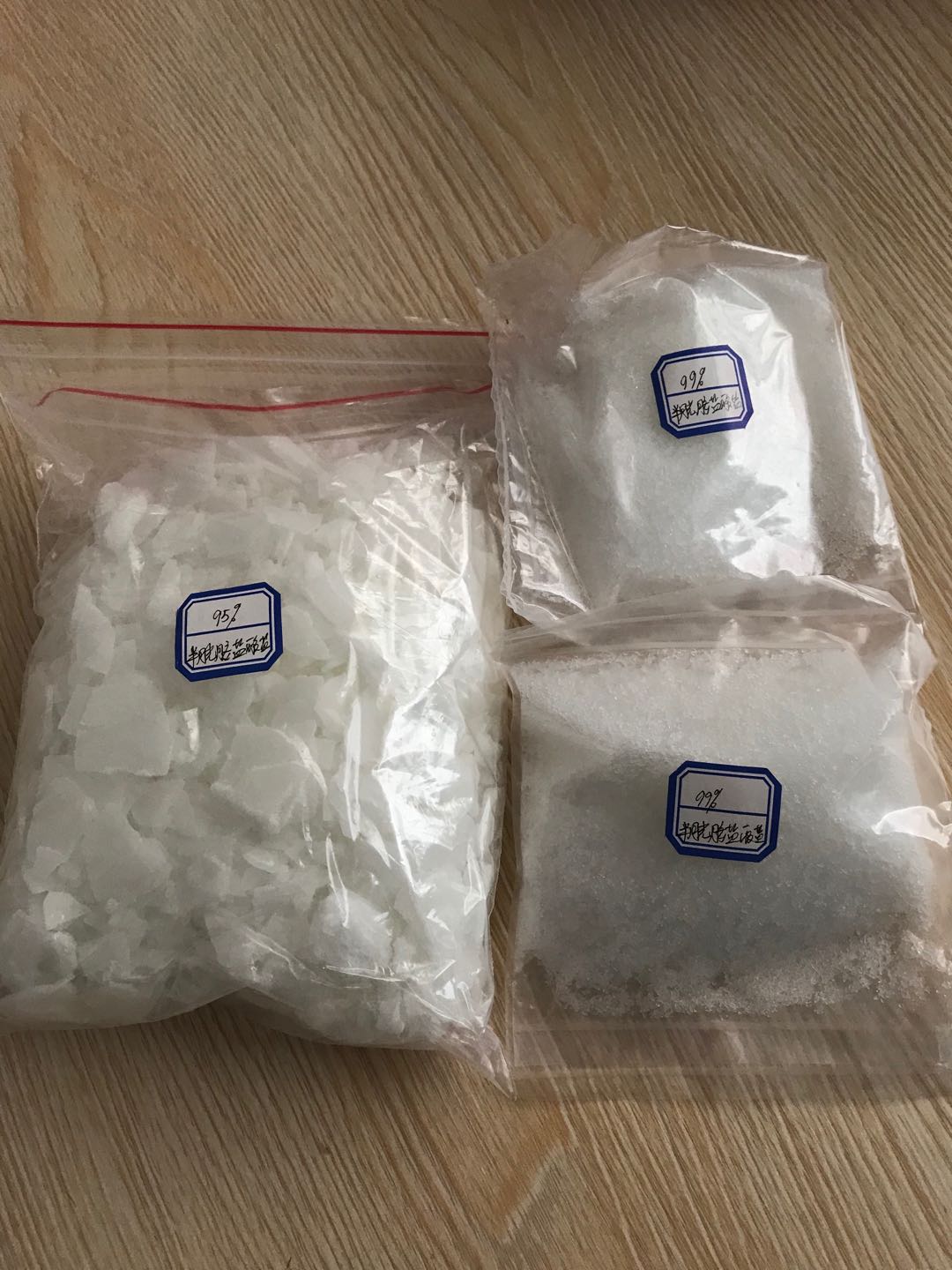
• Cysteamine Hydrochloride CAS 156-57-0
  • Cysteamine Hydrochloride CAS 156-57-0
  • Cysteamine Hydrochloride CAS 156-57-0

Cysteamine Hydrochloride CAS 156-57-0

Cysteamine Hydrochloride (2-aminoethanethiol hydrochloride, CAS 156-57-0) is supplied as an aminothiol intermediate for thiol-based synthesis, reduction reactions, and specialty chemical processing. It is commonly used in pharmaceutical intermediate applications and related laboratory or industrial systems where water solubility and reactive thiol functionality are required. COA, TDS, and SDS may be provided according to the supplied grade.

  • CAS: 156-57-0
  • Synonyms: Cysteamine hydrochloride, 2-aminoethanethiol hydrochloride, β-mercaptoethylamine hydrochloride, Mercaptoethylamine hydrochloride
  • Einecs: 205-858-1
  • Molecular Formula: C₂H₈ClNS
  • Grade: 99%
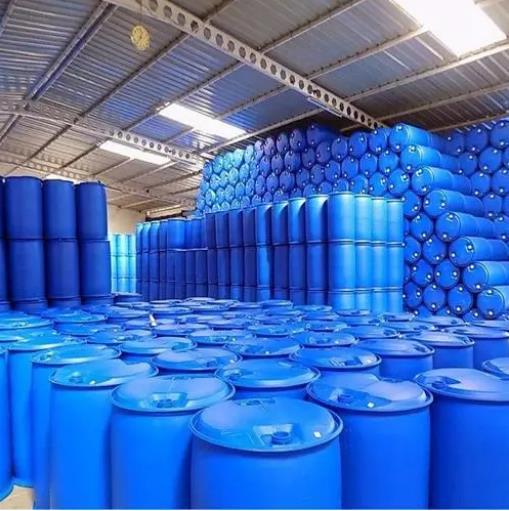
  • Package: 25kg/drum, or as required
Request a quote
Share:

Product Description

Product Overview

Cysteamine Hydrochloride is supplied as an aminothiol intermediate used in thiol-mediated reactions, reduction systems, and specialty synthesis processes. It is suitable for pharmaceutical intermediate manufacturing, laboratory synthesis, and selected industrial processing applications where reactive sulfur functionality and good water solubility are required.

This material is commonly handled as a hygroscopic solid and is typically selected where controlled reactivity, salt form stability, and compatibility with aqueous systems are important for process design and formulation handling.

Product Information / Specifications

Product Name Cysteamine Hydrochloride
CAS Number 156-57-0
Chemical Identity Aminothiol intermediate
Synonym 2-Aminoethanethiol Hydrochloride
Molecular Formula C₂H₈ClNS
Molecular Weight 113.61
Supply Form Typically supplied as solid material, according to grade
Grade Availability Available according to supplied grade and specification
Technical Documents COA, TDS, and SDS may be provided according to the supplied grade

Physical & Chemical Properties

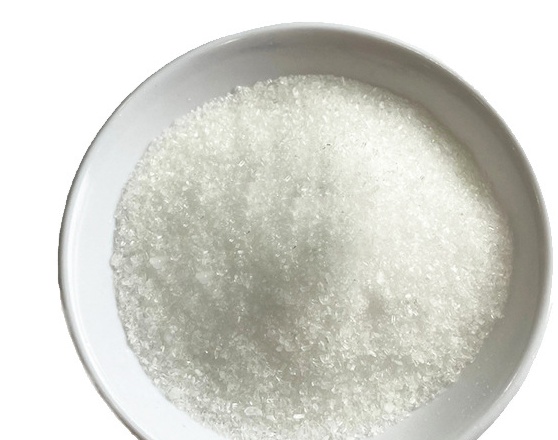
Appearance Typically supplied as white to off-white crystalline solid
Solubility Soluble in water; solubility behavior may vary with solvent system and grade
Handling Character Hygroscopic; should be protected from moisture exposure during handling
Stability Considerations Sensitive to air, light, heat, and oxidizing conditions depending on storage and process environment
Typical Purity Available according to grade; purity specification may vary by supplied standard

Applications

  • Pharmaceutical intermediate synthesis where thiol functionality is required in process chemistry.
  • Reduction and nucleophilic reaction systems used in specialty chemical manufacturing.
  • Laboratory and research synthesis involving aminothiol chemistry and related reaction pathways.
  • Fine chemical processing where a water-soluble thiol salt is preferred for controlled handling.
  • Process development work requiring sulfur-containing intermediate materials for reaction optimization and scale-up studies.

Packaging

Packaging may vary by grade and supply arrangement. The material is commonly packed in sealed containers suitable for moisture-sensitive chemical products.

Storage Conditions

Store in a cool, dry, and well-ventilated place in tightly closed containers. Protect from moisture, direct light, and air exposure.

Depending on the supplied grade and handling protocol, controlled or refrigerated storage may be used where required by the specification.

Safety Precautions

  • Avoid contact with skin, eyes, and clothing during handling.
  • Use appropriate protective equipment and suitable workplace ventilation.
  • Avoid dust formation and keep away from strong oxidizing agents.
  • Handle and store in accordance with the applicable SDS and site safety procedures.
  • Dispose of residues and packaging in accordance with local regulatory requirements.

FAQ - Technical & Supply Chain

  • Q:

    What is Cysteamine Hydrochloride and how does it work?

    A: Cysteamine Hydrochloride (CAS 156-57-0, 2-aminoethanethiol hydrochloride) is an aminothiol compound with a reactive thiol group. It functions as a reducing agent and nucleophile in pharmaceutical synthesis, particularly in the production of cysteamine-based drugs and as an intermediate for thiol-containing active pharmaceutical ingredients.
  • Q:

    What are the main applications of Cysteamine Hydrochloride?

    A: Cysteamine Hydrochloride is primarily used in pharmaceutical synthesis as an intermediate for cysteamine bitartrate and other thiol-based drugs. It is also applied in biochemical research for thiol-disulfide exchange studies, as a reducing agent in protein chemistry, and as a raw material for specialty chemical synthesis.
  • Q:

    What purity is available for Cysteamine Hydrochloride?

    A: Cysteamine Hydrochloride is supplied at ≥99% purity. Key specifications include assay by titration, appearance as a white to off-white crystalline powder, and controlled levels of heavy metals and related impurities suitable for pharmaceutical intermediate use.
  • Q:

    How should Cysteamine Hydrochloride be stored and handled?

    A: Cysteamine Hydrochloride should be stored in a cool, dry place in tightly sealed containers, protected from light and moisture. Due to its thiol functionality, it may oxidize over time if exposed to air. Proper PPE including gloves and safety goggles should be used during handling.
  • Q:

    What is the difference between Cysteamine and Cysteamine Hydrochloride?

    A: Cysteamine Hydrochloride is the hydrochloride salt form of cysteamine (2-aminoethanethiol). The hydrochloride form offers improved water solubility, stability, and handling characteristics compared to the free base. Both forms are used in pharmaceutical applications, with the hydrochloride salt being more common for intermediate synthesis.
  • Q:

    What documentation is provided with Cysteamine Hydrochloride?

    A: Each shipment includes a Certificate of Analysis (COA) confirming purity, assay results, and key specifications. A Technical Data Sheet (TDS) and Safety Data Sheet (SDS) are also provided, covering physical properties, handling guidelines, and regulatory information.
Documents

Documents and Product Support

For product review and sourcing evaluation, supporting documents can be coordinated according to the product type, inquiry stage, and order requirements.

  • COA for batch-based quality reference
  • TDS for key physical and chemical information
  • SDS / MSDS for handling, storage, and safety reference
  • Packing information for sample, trial, and bulk orders
  • Technical communication based on application and specification requirements
Quotation

Information to Confirm Before Quotation

Clear sourcing information helps reduce specification mismatch and allows a more accurate quotation before sample or bulk order discussion.

  • Product name and CAS number
  • Application or intended end use
  • Required purity, grade, or specification
  • Sample quantity, trial order, or bulk demand
  • Preferred packing form or net weight
  • Destination country or port
  • Required documents or compliance expectations
Storage & Handling

Packaging, Storage, and Handling Notes

Packaging form, storage conditions, shelf life, and shipment arrangements should be confirmed according to the product characteristics, package size, and destination requirements.

Before order confirmation, buyers are advised to review the corresponding product documents and confirm whether any special storage, labeling, or handling requirements apply.

Supply Support

Sample, Bulk Order and Repeat Supply Support

Support can be arranged for sample discussion, bulk supply planning, packaging confirmation, and routine sourcing communication based on the actual product and order requirements.

For repeat-use formulations or long-term procurement plans, buyers may discuss specification consistency, packaging preferences, delivery expectations, and document coordination in advance.

Contact Form

Use our contact form to send us your questions, suggestions or comments. We will respond as soon as possible.