









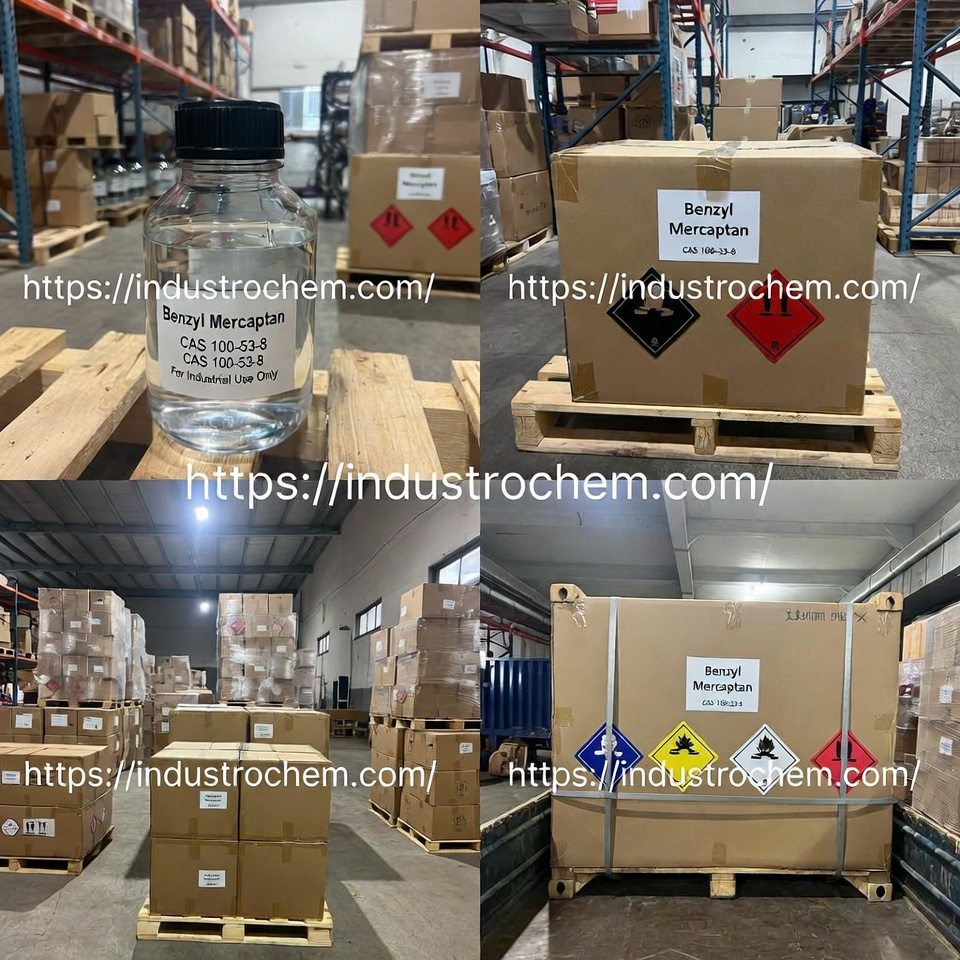
Benzyl Mercaptan, also called benzyl thiol or phenylmethanethiol, CAS 100-53-8, EC 202-862-5, is an aromatic thiol with molecular formula C₇H₈S and molecular weight 124.21 g/mol. It is strongly odorous and can oxidize to dibenzyl disulfide, making odor containment, assay, disulfide content, water, color and storage history important. It is supplied for controlled sulfur chemistry rather than open handling or unsupported end-use claims.
Benzyl Mercaptan CAS 100-53-8
- CAS: 100-53-8
- Synonyms: Benzyl Mercaptan, Benzyl Thiol, Phenylmethanethiol, α-Toluenethiol, alpha-Toluenethiol
- Einecs: 202-862-5
- Molecular Formula: C₇H₈S
- Grade: Confirm identity, GC assay, dibenzyl disulfide and other oxidation products, residual benzyl compounds, water and color against the current COA; review storage history for odor-sensitive handling.
- Package: State quantity and destination; confirm the current compatible sealed container, closure, secondary containment, net fill, storage conditions and transport requirements against the SDS before quotation.
Product Description
Identity and physicochemical profile
| Item | Technical guidance |
|---|---|
| Product identity | Benzyl mercaptan; phenylmethanethiol |
| CAS / EC | 100-53-8 / 202-862-5 |
| Formula / molecular weight | C₇H₈S / 124.21 g/mol |
| Chemical character | Reactive, strongly odorous thiol susceptible to oxidation to dibenzyl disulfide |
| Key purchase controls | Identity, GC assay, dibenzyl disulfide, residual benzyl halide or alcohol, water, color, acidity and package integrity |
Applications and grade selection
Benzyl Mercaptan may be evaluated in thioether formation, sulfur-functional intermediate synthesis, oxidation studies and other controlled organosulfur reactions. The buyer should qualify nucleophilic reactivity, oxidation state and impurity carryover in the intended route.
- Define assay and individual limits for dibenzyl disulfide and route-derived benzyl impurities.
- Plan closed sampling, odor control, compatible packaging and headspace management.
- Compare conversion, selectivity and downstream odor or sulfur impurity removal at small scale.
Storage and handling
Keep sealed in odor-tight compatible packaging away from oxidizers, heat and ignition sources under the current SDS. Minimize air exposure and use a controlled procedure for sampling, resealing and spill management.
Safety, documentation and procurement
Use closed transfer, effective local exhaust and suitable personal protection. Procurement should define assay, disulfide limit, quantity, packaging, destination, odor controls and dangerous-goods requirements.
FAQ - Technical & Supply Chain
-
Q:
Is Benzyl Mercaptan the same substance as benzenemethanethiol?
A: Yes. Benzyl mercaptan, benzenemethanethiol, benzylthiol and alpha-toluenethiol identify the same thiol under CAS 100-53-8. They are not benzyl alcohol or dibenzyl disulfide. Use the full name, CAS number and an agreed chromatographic identity test when matching material. -
Q:
Which quality and handling points should be confirmed for bulk Benzyl Mercaptan?
A: Confirm GC purity, color, water, density or refractive index where required, and any agreed limit for oxidation products such as dibenzyl disulfide. The quotation should also define container type and net weight; use the current SDS and supplier storage statement for closed-container, temperature and ventilation requirements.
Ordering & Documentation
Key information for document requests, quotations, and supply planning.
Documents
COA, TDS, SDS/MSDS and packing details are available on request.
Quotation
Send the CAS number, grade, quantity, packing preference and destination.
Sample & Supply
Support is available for samples, trial orders, bulk and repeat supply.
Storage & Shipping
Product-specific conditions are confirmed before order.