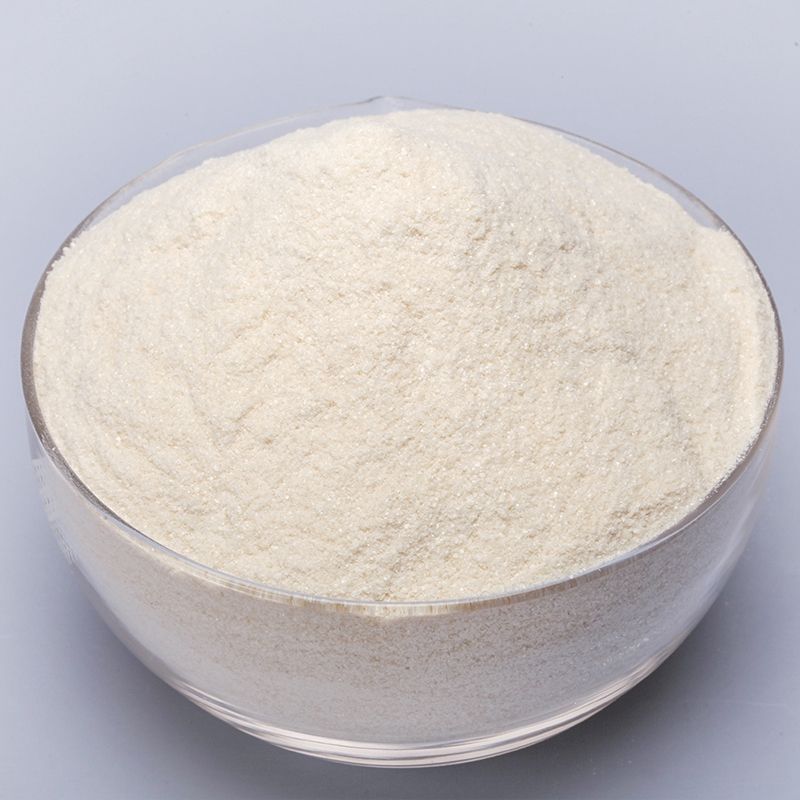










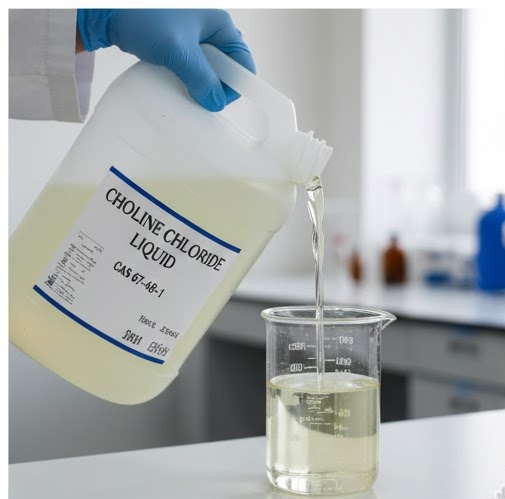
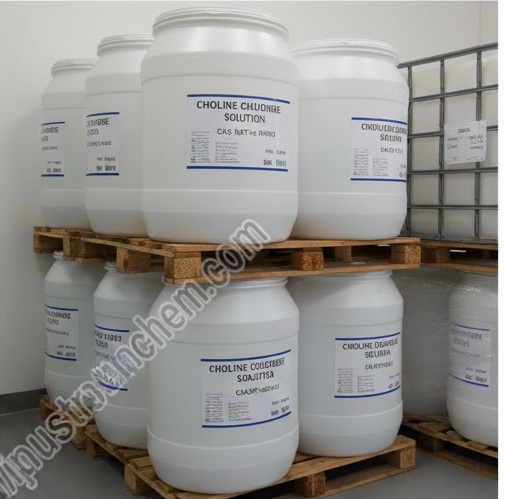
Choline Chloride Liquid CAS 67-48-1 is a high-concentration aqueous solution chemically defined as (2-hydroxyethyl)trimethylammonium chloride , functioning primarily as a vital methyl donor in animal nutrition and a clay stabilizer in the oil and gas industry. Commonly referred to as Vitamin B4, this clear, colorless to slight amber liquid provides a more cost-effective and dust-free alternative to powder forms for automated feed mills. It is utilized to prevent fatty liver syndrome in poultry by accelerating lipid metabolism and serves as a temporary clay swelling inhibitor in hydraulic fracturing fluids. We provide professional access to this material with competitive factory pricing and the ability to meet customized specifications (Standard 70% or 75% concentration) for various manufacturing requirements. Our commitment to technical transparency ensures that every shipment is accompanied by comprehensive MSDS, TDS, COA documentation to support your quality assurance protocols, and we maintain capacity for consistent bulk supply (Flexibags or IBC Drums) to facilitate large-scale industrial operations.
Choline Chloride Liquid CAS 67-48-1
- CAS: 67-48-1
- Synonyms: (2-Hydroxyethyl)trimethylammonium chloride, Vitamin B4 liquid, Hepacholine, Biocolina, Aqueous Choline Chloride
- Einecs: 200-655-4
- Molecular Formula: C5H14ClNO
- Grade: Industrial Grade
- Package: 200 kg drum / 1000 kg IBC (customizable)
Product Description
Technical Specifications
Understanding the physical limits of the product is vital for your tank storage and nozzle systems. Here is the standard profile for the liquid variant:
| Property | Description |
|---|---|
| Product Name | Choline Chloride Liquid |
| CAS Number | 67-48-1 |
| Chemical Formula | C5H14ClNO |
| Active Content | Typically 70% or 75% Aqueous Solution |
| Appearance | Clear, colorless to slight amber liquid |
| Odor | Slight, characteristic amine odor (faintly fishy) |
| pH Value | 6.5 – 8.0 |
| Solubility | Completely miscible in water |
| Freezing Point | Approx. -18°C (varies slightly by concentration) |
Key Applications: More Than Just a Vitamin
Choline is often called the “metabolic essential.” Its liquid form is primarily used in the following sectors:
1. Poultry (Broilers and Layers) This is the largest consumption sector. Choline is critical for preventing perosis (slipped tendon) and liver enlargement. Using the liquid form allows for precise spraying onto feed pellets post-extrusion, ensuring that the high heat of pelleting doesn’t degrade the vitamin content.
2. Swine Nutrition For pigs, choline is vital for general growth and feed conversion ratios. It ensures the transport of fats from the liver, preventing “fatty liver” syndrome which can drastically reduce the value of the animal.
3. Aquaculture Fish and shrimp have high choline requirements. The liquid form mixes easily into moist aquafeed formulations, ensuring uniform distribution throughout the feed block.
4. Industrial Applications Beyond feed, Choline Chloride is occasionally used as a clay stabilizer in the oil and gas industry (hydraulic fracturing fluids), where it prevents clay swelling in rock formations.
The Liquid Advantage: Why Switch?
If you are currently using powder, switching to liquid requires a setup change, but the ROI is often significant:
- No Dust: eliminates the risk of dust explosions and keeps the mill environment cleaner.
- Homogeneity: Liquid spraying ensures a more even distribution of the nutrient across the feed compared to dry mixing.
- Automated Dosing: Liquids are easier to pump and meter accurately into mixers using computer-controlled systems.
Safety and Handling Measures
While Choline Chloride is a nutritional additive, the concentrated liquid chemical form requires respect.
- Corrosivity: This is the most important factor. Choline Chloride Liquid can be corrosive to mild steel. It acts as an electrolyte. Do not use standard carbon steel pumps or pipes.
- Personal Protective Equipment (PPE): Wear safety glasses and rubber gloves. While not highly toxic, it is an irritant to eyes and skin.
- Ventilation: The product releases a slight amine odor (trimethylamine). Ensure the storage and mixing areas are well-ventilated to prevent odor buildup.
Storage and Tank Requirements
Proper storage is the difference between a smooth operation and a clogged pipe.
- Material Compatibility: Storage tanks, piping, and nozzles must be made of Stainless Steel (304 or 316) or high-quality plastic/polymer (PE, PVC, or fiberglass). Avoid mild steel, galvanized iron, aluminum, or copper, as the liquid will corrode them and become contaminated.
- Temperature Control:
- Low Temps: While it has a low freezing point, viscosity increases as it gets colder. In very cold climates, insulated or heat-traced tanks are recommended to ensure smooth pumping.
- High Temps: Store away from direct sunlight and heat sources to prevent discoloration or slight degradation over long periods.
- Shelf Life: When stored in a sealed container (IBC drum or Flexibag) under proper conditions, the shelf life is typically 2 years.
FAQ - Technical & Supply Chain
-
Q:
What are the logistic advantages of using Choline Chloride Liquid (CAS 67-48-1) over the Powder form?
A: Cost and Hygiene. The Liquid form (typically 70-75%) is 100% active solution without the added weight and cost of carriers (like corn cob or silica) found in the 50% or 60% Powder. Furthermore, liquid dosing systems in feed mills are fully enclosed, eliminating the risk of dust inhalation and cross-contamination associated with handling fine powders. -
Q:
Why is this chemical used in oilfield drilling fluids?
A: In the oil and gas sector, Choline Chloride Liquid functions as a Clay Stabilizer. It is an environmentally friendly alternative to Potassium Chloride (KCl). The cationic choline molecule exchanges with ions on the clay surface, preventing the hydration and swelling of shale formations during drilling, which protects the wellbore stability.
Documents and Product Support
For product review and sourcing evaluation, supporting documents can be coordinated according to the product type, inquiry stage, and order requirements.
- COA for batch-based quality reference
- TDS for key physical and chemical information
- SDS / MSDS for handling, storage, and safety reference
- Packing information for sample, trial, and bulk orders
- Technical communication based on application and specification requirements
Information to Confirm Before Quotation
Clear sourcing information helps reduce specification mismatch and allows a more accurate quotation before sample or bulk order discussion.
- Product name and CAS number
- Application or intended end use
- Required purity, grade, or specification
- Sample quantity, trial order, or bulk demand
- Preferred packing form or net weight
- Destination country or port
- Required documents or compliance expectations
Packaging, Storage, and Handling Notes
Packaging form, storage conditions, shelf life, and shipment arrangements should be confirmed according to the product characteristics, package size, and destination requirements.
Before order confirmation, buyers are advised to review the corresponding product documents and confirm whether any special storage, labeling, or handling requirements apply.
Sample, Bulk Order and Repeat Supply Support
Support can be arranged for sample discussion, bulk supply planning, packaging confirmation, and routine sourcing communication based on the actual product and order requirements.
For repeat-use formulations or long-term procurement plans, buyers may discuss specification consistency, packaging preferences, delivery expectations, and document coordination in advance.