








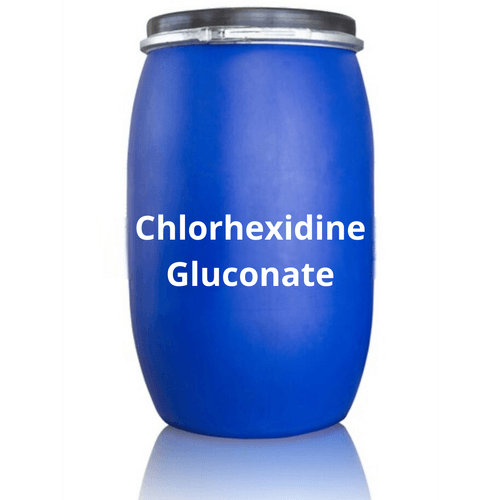
Chlorhexidine Digluconate (CHG), also called chlorhexidine gluconate, CAS 18472-51-0, is the digluconate salt of chlorhexidine supplied as an aqueous solution for antiseptic, disinfectant, oral-care, and preservative-related formulations. Confirm the required concentration and grade, then request a quotation with COA/TDS/SDS for bulk supply.
Chlorhexidine Digluconate (CHG) CAS 18472-51-0
- CAS: 18472-51-0
- Synonyms: Chlorhexidine Digluconate; Chlorhexidine Gluconate; Chlorhexidine Digluconate Solution
- Einecs: 242-354-0
- Grade: Disinfectant / cosmetic / industrial grade
- Package: Standard export packaging
Product Description
Chlorhexidine Digluconate (CHG) CAS 18472-51-0 is the digluconate salt of chlorhexidine with EINECS 242-354-0 and molecular formula C34H54Cl2N10O14.
Synonyms: Chlorhexidine gluconate; Chlorhexidine digluconate solution; CHG.
CAS: 18472-51-0.
Molecular formula: C34H54Cl2N10O14.
It is normally supplied as an aqueous solution.
It is the commercially useful salt form dissolved in water for antiseptic, disinfectant, oral-care, and preservative-related formulations.
It is used as a cationic broad-spectrum antimicrobial active in topical antiseptics, disinfectants, skin cleansers, medical and institutional hygiene products, and oral-care systems where permitted.
A 20% aqueous chlorhexidine digluconate solution is a widely used commercial strength for formulation and industrial handling.
Typical 20% material has an active content of about 19.0-21.0%, a pH of about 5.5-7.0, and a density of about 1.06-1.07 g/mL.
In cosmetic or preservative-related applications it is normally used at low, controlled concentrations.
Confirm active content, appearance, pH, density, and related impurities or residual solvent.
Because it is cationic, it can be incompatible with anionic surfactants, soaps, and certain complex anions, so pH, surfactant charge, and final-system compatibility should be checked.
Store in tightly closed containers in a cool, dry, well-ventilated area away from heat and incompatible materials.
Use appropriate PPE and prevent spills or contamination.
Confirm packaging suitable for the solution supply form and order quantity, and follow the current SDS.
Every batch is checked for active content, appearance, pH, density, and related impurities, with COA/TDS/SDS supplied per grade.
Confirm active content, pH, packaging, and grade as required.
The page is an RFQ entry point and does not state stock, price, MOQ, or fixed lead time.
For an RFQ, state the intended application, required grade, quantity, packaging, destination, and document needs.
FAQ - Technical & Supply Chain
-
Q:
What is Chlorhexidine Digluconate CAS 18472-51-0?
A: Chlorhexidine Digluconate, also called chlorhexidine gluconate or CHG, is the digluconate salt of chlorhexidine. It has CAS 18472-51-0, EC 242-354-0, molecular formula C34H54Cl2N10O14, and molecular weight about 897.76 g/mol, and is normally supplied as an aqueous solution. -
Q:
Is Chlorhexidine Digluconate the same as chlorhexidine base?
A: No. Chlorhexidine base is the unformulated biguanide compound and has a different identity from the soluble digluconate salt. Chlorhexidine Digluconate CAS 18472-51-0 is the commercially useful salt form that is dissolved in water for antiseptic, disinfectant, oral-care, and preservative-related formulations. -
Q:
Why is the 20% solution commonly supplied?
A: A 20% aqueous chlorhexidine digluconate solution is a widely used commercial strength for formulation and industrial handling. Typical 20% material has an active content of about 19.0-21.0%, a pH of about 5.5-7.0, and a density of about 1.06-1.07 g/mL, though the exact range should be confirmed with the supplier. -
Q:
What are the main formulation uses of Chlorhexidine Digluconate?
A: It is used as a cationic broad-spectrum antimicrobial active in topical antiseptics, disinfectants, skin cleansers, medical and institutional hygiene products, and oral-care systems where permitted. In cosmetic or preservative-related applications it is normally used at low, controlled concentrations and must be assessed against the target market regulations. -
Q:
Which compatibility issues should be checked before formulation?
A: Because chlorhexidine digluconate is cationic, it can be incompatible with anionic surfactants, soaps, and certain complex anions, which may reduce activity or cause precipitation. Formulators should check pH, surfactant charge, and final-system compatibility before combining it with other ingredients.
Ordering & Documentation
Key information for document requests, quotations, and supply planning.
Documents
Tell us which documents your procurement team needs. Before an order, we will check whether the quoted source can provide them for the offered lot.
Quotation
Send the CAS number, grade, quantity, packing preference and destination.
Sample & Supply
Ask whether samples, trial quantities or repeat orders are possible. We will check each request against the sourced product and current offer.
Storage & Shipping
Product-specific conditions are confirmed before order.

