










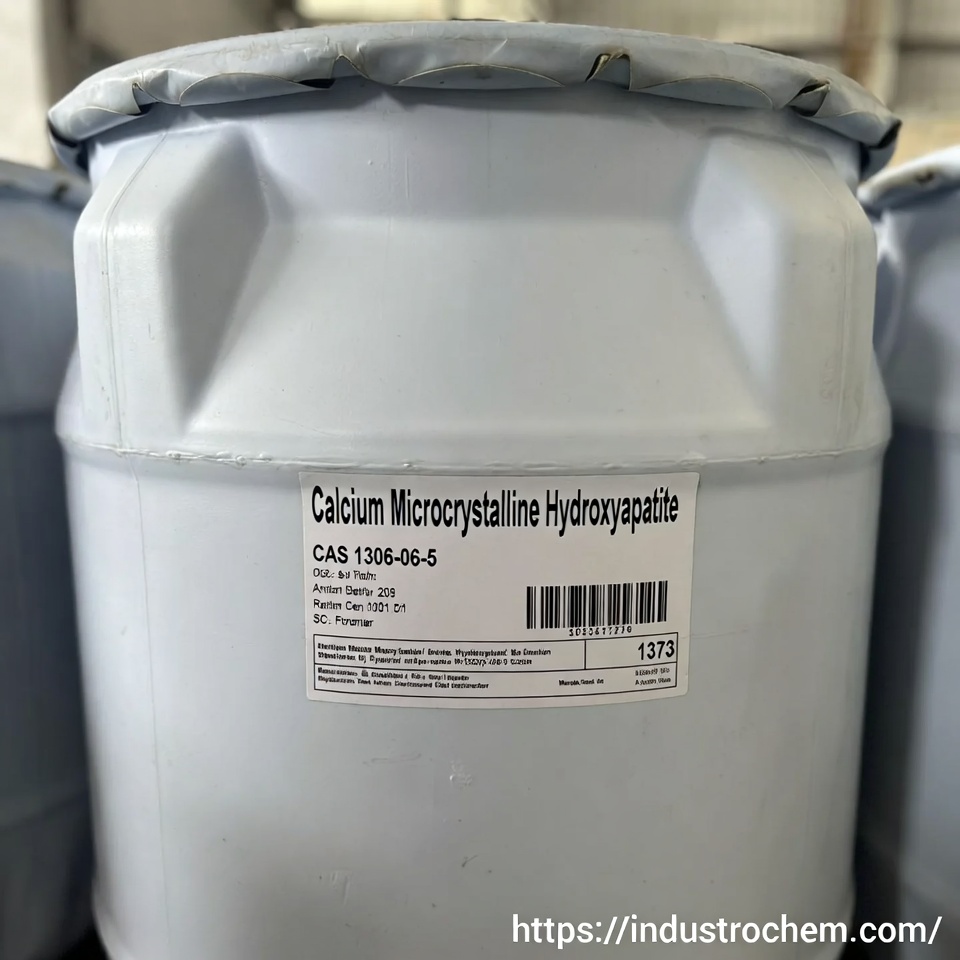
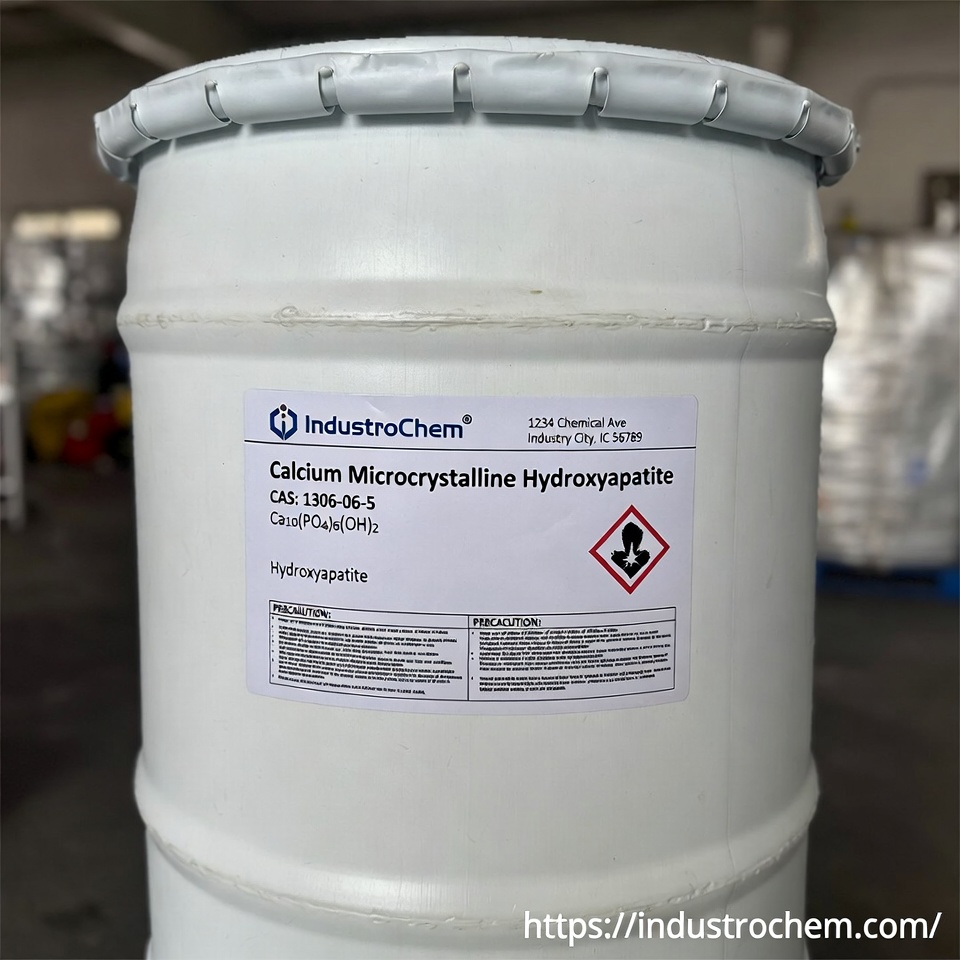
Calcium Microcrystalline Hydroxyapatite is an inorganic calcium phosphate material corresponding to hydroxyapatite chemistry. We supply this product for applications where hydroxyapatite is selected according to particle characteristics, purity profile, formulation compatibility, and end-use requirements. Because “microcrystalline” usually refers to crystal form and material structure, the applicable grade and particle specification should be confirmed before purchase.
Calcium Microcrystalline Hydroxyapatite CAS 1306-06-5
- CAS: 1306-06-5
- Synonyms: Hydroxyapatite, Hydroxylapatite ,Calcium Hydroxyapatite
- Einecs: 215-145-7
- Molecular Formula: Ca5HO13P3
- Grade: Industrial grade, Cosmetic grade, Oral care grade
- Package: 25 kg drum, 50 kg drum, 200 kg plastic drum, or IBC, depending on grade and supply format.
Product Description
Reference Information
| Item | Reference Information |
|---|---|
| Chemical Identity | Hydroxyapatite / calcium phosphate hydroxide |
| Molecular Formula | Ca5HO13P3 |
| Alternative Formula Representation | Ca10(PO4)6(OH)2 |
| Molecular Weight | 502.31 |
| Appearance Category | White solid or white powder |
| Water Solubility | Practically insoluble / very low solubility in water |
| Melting Point | About 1100 °C |
| Density | About 3.076 g/cm³ |
| Structural Note | Inorganic calcium phosphate material; “microcrystalline” refers to crystal form / material structure rather than a separate chemical identity |
The molecular formula, molecular weight, density, melting point, and water-solubility references are reported in public chemical sources for hydroxyapatite CAS 1306-06-5.
Applications
- oral care formulations, depending on grade, particle profile, and formulation design
- cosmetic raw material use where hydroxyapatite is selected for compatible systems, depending on grade and regulatory requirements
- nutritional or specialty calcium-phosphate material programs, subject to grade confirmation and compliance review
- biomedical, laboratory, or research-related material use, depending on specification and intended application
- specialty powder systems where crystal form, particle size, and surface characteristics are important to formulation performance
Any specific application should be confirmed according to grade, particle size distribution, morphology, purity requirements, and application validation.
Packaging and Storage
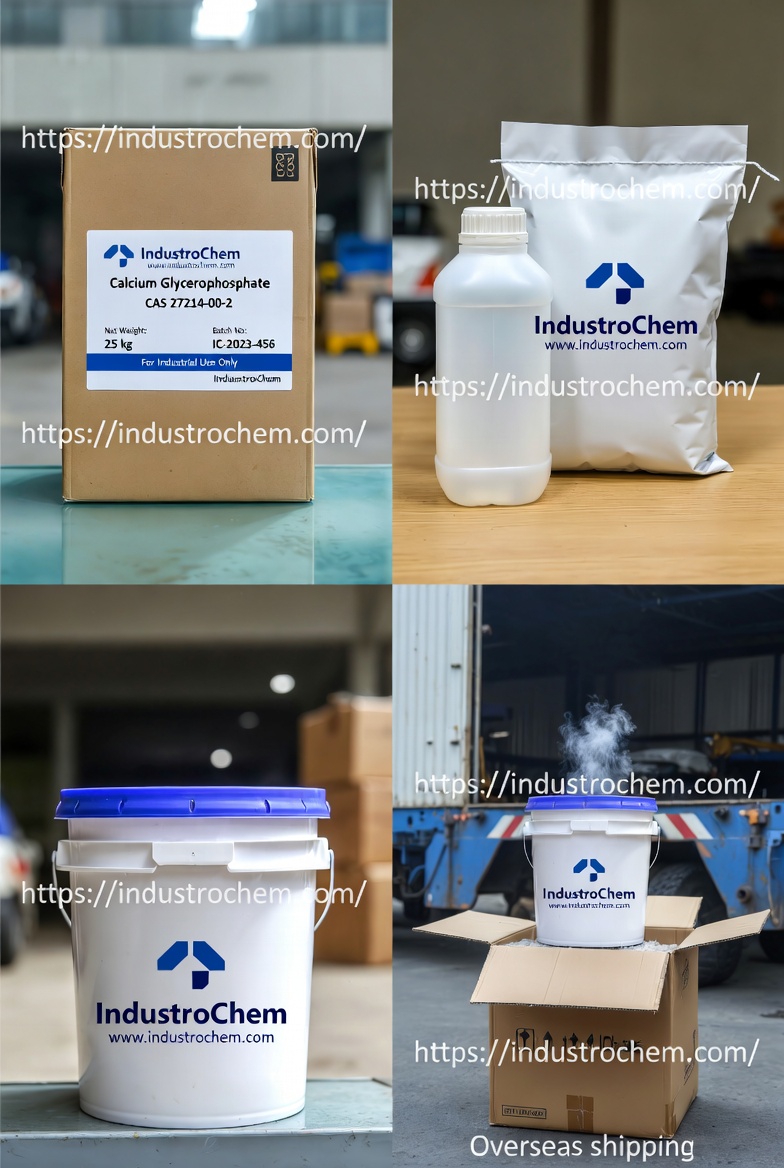
Standard packaging is available. The product may be packed in bags, drums, cartons, or other suitable containers as applicable to the offered grade and supply format. Customized packaging may be available upon request.
Store in a cool, dry place in tightly closed packaging. Protection from moisture and contamination is recommended during storage and handling. Where a finer particle specification or specialty grade is required, storage and handling conditions should be aligned with the offered grade and application requirements.
FAQ
1. Does Calcium Microcrystalline Hydroxyapatite match CAS 1306-06-5?
Yes. CAS 1306-06-5 corresponds to hydroxyapatite. The word “microcrystalline” is generally a physical description of the material form rather than a separate chemical identity.
2. What type of product is this?
This product is best classified as an inorganic chemical, specifically a calcium phosphate material. Depending on grade, it may also be discussed for oral care, cosmetic, nutritional, research, or specialty material use.
3. Which parameters should be confirmed before purchase?
Buyers should usually confirm particle size distribution, crystal form, morphology, purity profile, intended application, and grade-specific document requirements before ordering.
4. Can COA, TDS, or SDS / MSDS be provided?
These documents may be provided upon request and are available depending on the offered grade and supply arrangement.
5. Why is “microcrystalline” important for this product?
Because hydroxyapatite performance in formulation can be influenced by crystal structure, particle size, and powder characteristics, the “microcrystalline” description should be matched to the intended application requirements rather than treated as the chemical identity alone.
FAQ - Technical & Supply Chain
Documents and Product Support
For product review and sourcing evaluation, supporting documents can be coordinated according to the product type, inquiry stage, and order requirements.
- COA for batch-based quality reference
- TDS for key physical and chemical information
- SDS / MSDS for handling, storage, and safety reference
- Packing information for sample, trial, and bulk orders
- Technical communication based on application and specification requirements
Information to Confirm Before Quotation
Clear sourcing information helps reduce specification mismatch and allows a more accurate quotation before sample or bulk order discussion.
- Product name and CAS number
- Application or intended end use
- Required purity, grade, or specification
- Sample quantity, trial order, or bulk demand
- Preferred packing form or net weight
- Destination country or port
- Required documents or compliance expectations
Packaging, Storage, and Handling Notes
Packaging form, storage conditions, shelf life, and shipment arrangements should be confirmed according to the product characteristics, package size, and destination requirements.
Before order confirmation, buyers are advised to review the corresponding product documents and confirm whether any special storage, labeling, or handling requirements apply.
Sample, Bulk Order and Repeat Supply Support
Support can be arranged for sample discussion, bulk supply planning, packaging confirmation, and routine sourcing communication based on the actual product and order requirements.
For repeat-use formulations or long-term procurement plans, buyers may discuss specification consistency, packaging preferences, delivery expectations, and document coordination in advance.


