









• Isovaleronitrile (3-Methylbutanenitrile) – CAS 625-28-5
  • Isovaleronitrile (3-Methylbutanenitrile) – CAS 625-28-5

Isovaleronitrile (3-Methylbutanenitrile) – CAS 625-28-5

Isovaleronitrile, also known as 3‑Methylbutanenitrile, is a branched aliphatic nitrile characterized by a terminal cyano group on a short carbon chain. As a defined low‑molecular‑weight organic nitrile, it is handled as a specialty chemical intermediate within regulated industrial and research chemical supply chains. Isovaleronitrile (CAS 625-28-5) is supplied as a discrete molecular substance for professional use in controlled environments, with emphasis on material identification, documentation, and compliance rather than end‑use formulation.
This material is provided with standardized specifications and complete technical documentation including MSDS, TDS, and COA, supporting compliant handling and traceability.

  • CAS: 625-28-5
  • Synonyms: Isovaleronitrile, 3-Methylbutanenitrile, Isopropylacetonitrile
  • Einecs: 210-884-1
  • Molecular Formula: C₅H₉N
  • Grade: Industrial grade 98%
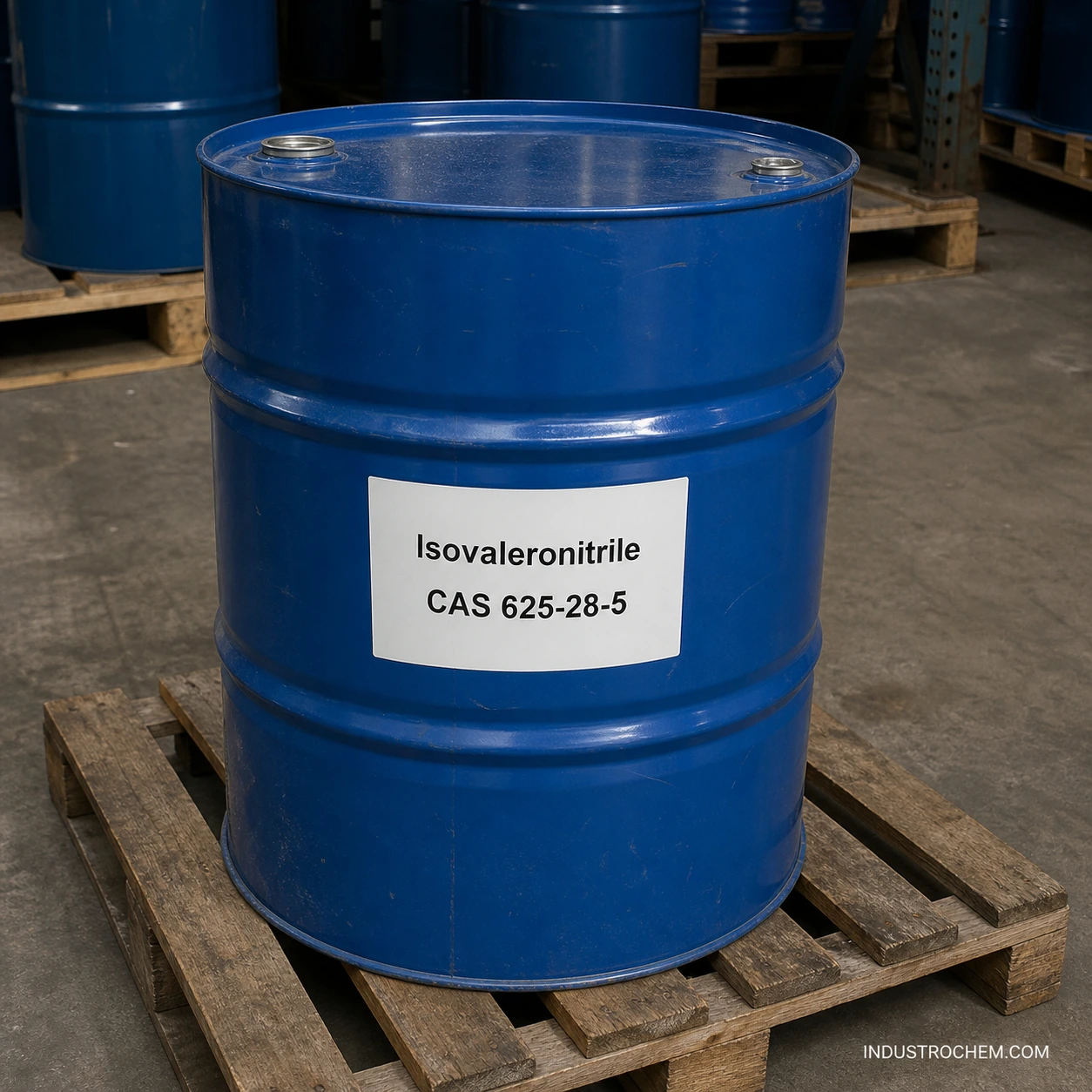
  • Package: 200kg iron drum or 50kg plastic drum packaging
Request a quote
Share:

Product Description

physicochemical properties

PropertyDescription
IUPAC Name3-Methylbutanenitrile
CAS Number625-28-5
Molecular FormulaC₅H₉N
Molecular Weight83.13 g/mol
AppearanceColorless liquid
Density0.795 g/mL at 25 °C
Boiling Point128–130 °C at 730 mm Hg
Melting Point-101 °C
Refractive Indexn₂₀/D 1.393
Flash Point83 °F (28.3 °C)
SolubilitySlightly soluble in water; soluble in chloroform, methanol, acetone, ethanol, and ethyl ether
StabilityStable under normal conditions; avoid contact with strong oxidizers, strong reducers, and acids
Storage ConditionsStore in a cool, well-ventilated area away from fire, heat, and incompatible substances
Hazard SymbolsGHS02 (Flammable), GHS06 (Toxic)
Signal WordDanger

Application Areas

organic synthesis
Pharmaceutical intermediates: used for synthesizing drug molecules (such as sedatives, antiviral drugs) or amino acid derivatives.
Pesticide synthesis: used as a precursor to prepare insecticides or herbicides (such as pyrethroids).
Flavor industry: Isovaleric acid or isoamylamine is produced by hydrolysis or reduction reaction, which is used to prepare fruit flavor or milk flavor essence.
chemical research
Solvent or reaction medium: used as a polar non proton solvent in special reactions.
Catalyst ligand: used in metal organic chemistry (such as palladium catalyzed coupling reactions).

Storage conditions

Keep the container sealed, store in a cool, dry place, and ensure good ventilation.
Avoid contact with oxidants to prevent decomposition.
Keep away from sources of fire, heat, and static electricity, and prevent direct sunlight

Safety precautions

Respiratory protection: When operating in a fume hood, wear an organic vapor proof mask (such as N95 or higher).
Skin protection: Wear butyl rubber gloves, goggles, and chemical protective clothing.
Eye protection: Use chemical goggles or face shields.

FAQ - Technical & Supply Chain

  • Q:

    Does CAS 625-28-5 specifically refer to Isovaleronitrile?

    A: Yes. CAS 625-28-5 is assigned specifically to the branched nitrile structure known as isovaleronitrile or 3‑methylbutanenitrile.
  • Q:

    Is Isovaleronitrile supplied as a mixture or formulated product?

    A: No. It is supplied as a defined chemical substance for professional handling within regulated industrial or research environments.
Documents

Documents and Product Support

For product review and sourcing evaluation, supporting documents can be coordinated according to the product type, inquiry stage, and order requirements.

  • COA for batch-based quality reference
  • TDS for key physical and chemical information
  • SDS / MSDS for handling, storage, and safety reference
  • Packing information for sample, trial, and bulk orders
  • Technical communication based on application and specification requirements
Quotation

Information to Confirm Before Quotation

Clear sourcing information helps reduce specification mismatch and allows a more accurate quotation before sample or bulk order discussion.

  • Product name and CAS number
  • Application or intended end use
  • Required purity, grade, or specification
  • Sample quantity, trial order, or bulk demand
  • Preferred packing form or net weight
  • Destination country or port
  • Required documents or compliance expectations
Storage & Handling

Packaging, Storage, and Handling Notes

Packaging form, storage conditions, shelf life, and shipment arrangements should be confirmed according to the product characteristics, package size, and destination requirements.

Before order confirmation, buyers are advised to review the corresponding product documents and confirm whether any special storage, labeling, or handling requirements apply.

Supply Support

Sample, Bulk Order and Repeat Supply Support

Support can be arranged for sample discussion, bulk supply planning, packaging confirmation, and routine sourcing communication based on the actual product and order requirements.

For repeat-use formulations or long-term procurement plans, buyers may discuss specification consistency, packaging preferences, delivery expectations, and document coordination in advance.

Contact Form

Use our contact form to send us your questions, suggestions or comments. We will respond as soon as possible.