








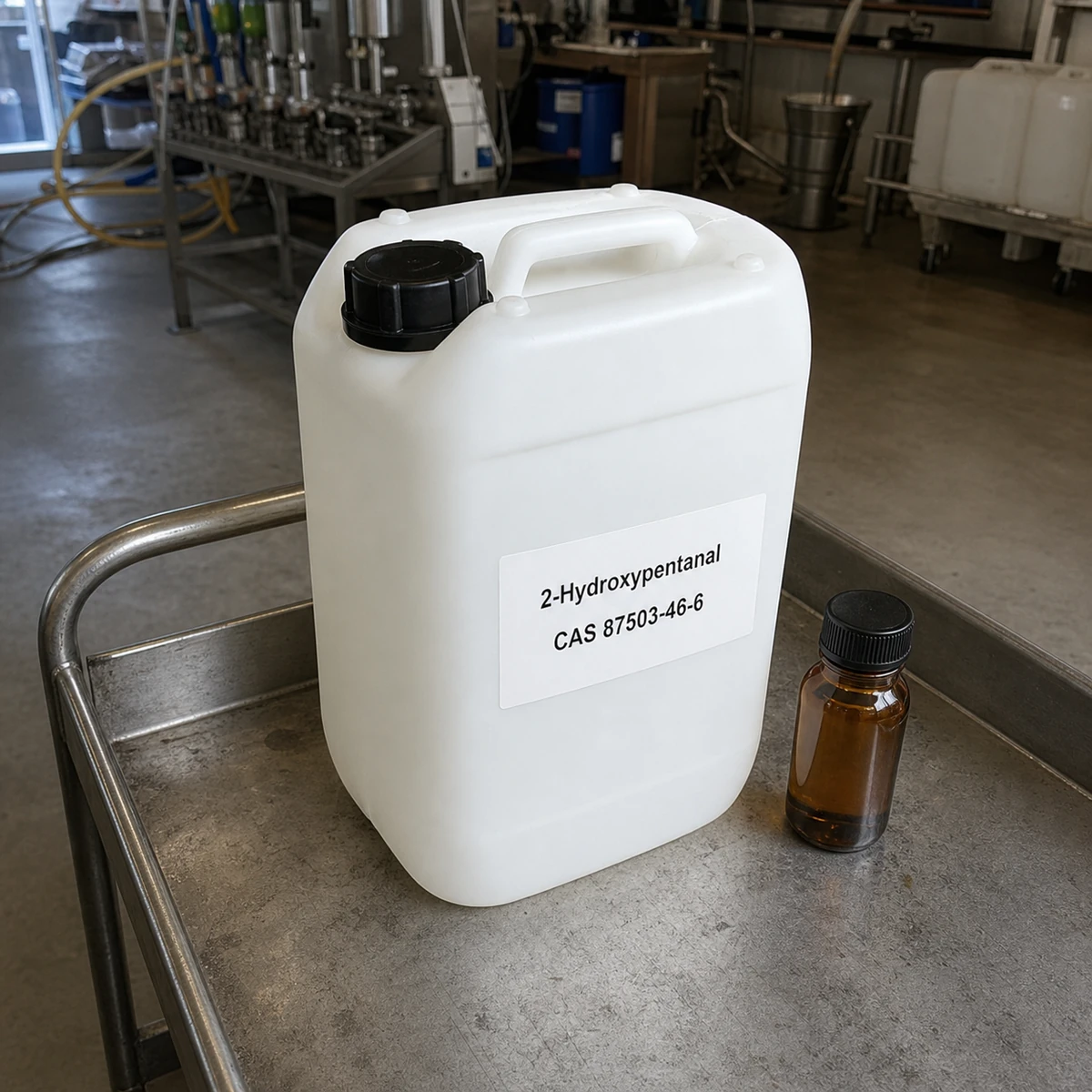
2‑Hydroxypentanal, also known as 2‑Hydroxyvaleraldehyde, is an α‑hydroxy aldehyde characterized by the presence of both hydroxyl and aldehyde functional groups on a five‑carbon chain. This dual functionality defines its chemical behavior and positions it as a specialty organic intermediate within professional chemical supply chains. 2‑Hydroxypentanal (CAS 87503-46-6) is handled as a defined molecular substance in regulated industrial and research environments, with emphasis on material identification, documentation, and compliance rather than end‑use formulation.
This material is supplied with standardized specifications and complete technical documentation including MSDS, TDS, and COA, supporting compliant handling and traceability.
2‑Hydroxypentanal CAS 87503-46-6
- CAS: 87503-46-6
- Synonyms: 2-Hydroxypentanal, 2-Hydroxyvaleraldehyde, α-Hydroxypentanal
- Molecular Formula: C₅H₁₀O₂
- Grade: Industrial grade 99%
- Package: 200kg iron drum or 50kg plastic drum packaging
Product Description
Physicochemical properties
| Property | Description/Value |
|---|---|
| IUPAC Name | 2-Hydroxypentanal |
| CAS Number | 87503-46-6 |
| Molecular Formula | C₅H₁₀O₂ |
| Molecular Weight | 102.13 g/mol |
| Appearance | Colorless to pale yellow liquid |
| Odor | Likely aldehydic (pungent, fruity) |
| Melting Point | Not well documented |
| Boiling Point | Estimated ~150-170°C (decomposes) |
| Density | ~1.0 g/cm³ (approximate) |
| Solubility | Soluble in water, polar organic solvents (e.g., ethanol, acetone) |
| Refractive Index | Not reported |
| Flash Point | Likely >60°C (combustible) |
| Stability | Unstable; may polymerize or oxidize |
| pKa (Hydroxyl group) | ~14-15 (typical for aliphatic alcohols) |
| Reactivity | – Aldehyde group: prone to oxidation (→ carboxylic acid) – β-Hydroxy aldehyde: may undergo dehydration or intramolecular cyclization |
Application Areas
- Pharmaceutical intermediates: Used for synthesizing molecules with biological activity, such as antibiotics, anti-inflammatory drugs, or chiral drugs.
- Research on food additives: Exploring their potential as natural flavor enhancers (requiring safety assessment).
- Agriculture and pesticides: Aldehyde derivatives may participate in plant signaling or stress response (such as inducing defense mechanisms)
Storage conditions
Storage conditions: It is recommended to store it in a cool, well ventilated environment and seal it to avoid contact with oxidants and acidic substances.
Special requirement: If it is a flammable liquid (similar to tetrahydrofurfurfuryl propionate), it should be stored in an explosion-proof area, away from sources of fire and heat
Safety precautions
Operation protection:
Wear chemical resistant gloves, goggles, and lab coats to avoid direct contact.
Operate in a fume hood to prevent vapor inhalation.
Emergency measures:
Skin contact: Immediately rinse with plenty of water and seek medical attention if necessary.
Inhalation: Transfer to fresh air. If breathing is difficult, oxygen should be administered.
Leakage treatment: When there is a small amount of leakage, use adsorbent materials (such as sand) to collect it, and when there is a large amount of leakage, build a dam and transfer it to a dedicated container.
Fire fighting measures: use dry powder, carbon dioxide or insoluble foam to extinguish the fire and avoid direct impact of water on flammable liquid
FAQ - Technical & Supply Chain
-
Q:
Is 2‑Hydroxypentanal supplied as a mixture or formulation?
A: No. It is supplied as a defined chemical substance for professional handling within regulated research or industrial environments.
Documents and Product Support
For product review and sourcing evaluation, supporting documents can be coordinated according to the product type, inquiry stage, and order requirements.
- COA for batch-based quality reference
- TDS for key physical and chemical information
- SDS / MSDS for handling, storage, and safety reference
- Packing information for sample, trial, and bulk orders
- Technical communication based on application and specification requirements
Information to Confirm Before Quotation
Clear sourcing information helps reduce specification mismatch and allows a more accurate quotation before sample or bulk order discussion.
- Product name and CAS number
- Application or intended end use
- Required purity, grade, or specification
- Sample quantity, trial order, or bulk demand
- Preferred packing form or net weight
- Destination country or port
- Required documents or compliance expectations
Packaging, Storage, and Handling Notes
Packaging form, storage conditions, shelf life, and shipment arrangements should be confirmed according to the product characteristics, package size, and destination requirements.
Before order confirmation, buyers are advised to review the corresponding product documents and confirm whether any special storage, labeling, or handling requirements apply.
Sample, Bulk Order and Repeat Supply Support
Support can be arranged for sample discussion, bulk supply planning, packaging confirmation, and routine sourcing communication based on the actual product and order requirements.
For repeat-use formulations or long-term procurement plans, buyers may discuss specification consistency, packaging preferences, delivery expectations, and document coordination in advance.
Contact Form
Use our contact form to send us your questions, suggestions or comments. We will respond as soon as possible.
Product Categories
Related Products
-
Sodium Methoxide CAS 124-41-4 -
Sodium Fluoride CAS 7681-49-4 -
GPE 3000 CAS 9082-00-2 -
Polypropylene Glycol 1000 CAS 25322-69-4 -
Polypropylene Glycol 2000 CAS 25322-69-4 -
AEO-9 / MOA-9 (Fatty Alcohol Ethoxylate 9EO) – CAS 9002‑92‑0 -
Polypropylene Glycol 200 (PPG-200) CAS 25322-69-4 -
PPG 2000 (Polyether Polyol 220) CAS 25322-69-4