









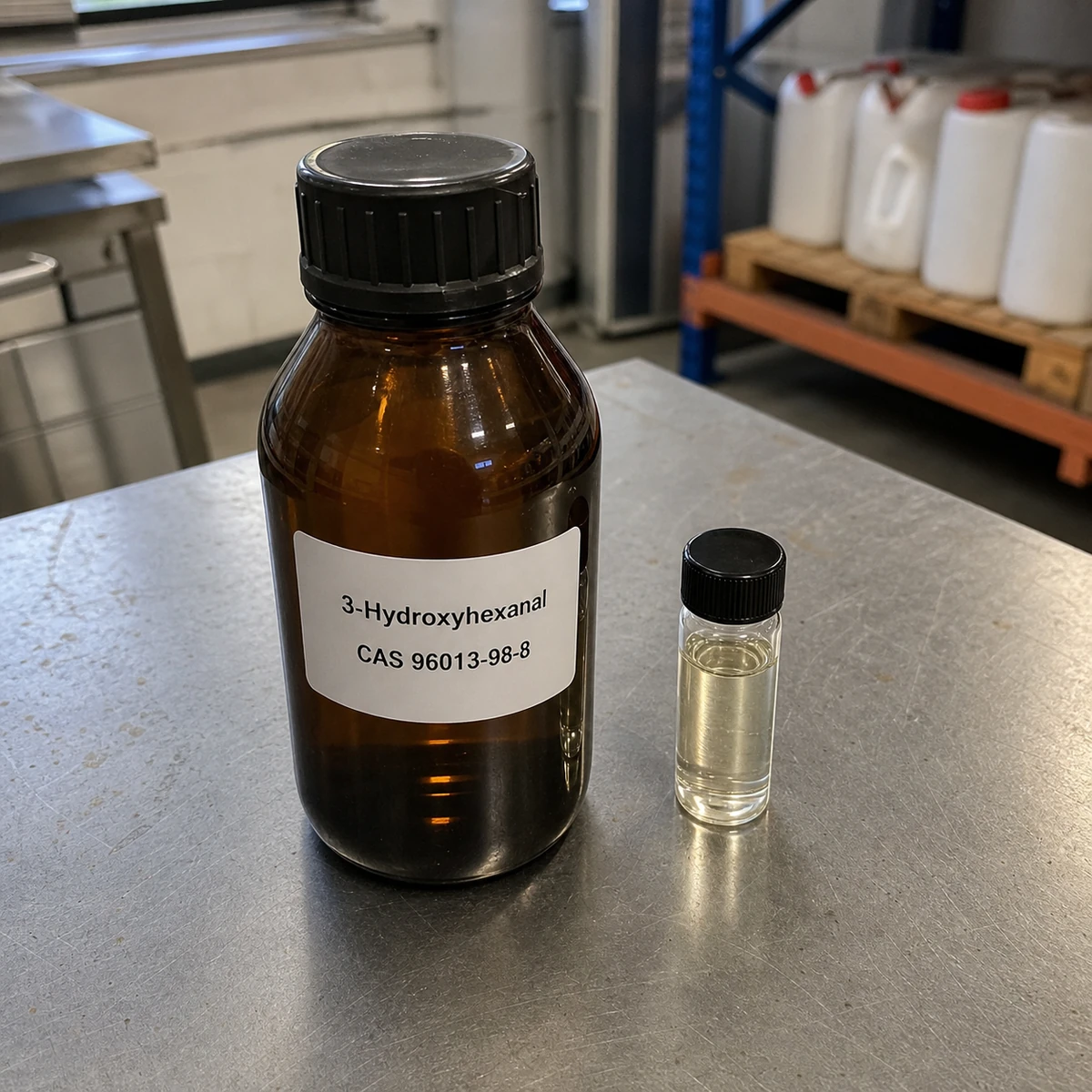
• 3-Hydroxyhexanal CAS 96013-98-8

3-Hydroxyhexanal CAS 96013-98-8

3-Hydroxyhexanal is an aliphatic hydroxy aldehyde used as an organic synthesis intermediate, typically participating in aldol-type reactions and further functional group transformations within controlled chemical processes. As a structurally defined beta-hydroxy aldehyde (CAS 96013-98-8), it serves as a key intermediate for downstream conversion to alcohols, acids, or unsaturated carbonyl compounds in fine chemical and specialty material synthesis. Industrial supply is available with competitive factory pricing, support for customized specifications, and complete documentation including MSDS, TDS, COA, enabling bulk supply for standardized manufacturing operations.

  • CAS: 96013-98-8
  • Molecular Formula: C₆H₁₂O₂
  • Grade: Industrial grade 99%
  • Package: 200kg iron drum or 50kg plastic drum packaging
Request a quote
Share:

Product Description

Physicochemical properties

PropertyValue
Chemical FormulaC₆H₁₂O₂
Molecular Weight116.16 g/mol
CAS Number96013-98-8
Appearance(Data not explicitly provided, typically a liquid or low-melting solid for small aldehydes)
Boiling Point(Data not explicitly provided, varies with pressure)
Melting Point(Data not explicitly provided, typically low for small aldehydes)
Density(Data not explicitly provided, generally around 0.9-1.1 g/cm³ for similar compounds)
Flash Point(Data not explicitly provided, depends on volatility)
Solubility in Water(Data not explicitly provided, typically soluble due to hydroxyl group)

Application Areas

biochemical research
As a model compound, investigate the behavior of hydroxyl and aldehyde groups in enzyme catalyzed reactions (such as the mechanism of action of oxidoreductases).
Used for metabolic pathway research, simulating the conversion process of aldehydes in organisms.
material science
As a monomer or modifier, participate in polymer synthesis (such as producing polyester or polyamide through condensation reaction).
It is used to prepare materials with specific functions (such as biodegradable materials or hydrogels).
perfumes and essences
Aldehydes often have special aroma. 3-Hydroxyhexanal may be used to synthesize perfume or as an intermediate for essence preparation

Storage conditions

Sealed storage: Use glass bottles or polyethylene containers to ensure that the bottle mouth is sealed to prevent evaporation or moisture absorption.
Avoid light conditions: Store in brown bottles or light cabinets to prevent light from causing aldehyde oxidation.
Low temperature environment: It is recommended to store at 2-8 ° C (short-term) or -20 ° C (long-term) to slow down the decomposition rate.
Inert gas protection: If long-term storage is required, nitrogen or argon can be filled to eliminate oxygen to prevent oxidation.
Classified storage: Keep away from strong oxidants (such as potassium permanganate), strong acids (such as sulfuric acid), and strong bases (such as sodium hydroxide) to avoid dangerous reactions.

Safety precautions

Ventilation conditions: The operating environment should maintain forced ventilation to avoid vapor accumulation in enclosed spaces (refer to the ventilation requirements for aldehydes such as n-hexane)
Personal protection: Wear chemical resistant gloves, goggles, and dust masks when in contact to prevent skin/eye contact or inhalation. If there is a risk of volatilization, it is recommended to use a gas mask (such as an activated carbon filter box)

FAQ - Technical & Supply Chain

  • Q:

    Are 3-Hydroxyhexanal and Beta-Hydroxyhexanal the same substance?

    A: Yes. Both names describe the same molecular structure and correspond to a single CAS number, indicating identical substance identity.
  • Q:

    Is 3-Hydroxyhexanal commonly used as an industrial intermediate rather than a finished product?

    A: It is typically applied as an intermediate in organic and fine chemical synthesis, where beta-hydroxy aldehydes are used for subsequent transformation steps.
Documents

Documents and Product Support

For product review and sourcing evaluation, supporting documents can be coordinated according to the product type, inquiry stage, and order requirements.

  • COA for batch-based quality reference
  • TDS for key physical and chemical information
  • SDS / MSDS for handling, storage, and safety reference
  • Packing information for sample, trial, and bulk orders
  • Technical communication based on application and specification requirements
Quotation

Information to Confirm Before Quotation

Clear sourcing information helps reduce specification mismatch and allows a more accurate quotation before sample or bulk order discussion.

  • Product name and CAS number
  • Application or intended end use
  • Required purity, grade, or specification
  • Sample quantity, trial order, or bulk demand
  • Preferred packing form or net weight
  • Destination country or port
  • Required documents or compliance expectations
Storage & Handling

Packaging, Storage, and Handling Notes

Packaging form, storage conditions, shelf life, and shipment arrangements should be confirmed according to the product characteristics, package size, and destination requirements.

Before order confirmation, buyers are advised to review the corresponding product documents and confirm whether any special storage, labeling, or handling requirements apply.

Supply Support

Sample, Bulk Order and Repeat Supply Support

Support can be arranged for sample discussion, bulk supply planning, packaging confirmation, and routine sourcing communication based on the actual product and order requirements.

For repeat-use formulations or long-term procurement plans, buyers may discuss specification consistency, packaging preferences, delivery expectations, and document coordination in advance.

Contact Form

Use our contact form to send us your questions, suggestions or comments. We will respond as soon as possible.