









• 3-Methylbutanenitrile CAS 625-28-5
  • 3-Methylbutanenitrile CAS 625-28-5
  • 3-Methylbutanenitrile CAS 625-28-5

3-Methylbutanenitrile CAS 625-28-5

3-Methylbutanenitrile, also known as Isovaleronitrile, is an aliphatic nitrile used as an organic intermediate in chemical synthesis. It is characterized by a terminal nitrile functional group attached to a branched hydrocarbon chain, enabling participation in hydrolysis, reduction, or substitution reactions where controlled nitrile reactivity is required. 3-Methylbutanenitrile (CAS 625-28-5) is typically applied in organic synthesis intermediate production, serving as a building block within multi-step industrial chemical processes.
For industrial manufacturing requirements, this material is provided with competitive factory pricing, customized specifications, complete technical documentation including MSDS, TDS, COA, and support for bulk supply operations.

  • CAS: 625-28-5
  • Synonyms: 3-Methylbutanenitrile, Isovaleronitrile, Isopropylacetonitrile, 3-Methylbutyronitrile
  • Einecs: 210-884-1
  • Molecular Formula: C₅H₉N
  • Grade: Industrial grade 98%
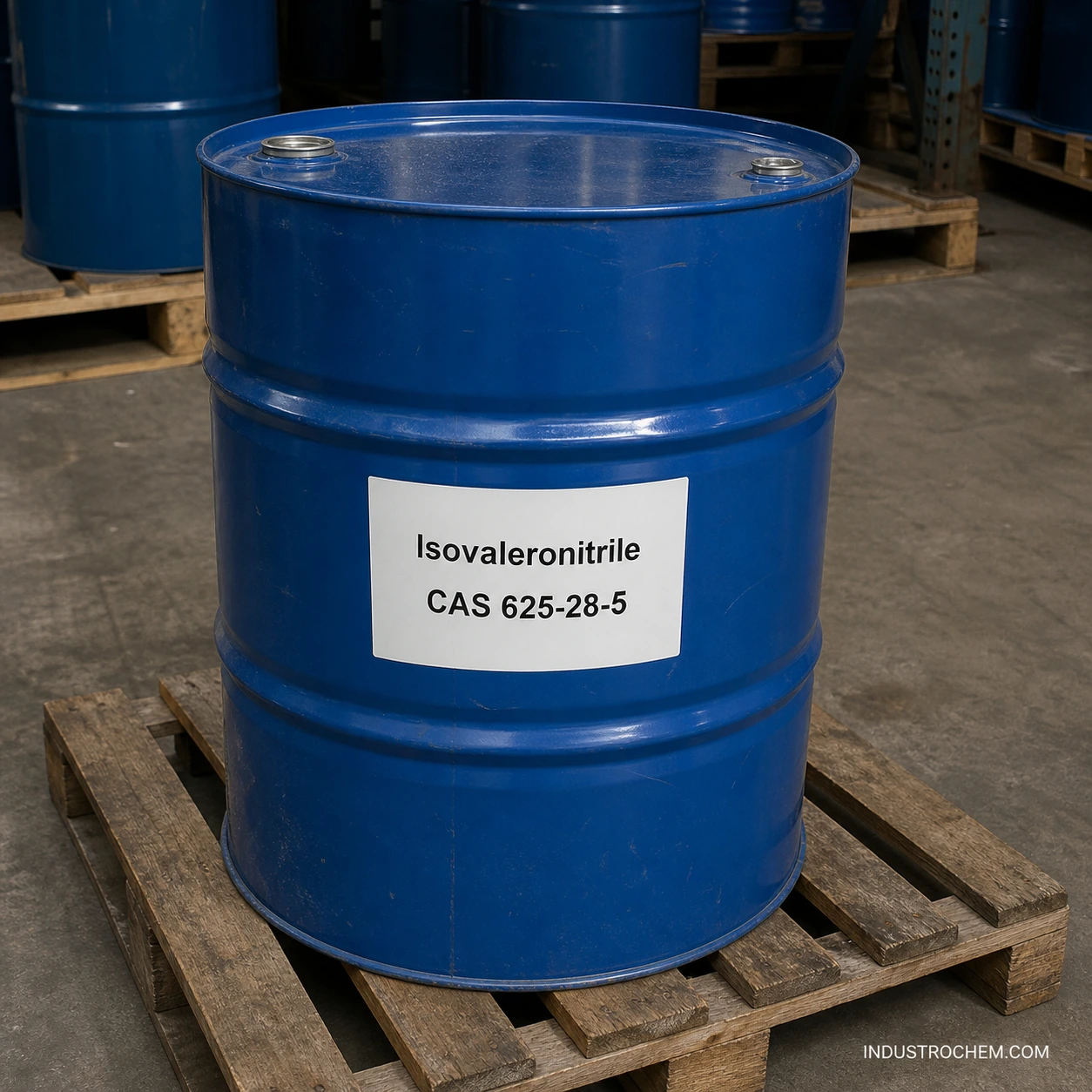
  • Package: 200kg iron drum or 50kg plastic drum packaging
Request a quote
Share:

Product Description

Physicochemical properties

PropertyValue
IUPAC Name3-Methylbutanenitrile
Other NamesIsovaleronitrile; Isobutyl cyanide; 3-Methylbutyronitrile
CAS Number625-28-5
EINECS Number210-884-1
Molecular FormulaC₅H₉N
Molecular Weight83.13 g/mol
AppearanceColorless liquid
Density0.795 g/mL at 25 °C
Boiling Point128–130 °C at 730 mmHg
Melting Point-101 °C
Refractive Index1.393 (n²⁰/D)
Flash Point83 °F (28.3 °C)
SolubilityInsoluble in water; soluble in organic solvents (e.g., ethanol, ether)
Vapor PressureNot specifically reported
ViscosityNot specifically reported (expected to be low for a liquid nitrile)
Chemical StabilityStable under normal conditions; incompatible with strong oxidizers and acids
ReactivityMay undergo addition reactions due to the nitrile group
Safety HazardsFlammable liquid (R10); Harmful if swallowed (R22); Irritant to eyes, respiratory system, and skin (R36/37/38)

Application Areas

Organic synthesis: As a nitrile intermediate, it is used for synthesizing nitrogen-containing compounds such as drugs, pesticides, and fragrances. Can be used to prepare isovaleric acid (by hydrolysis) or isovaleramine (by reduction).
Flavor industry: a small amount of essence used for blending fruit flavor or nut flavor (the dosage needs to be strictly controlled, because nitriles may be toxic).
Solvent and extractant: used as polar solvents in specific reactions

Storage conditions

Sealed and light shielded: Store in a sealed container and avoid light exposure (nitriles may undergo photolysis).
Dry and cool: Place in a well ventilated and cool place, recommended temperature<30 ° C, away from heat and fire sources.
Inert gas protection: can be filled with nitrogen to reduce the risk of oxidation or hydrolysis.
Isolation storage: separate from strong oxidants (such as peroxides), strong acids, and strong bases

Safety precautions

Respiratory protection: When exposed to high concentrations of vapor, it is necessary to wear a self-contained positive pressure respirator or a full face gas mask.
Skin/Eye Protection: Wear chemical resistant gloves, goggles, and protective clothing to avoid direct contact.
Leakage handling
Minor leakage: Absorb with sand or non combustible materials to avoid entering the sewer.
Large amount of leakage: build a dike to collect, use foam to cover to inhibit the vapor diffusion, and transfer to a special container for treatment.

FAQ - Technical & Supply Chain

  • Q:

    Do 3-Methylbutanenitrile and Isovaleronitrile correspond to the same CAS number?

    A: Yes. These names are commonly used interchangeably to describe the same chemical substance and correspond to the same CAS identity.
  • Q:

    Is 3-Methylbutanenitrile mainly intended for industrial intermediate use?

    A: It is commonly used as an intermediate in organic synthesis processes, where it functions within controlled industrial reaction pathways rather than as an end-use formulation.
Documents

Documents and Product Support

For product review and sourcing evaluation, supporting documents can be coordinated according to the product type, inquiry stage, and order requirements.

  • COA for batch-based quality reference
  • TDS for key physical and chemical information
  • SDS / MSDS for handling, storage, and safety reference
  • Packing information for sample, trial, and bulk orders
  • Technical communication based on application and specification requirements
Quotation

Information to Confirm Before Quotation

Clear sourcing information helps reduce specification mismatch and allows a more accurate quotation before sample or bulk order discussion.

  • Product name and CAS number
  • Application or intended end use
  • Required purity, grade, or specification
  • Sample quantity, trial order, or bulk demand
  • Preferred packing form or net weight
  • Destination country or port
  • Required documents or compliance expectations
Storage & Handling

Packaging, Storage, and Handling Notes

Packaging form, storage conditions, shelf life, and shipment arrangements should be confirmed according to the product characteristics, package size, and destination requirements.

Before order confirmation, buyers are advised to review the corresponding product documents and confirm whether any special storage, labeling, or handling requirements apply.

Supply Support

Sample, Bulk Order and Repeat Supply Support

Support can be arranged for sample discussion, bulk supply planning, packaging confirmation, and routine sourcing communication based on the actual product and order requirements.

For repeat-use formulations or long-term procurement plans, buyers may discuss specification consistency, packaging preferences, delivery expectations, and document coordination in advance.

Contact Form

Use our contact form to send us your questions, suggestions or comments. We will respond as soon as possible.