










Titanium Tetrachloride (TiCl₄), CAS 7550-45-0, is also known as titanium(IV) chloride. It is used for titanium-metal, titanium-dioxide and selected catalyst processes. Before requesting a quotation, confirm assay, vanadium and other relevant impurities, dry-transfer requirements, sealed packaging and intended process, and request current TDS, COA and SDS.
Titanium Tetrachloride (TiCl₄) CAS 7550-45-0
- CAS: 7550-45-0
- Synonyms: Titanium tetrachloride; Titanium(IV) chloride; TiCl₄
- Einecs: 231-441-9
- Molecular Formula: TiCl₄
- Grade: Confirm on the offered specification and lot COA: assay, vanadium and other relevant impurities, dry-transfer requirements, sealed packaging and intended process
- Package: Dry, moisture-excluding sealed packaging; confirm configuration and transfer requirements before quotation
Product Description
Product name: Titanium Tetrachloride (TiCl₄)
Chemical formula: TiCl₄
Molar mass: 189.68 g/mol
CAS Number: 7550-45-0
EC number: 231-441-9
Melting point: -25 °C
Boiling point: 136.4 °C
Water reactivity: reacts violently with water and moist air; it must not be described as water-soluble
Density: 1.73 g/cm³
Appearance: colorless or yellowish liquid
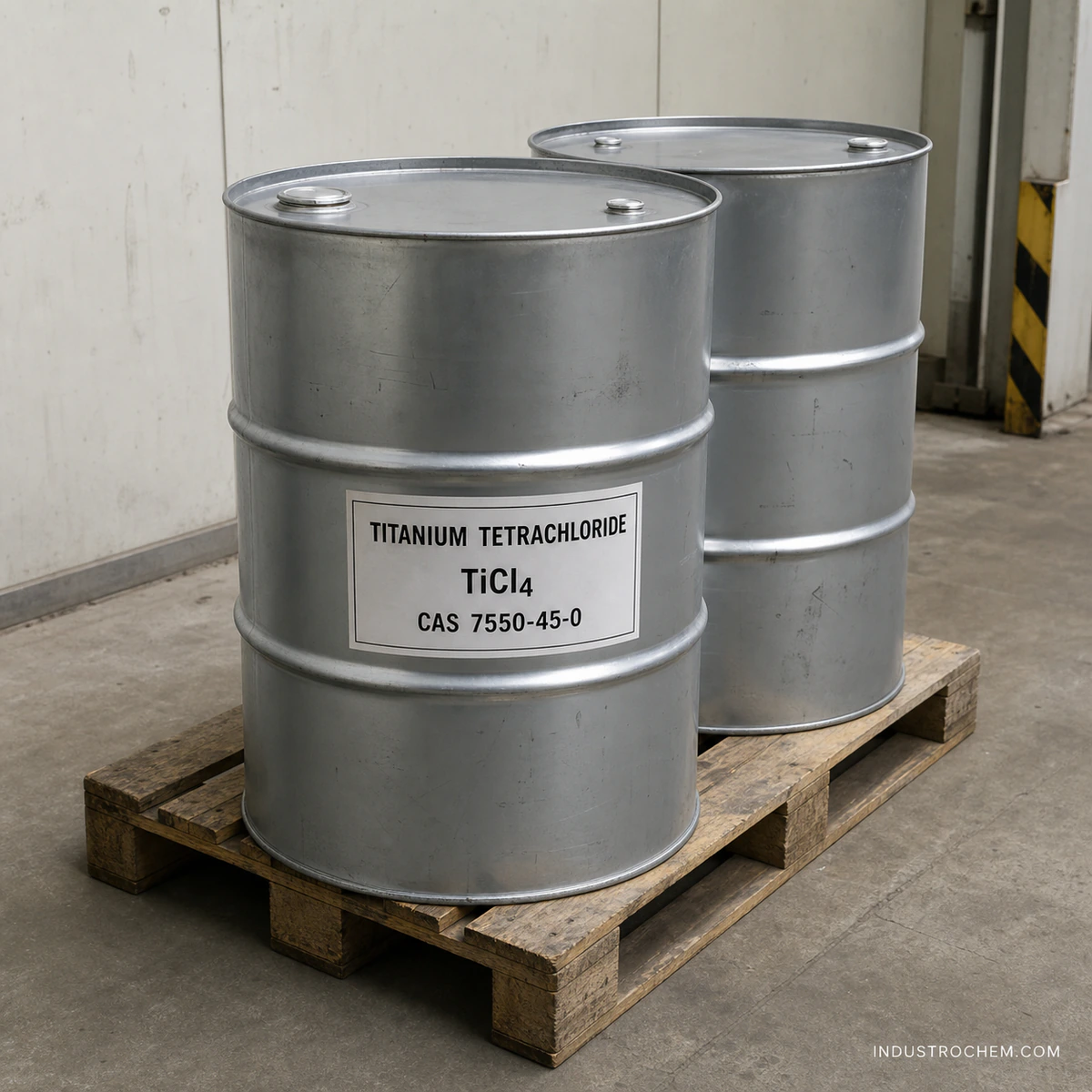
Handling: keep the system dry and closed; confirm transfer, storage and emergency controls in the current SDS
Safety classification: consult the current SDS and destination transport rules before handling or shipment
Main uses: precursor for titanium metal and titanium dioxide, and a component in selected catalyst systems; confirm impurity and process requirements before RFQ.
FAQ - Technical & Supply Chain
-
Q:
Does Titanium Tetrachloride mean an anhydrous TiCl4 grade?
A: Titanium tetrachloride, CAS 7550-45-0, is the anhydrous molecular compound TiCl4. It reacts vigorously with moisture and should not be replaced by hydrated titanium salts or titanium oxychloride. Purchasing documents should state anhydrous grade, concentration basis and moisture limit. -
Q:
Which specifications should be agreed for industrial Titanium Tetrachloride?
A: Define TiCl4 assay, free chlorine, titanium content, moisture, insoluble matter, color and metallic impurities with the applicable test methods. For chlorination or catalyst service, also specify hydrolysis-sensitive impurity limits and container integrity. A current COA and SDS are needed before process qualification. -
Q:
What should be confirmed before bulk TiCl4 delivery?
A: Agree moisture-tight containers, compatible valves and gaskets, dry nitrogen blanketing, unloading connections, emergency quench procedures and site ventilation. Confirm the corrosive and water-reactive transport classification. Inspect seals and headspace before transfer, and prevent contact with water, humid air and incompatible organic materials.
Ordering & Documentation
Key information for document requests, quotations, and supply planning.
Documents
Tell us which documents your procurement team needs. Before an order, we will check whether the quoted source can provide them for the offered lot.
Quotation
Send the CAS number, grade, quantity, packing preference and destination.
Sample & Supply
Ask whether samples, trial quantities or repeat orders are possible. We will check each request against the sourced product and current offer.
Storage & Shipping
Product-specific conditions are confirmed before order.