










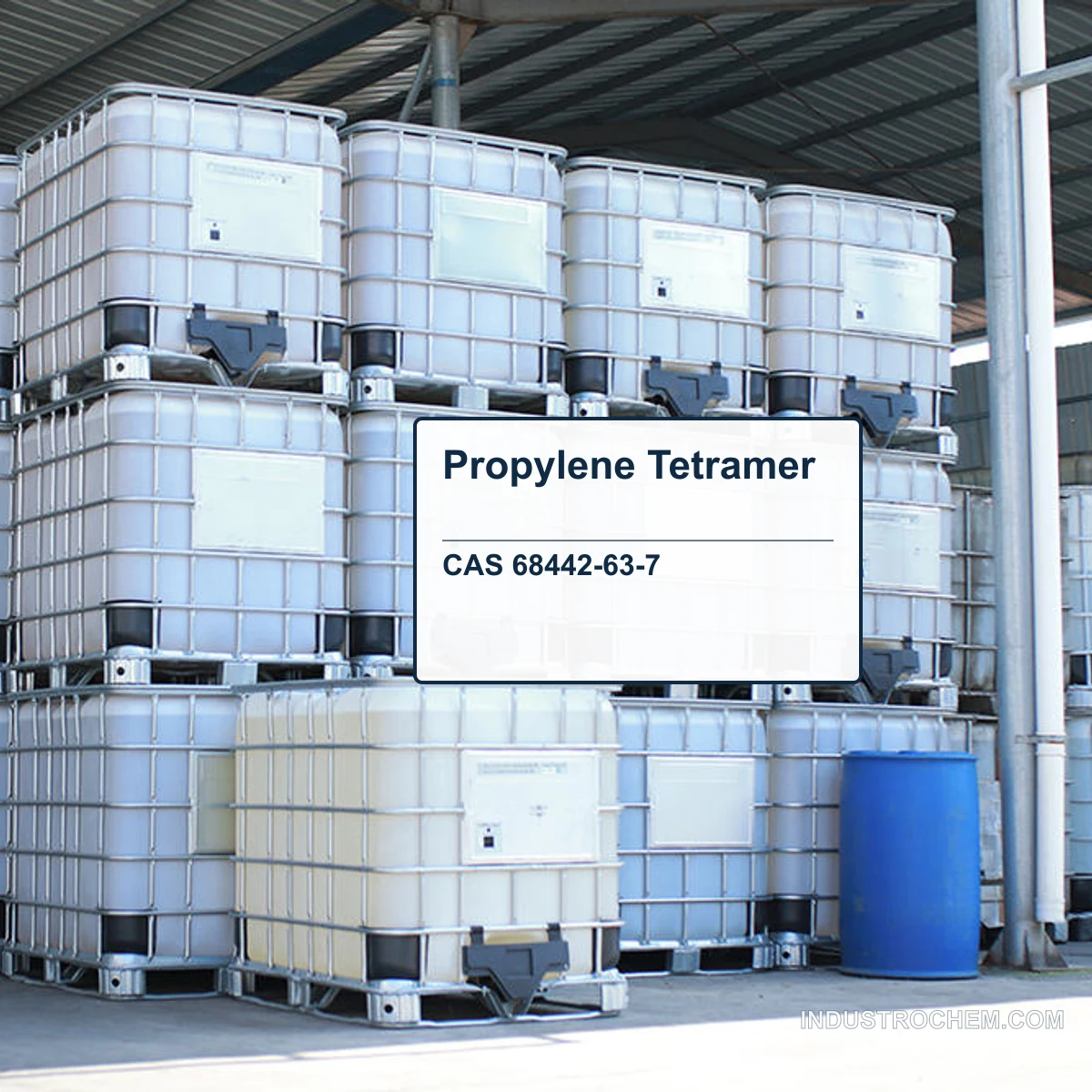
Propylene Tetramer is a C12 branched olefin mixture produced through propylene oligomerization and is commonly classified as a propylene-derived olefin, C12 olefin mixture, or propylene oligomer stream. Identified by CAS 68442-63-7, it functions primarily as an alkylation feedstock, where its branched olefin structure participates in downstream alkylation or functionalization reactions to generate higher-value intermediates used in lubricant additives, fuel-related formulations, and specialty hydrocarbon processing. The material’s role is defined by its reactivity as an unsaturated hydrocarbon mixture rather than as a single, purified compound.
In terms of industrial availability, this product is offered with competitive factory pricing, customized specifications, and full documentation including MSDS, TDS, COA, supporting bulk supply for continuous industrial processing requirements.
Propylene Tetramer CAS 68442-63-7
- CAS: 68442-63-7
- Synonyms: Propylene tetramer, C12 olefin mixture, Propylene oligomer C12, Tetrapropylene, Branched dodecene mixture
- Einecs: 203-968-4
- Molecular Formula: C12H24
- Grade: Industrial grade 99%
- Package: 200kg iron drum or 50kg plastic drum packaging
Product Description
Propylene Tetramer(PT)
Alias:Orthododecane、Dodecane、propylene tetramer, etc
chemical formula:C12H24
molecular weight:168.32
CAS login number:68442-63-7
EINECS login number:203-968-4
Melting point:-33.6 ℃
Boiling point:213 ℃
water solubility: Insoluble
Density:0.760(20/4℃)
Appearance:Colorless liquid
Flash point:56 ℃
application:Produce petroleum additives, surfactants, detergents, anti-radiation greases and plasticizers
Description of hazards:Flammable liquids
UN Dangerous Goods Number::UN 2850/3295
Physical and chemical properties
Chemical classification: olefins.
Spontaneous ignition temperature: 255°C.
Explosion limit (VOL%): 0.8-4.9.
Corrosive: No corrosive effect on materials.
Solubility: soluble in alcohols, ethers, acetone, petroleum ethers.
Vapor density (air=1): 5.81.
Vapor pressure: 0.1KPa (47.2°C).
Industrial use
1. N-olefins or dodecenes are used as feed materials to produce straight-chain or branched-chain alkylbenzene.
2. Dodecylene is used to make dodecyl phenol ethoxyethylene ether, dodecyl phenol, alkyl diphenyl ether sodium disulfonate, etc.
3. Dodecene is used in the production of detergents,surfactant, plasticizers and petroleum additives,Lubricant additives。
4. Decene is used to synthesize dodecaene.
5. Direct synthesis of dodecyne and hydrogen sulfideUnt twelve carbon mercaptans。
6. Dodecene and maleic anhydride can produce T746 rust inhibitor.
FAQ - Technical & Supply Chain
-
Q:
Is Propylene Tetramer (CAS 68442-63-7) a single compound or a mixture?
A: It is a UVCB substance composed of branched C12 olefins formed during propylene oligomerization. The CAS number refers to the industrial mixture rather than a single defined molecular structure. -
Q:
Is Propylene Tetramer suitable as an alkylation feedstock in industrial processes?
A: It is commonly used as an alkylation feedstock where C12 olefin reactivity is required, particularly in processes that convert branched olefins into functional intermediates under controlled industrial conditions.
Documents and Product Support
For product review and sourcing evaluation, supporting documents can be coordinated according to the product type, inquiry stage, and order requirements.
- COA for batch-based quality reference
- TDS for key physical and chemical information
- SDS / MSDS for handling, storage, and safety reference
- Packing information for sample, trial, and bulk orders
- Technical communication based on application and specification requirements
Information to Confirm Before Quotation
Clear sourcing information helps reduce specification mismatch and allows a more accurate quotation before sample or bulk order discussion.
- Product name and CAS number
- Application or intended end use
- Required purity, grade, or specification
- Sample quantity, trial order, or bulk demand
- Preferred packing form or net weight
- Destination country or port
- Required documents or compliance expectations
Packaging, Storage, and Handling Notes
Packaging form, storage conditions, shelf life, and shipment arrangements should be confirmed according to the product characteristics, package size, and destination requirements.
Before order confirmation, buyers are advised to review the corresponding product documents and confirm whether any special storage, labeling, or handling requirements apply.
Sample, Bulk Order and Repeat Supply Support
Support can be arranged for sample discussion, bulk supply planning, packaging confirmation, and routine sourcing communication based on the actual product and order requirements.
For repeat-use formulations or long-term procurement plans, buyers may discuss specification consistency, packaging preferences, delivery expectations, and document coordination in advance.


