• Phenylmagnesium Bromide CAS 100-59-2

Phenylmagnesium Bromide CAS 100-59-2

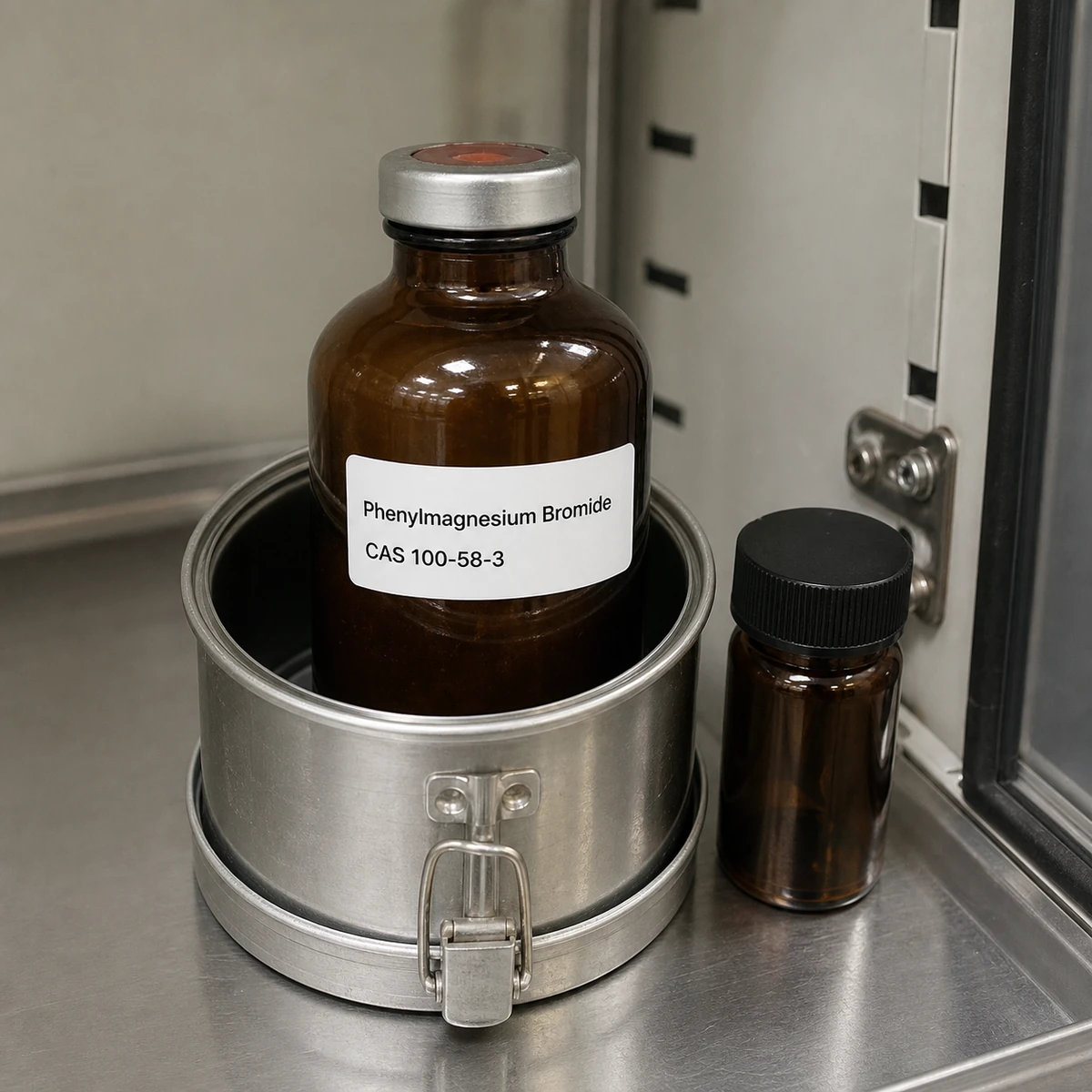
Phenylmagnesium bromide is an organomagnesium compound consisting of a phenyl group bonded to magnesium bromide, representing a well‑defined member of the Grignard reagent class from a structural standpoint. As a discrete chemical entity, phenylmagnesium bromide (CAS 100-59-2) is supplied within regulated industrial and research supply chains, where precise substance identification, documentation, and compliance are essential.
The material is provided with standardized specifications and complete technical documentation, including MSDS, TDS, and COA, supporting traceability and regulatory conformity in professional environments.

  • CAS: 100-58-3
  • Synonyms: Phenylmagnesium bromide, Bromomagnesium benzene, Phenyl magnesium bromide
  • Einecs: 202-867-2
  • Molecular Formula: C6H5BrMg
  • Grade: Industrial grade 99%
  • Package: 100kg iron drum or 50kg plastic drum packaging
Request a quote
Share:

Product Description

Physicochemical properties

PropertyValue
Chemical NamePhenylmagnesium bromide
CAS Number100-59-2
Molecular FormulaC6H5BrMg
Molecular Weight181.31 g/mol
AppearanceColorless liquid (or crystal, depending on the source)
Density1.134 g/mL at 25 °C
Boiling Point78.8 °C at 760 mmHg
Melting Point-45 °C (or N/A, depending on the source)
Flash Point-40 °F (-40 °C) (or -17 °C, depending on the source)
SolubilityMiscible with tetrahydrofuran (THF); reacts violently with water
StabilityAvoid contact with oxidizers, acids, light, and water; may form explosive peroxides
Hazard StatementsH225 (Highly flammable liquid and vapor), H261 (Contact with water liberates flammable gas), H302 (Harmful if swallowed), H314 (Causes severe skin burns and eye damage)

Application Areas

Organic synthesis industry: used for preparing aromatic alcohol compounds: reacting with carbonyl compounds such as aldehydes, ketones, esters, etc. to generate corresponding secondary or tertiary alcohols (such as reacting with benzaldehyde to produce benzyl alcohol).
Drugs and Fine Chemicals: Participate as intermediates in the synthesis of fine chemicals such as antibiotics, fragrances, dyes, etc.
Laboratory research: It is a commonly used reagent for constructing complex molecular structures in organic chemistry experiments.

Storage conditions

Temperature and Environment: Sealed and away from light, stored in a dry and inert gas environment (such as nitrogen protection) at low temperatures (0-5 ℃).
Packaging requirements: Sealed steel cylinders or Schlenk bottles filled with argon gas should be used to protect transportation and avoid contact with air.
Taboo substances: Keep away from water, acid, alcohol, oxidants, and carbon dioxide

Safety precautions

Operation protection: Wear goggles and chemical resistant gloves, and operate in a fume hood. Operators need to receive professional training to avoid inhaling steam or coming into contact with the skin.
Fire risk: Low flash point, keep away from sources of fire, do not use water to extinguish fires (use dry sand, dry powder, or carbon dioxide fire extinguishers).
Leakage treatment: Slowly quench the reaction with isopropanol, and then neutralize the waste liquid with weak acid. Emergency personnel are required to wear anti-static clothing and eliminate all ignition sources.
First aid measures: Inhalation: Move to a place with fresh air; Skin/eye contact: Immediately rinse with clean water and seek medical attention

FAQ - Technical & Supply Chain

  • Q:

    Does CAS 100-59-2 specifically correspond to phenylmagnesium bromide?

    A: Yes. CAS 100-59-2 is assigned specifically to the organomagnesium compound known as phenylmagnesium bromide.
  • Q:

    Does this CAS number define a formulated solution or the chemical entity itself?

    A: CAS 100-59-2 defines the chemical entity phenylmagnesium bromide itself; solvent systems, concentrations, or formulations are not specified by the CAS number.
Documents

Documents and Product Support

For product review and sourcing evaluation, supporting documents can be coordinated according to the product type, inquiry stage, and order requirements.

  • COA for batch-based quality reference
  • TDS for key physical and chemical information
  • SDS / MSDS for handling, storage, and safety reference
  • Packing information for sample, trial, and bulk orders
  • Technical communication based on application and specification requirements
Quotation

Information to Confirm Before Quotation

Clear sourcing information helps reduce specification mismatch and allows a more accurate quotation before sample or bulk order discussion.

  • Product name and CAS number
  • Application or intended end use
  • Required purity, grade, or specification
  • Sample quantity, trial order, or bulk demand
  • Preferred packing form or net weight
  • Destination country or port
  • Required documents or compliance expectations
Storage & Handling

Packaging, Storage, and Handling Notes

Packaging form, storage conditions, shelf life, and shipment arrangements should be confirmed according to the product characteristics, package size, and destination requirements.

Before order confirmation, buyers are advised to review the corresponding product documents and confirm whether any special storage, labeling, or handling requirements apply.

Supply Support

Sample, Bulk Order and Repeat Supply Support

Support can be arranged for sample discussion, bulk supply planning, packaging confirmation, and routine sourcing communication based on the actual product and order requirements.

For repeat-use formulations or long-term procurement plans, buyers may discuss specification consistency, packaging preferences, delivery expectations, and document coordination in advance.

Contact Form

Use our contact form to send us your questions, suggestions or comments. We will respond as soon as possible.