










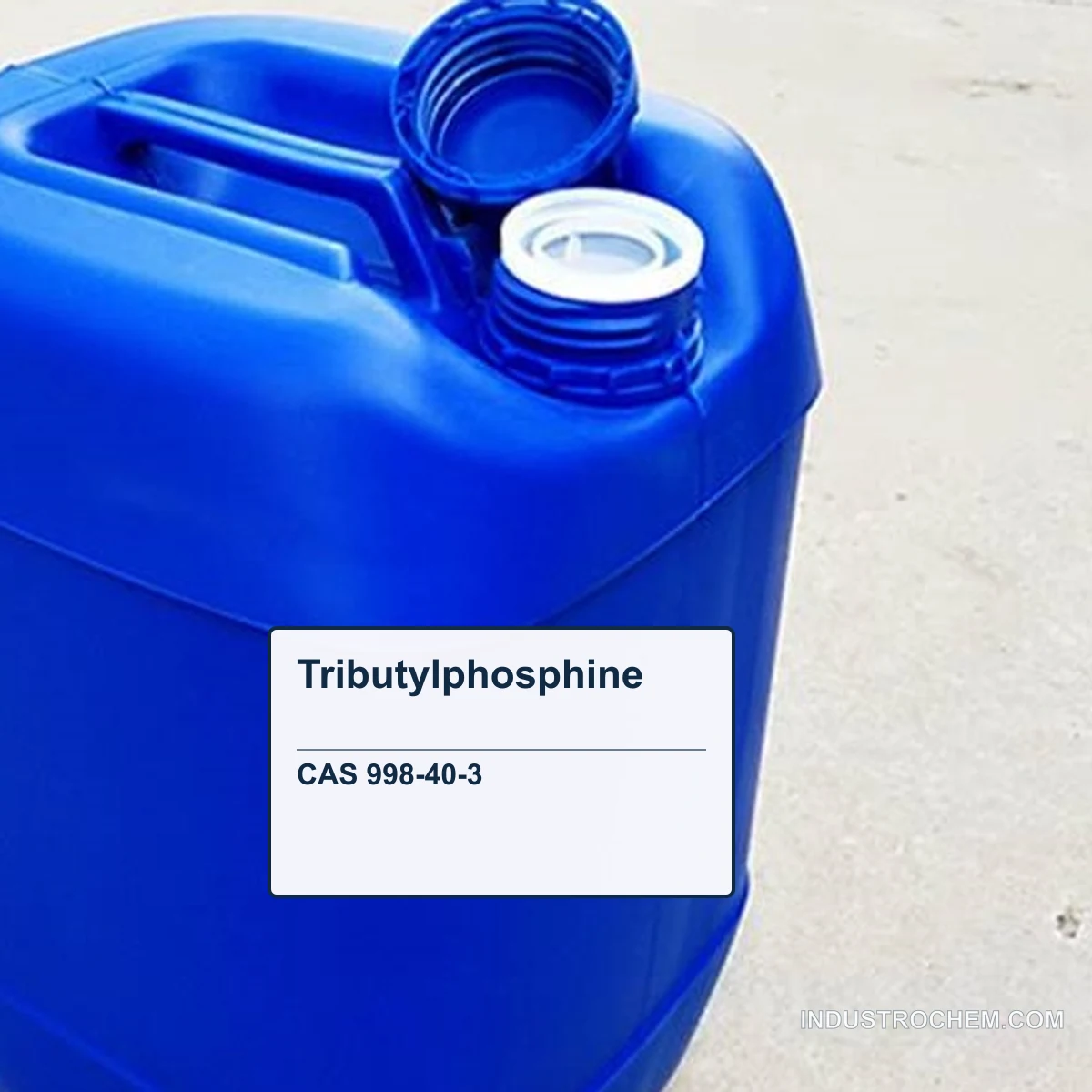
• Tributylphosphine CAS 998-40-3
  • Tributylphosphine CAS 998-40-3

Tributylphosphine CAS 998-40-3

Tributylphosphine is an aliphatic organophosphorus compound commonly used as a reactive phosphine intermediate in organophosphorus synthesis and related coordination chemistry systems. Owing to its strong nucleophilicity and reducing properties, it participates in substitution, reduction, and ligand formation reactions, enabling controlled transformation of functional groups and metal complexes. In industrial chemical processes, Tributylphosphine is typically applied in synthesis routes involving phosphine derivatives, catalyst ligands, and downstream phosphorus-containing intermediates. For industrial sourcing, the material is available with competitive factory pricing, customized specifications, and complete documentation including MSDS, TDS, COA, supplied for bulk supply.

  • CAS: 998-40-3
  • Synonyms: TBP, Tri-n-butylphosphine, n-Butyl phosphine trimer, Tributyl phosphine
  • Einecs: 213-651-2
  • Molecular Formula: C₁₂H₂₇P
  • Grade: Industrial grade 99%
  • Package: 200kg iron drum or 50kg plastic drum packing
Request a quote
Share:

Product Description

Product Name:Tributylphosphine 
Alias:tributylphosphorus; tri-butylphosphine; Sanzheng Ding Jilin; TBUP
Cas No.:998-40-3 
Molecular formula:C12H27
Molecular weight:202.32 

Physical and chemical properties
Appearance and properties: colorless transparent liquid
Melting point: -65°C

Boiling point: 240.0~242.0°C, 121~122 (2.133×10Pa)
Flash point: 40°C

Relative density: 0.817 (20°C).
Saturated vapor pressure: 6.67 (150°C)

Refractive index: 1.4635
Solubility: insoluble in water, miscible in methanol, ether, ethanol, benzene

Contact avoidance conditions
Flammability: flammable Construction Regulation Fire Risk Classification: B
Ignition Temperature: 200°C Combustion (Decomposition) Products: Carbon Monoxide, Carbon Dioxide, Phosphorus
Oxide Contraindications: Oxygen, Strong Oxidants Stability: Stable
Hazard Characteristics: Strong Reducing Properties; High heat, open flame or contact with oxidizing agents may cause combustion.

Main uses: It is oxidized in the air and releases heat, and is converted into phosphine oxide, which is an important organophosphine ligand; It is widely used in transition metal organic synthesis; It can be used as a reducing agent, etc.

Precautions for storage and transportation: Store in a cool and ventilated warehouse;
Stay away from fire and heat sources; It should be stored separately from oxidants, oxygen, and edible chemicals, and should not be mixed storage.
Explosion-proof lighting and ventilation facilities are adopted;
It is forbidden to use mechanical equipment and tools that are prone to sparks;
The storage area should be equipped with leak emergency treatment equipment and appropriate containment materials.

FAQ - Technical & Supply Chain

  • Q:

    How is Tributylphosphine confirmed to correspond to CAS 998-40-3 in industrial use?

    A: Identification is based on alignment of the CAS number with the tri-n-butyl–substituted phosphine structure, supported by routine analytical data and consistency across SDS and COA documentation.
  • Q:

    What functional role does Tributylphosphine typically serve in organophosphorus synthesis?

    A: It is commonly used as a reactive phosphine intermediate or ligand precursor, participating in reduction, substitution, or coordination steps within controlled synthesis processes.
Documents

Documents and Product Support

For product review and sourcing evaluation, supporting documents can be coordinated according to the product type, inquiry stage, and order requirements.

  • COA for batch-based quality reference
  • TDS for key physical and chemical information
  • SDS / MSDS for handling, storage, and safety reference
  • Packing information for sample, trial, and bulk orders
  • Technical communication based on application and specification requirements
Quotation

Information to Confirm Before Quotation

Clear sourcing information helps reduce specification mismatch and allows a more accurate quotation before sample or bulk order discussion.

  • Product name and CAS number
  • Application or intended end use
  • Required purity, grade, or specification
  • Sample quantity, trial order, or bulk demand
  • Preferred packing form or net weight
  • Destination country or port
  • Required documents or compliance expectations
Storage & Handling

Packaging, Storage, and Handling Notes

Packaging form, storage conditions, shelf life, and shipment arrangements should be confirmed according to the product characteristics, package size, and destination requirements.

Before order confirmation, buyers are advised to review the corresponding product documents and confirm whether any special storage, labeling, or handling requirements apply.

Supply Support

Sample, Bulk Order and Repeat Supply Support

Support can be arranged for sample discussion, bulk supply planning, packaging confirmation, and routine sourcing communication based on the actual product and order requirements.

For repeat-use formulations or long-term procurement plans, buyers may discuss specification consistency, packaging preferences, delivery expectations, and document coordination in advance.

Contact Form

Use our contact form to send us your questions, suggestions or comments. We will respond as soon as possible.