










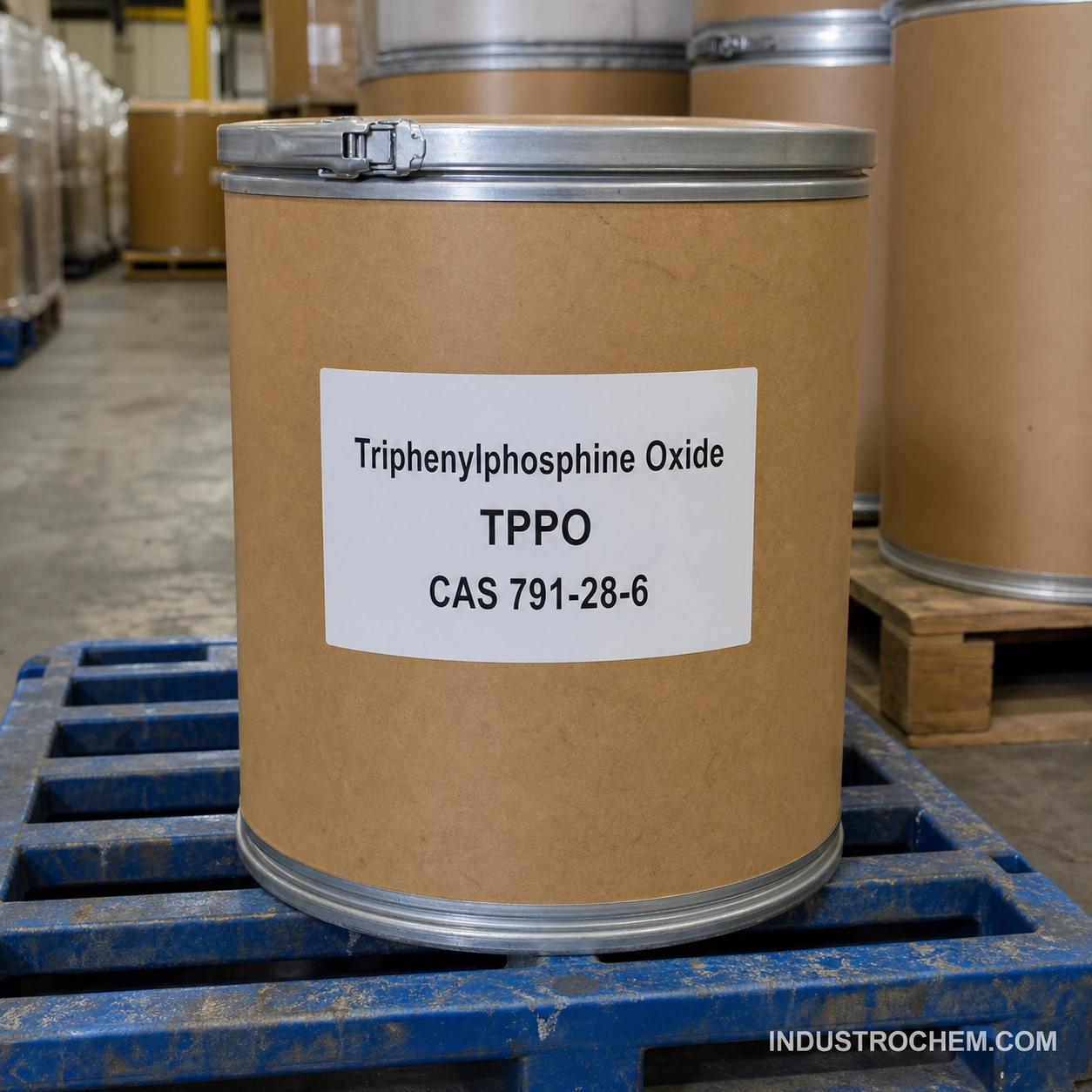
Triphenylphosphine Oxide (TPPO), CAS 791-28-6, is also called Triphenylphosphane Oxide. It is an organophosphorus phosphine oxide that may be evaluated for organophosphorus synthesis or recovery processes. For an RFQ, state the intended process, required material specification, form, quantity, packaging and destination.
Triphenylphosphine Oxide (TPPO) CAS 791-28-6
- CAS: 791-28-6
- Synonyms: Triphenylphosphine Oxide; Triphenylphosphane Oxide; TPPO
- Einecs: 212-338-8
- Molecular Formula: C₁₈H₁₅OP
- Grade: State the required product-specific specification for the intended process.
- Package: State packaging and handling requirements for the product and destination.
Product Description
| Product name | Triphenylphosphine Oxide (TPPO) |
| Synonyms | Triphenylphosphine Oxide; Triphenylphosphane Oxide; TPPO |
| CAS Number | 791-28-6 |
| Molecular formula | C₁₈H₁₅OP |
| Molar mass | 278.29 g/mol |
Physical-property requirements: confirm them against the current product-specific specification and applicable SDS.
It may be evaluated for organophosphorus synthesis or recovery processes when the intended process and specification are stated.
TPPO is the oxide and is not the same substance as triphenylphosphine (PPh3).
Safety review: assess handling, storage and process controls against the applicable SDS and current product-specific specification.
FAQ - Technical & Supply Chain
-
Q:
Are Triphenylphosphine Oxide and Triphenylphosphine the same material?
A: No. Triphenylphosphine Oxide, TPPO, is CAS 791-28-6, while Triphenylphosphine has a different CAS number and oxidation state. The quotation should state TPPO, its CAS number, formula and whether the requirement is for purified product or recovered process material. -
Q:
Which specifications matter when purchasing TPPO?
A: Confirm assay and method, appearance, melting range, loss on drying or water, Triphenylphosphine and other organophosphorus impurities, ash and color where required. Recovered and synthesis-grade material can have different impurity profiles, so approve the batch analysis and technical data for the intended use. -
Q:
Is recovered TPPO acceptable for all uses?
A: Not automatically. TPPO from byproduct or recovery streams may contain triphenylphosphine, chlorides, metal residues or solvent traces that do not affect some recovery work but can be unsuitable for sensitive synthesis or high-purity applications. The source and purification method should be stated. -
Q:
How should TPPO be stored and handled?
A: Keep in tightly closed containers in a cool, dry, ventilated area. Avoid dust formation and contact with strong oxidizers, and use appropriate hygiene measures. Confirm packaging, net quantity and any destination requirements with the current safety information. -
Q:
What are the key physical properties of TPPO?
A: Triphenylphosphine Oxide is a white crystalline solid with molecular formula C18H15OP, molar mass about 278.29 g/mol and melting point commonly around 150-157 C. Its boiling point is about 360 C and density is roughly 1.17-1.21 g/cm3.
Ordering & Documentation
Key information for document requests, quotations, and supply planning.
Documents
Tell us which documents your procurement team needs. Before an order, we will check whether the quoted source can provide them for the offered lot.
Quotation
Send the CAS number, grade, quantity, packing preference and destination.
Sample & Supply
Ask whether samples, trial quantities or repeat orders are possible. We will check each request against the sourced product and current offer.
Storage & Shipping
Product-specific conditions are confirmed before order.