









Monoethanolamine Oleate, CAS 2272-11-9, is also known as ethanolamine oleate. It is the monoethanolamine salt of oleic acid, used in surfactant and emulsifier applications. Confirm the requested physical form, intended formulation and buyer-specific acceptance criteria, quantity, packaging, destination and document availability before ordering.
Monoethanolamine Oleate CAS 2272-11-9
- CAS: 2272-11-9
- Synonyms: Monoethanolamine Oleate; Ethanolamine Oleate
- Einecs: 218-878-0
- Molecular Formula: C₂₀H₄₁NO₃
- Grade: Supply-form-specific ethanolamine oleate grade; confirm active matter and free acid/base limits.
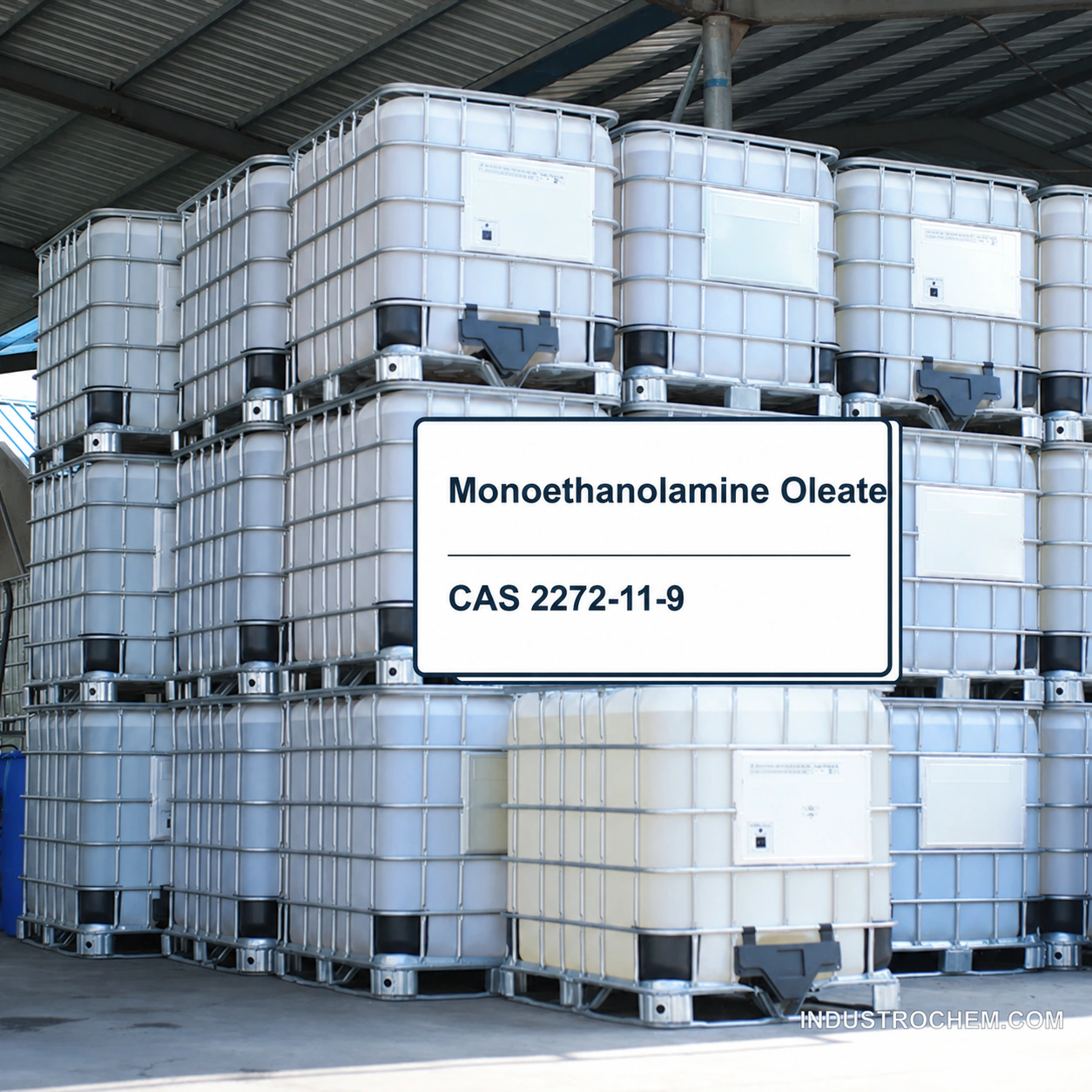
- Package: Drum or IBC for the offered liquid or paste form; confirm net weight and temperature handling.
Product Description
Product identity and intended-use review
Monoethanolamine Oleate is the monoethanolamine salt of oleic acid. CAS 2272-11-9 identifies Monoethanolamine Oleate; do not use this CAS for a different ethanolamine derivative.
Technical context
Monoethanolamine Oleate, CAS 2272-11-9, is the monoethanolamine salt of oleic acid. Before an RFQ, confirm: that the requested material is Monoethanolamine Oleate, the required physical form, intended formulation and buyer-specific acceptance criteria; quantity, packaging, destination and document availability.
In the RFQ, state: that the requested material is Monoethanolamine Oleate, the required physical form, intended formulation and buyer-specific acceptance criteria; quantity, packaging, destination and required documents.
Request current product-specific specifications, packaging details and document availability.
Use the current product-specific SDS and specification to review handling, storage and local regulatory suitability.
| Field | Current page status | Buyer check |
| Chemical identity | Monoethanolamine Oleate; CAS 2272-11-9 | CAS 2272-11-9 identifies Monoethanolamine Oleate; do not use this CAS for a different ethanolamine derivative. |
| Molecular formula | C₂₀H₄₁NO₃ | Current product-specific specification |
| Offered physical form | Confirm the offered physical form in the current product-specific specification. | Current product-specific specification |
| Grade and assay | Confirm the required value in the current product-specific specification. | Current product-specific specification |
| Application boundary | Monoethanolamine Oleate is the monoethanolamine salt of oleic acid. CAS 2272-11-9 identifies Monoethanolamine Oleate; do not use this CAS for a different ethanolamine derivative. | Buyer check |
| Packaging | Confirm packaging compatible with the offered form and destination requirements. | Request current product-specific specifications, packaging details and document availability. |
Procurement information
State the required form, quantity, intended use, packaging, destination and document needs in the RFQ.
FAQ - Technical & Supply Chain
-
Q:
Is Monoethanolamine Oleate the same material as free Monoethanolamine or Cocamide MEA?
A: No. Monoethanolamine Oleate, CAS 2272-11-9, is the ethanolammonium salt of oleic acid. It is not free monoethanolamine, Cocamide MEA, triethanolamine oleate or unneutralized oleic acid. Use the CAS number and the full ethanolamine-oleate name in the order. -
Q:
What is Monoethanolamine Oleate used for?
A: It is used as an emulsifier, corrosion inhibitor, textile or metalworking aid, cleaning intermediate and specialty formulation component. The performance depends on the degree of neutralization, active matter and whether it is supplied neat, as a paste or in solution. -
Q:
Which supply form and specifications should be agreed for Monoethanolamine Oleate?
A: Confirm whether the offer is neat salt, paste or solution and identify any water, solvent or carrier. Agree active matter, free monoethanolamine, free oleic acid or acid value, pH at the stated dilution, water, appearance, color, viscosity and fatty-acid profile with the methods. -
Q:
What handling and packaging should be confirmed for Monoethanolamine Oleate?
A: Confirm drum or IBC construction, net weight, seal condition, temperature handling and whether the product is solid, paste or liquid. Store in closed, compatible containers and apply amine-handling controls for ventilation and personal protection. -
Q:
What physical form and properties should be expected for Monoethanolamine Oleate?
A: Monoethanolamine Oleate is typically a clear to pale-yellow viscous liquid or semi-solid depending on temperature and grade. It is water-soluble and functions as a mild surfactant/emulsifier; confirm viscosity, appearance, density and pH range against the agreed specification.
Ordering & Documentation
Key information for document requests, quotations, and supply planning.
Documents
Tell us which documents your procurement team needs. Before an order, we will check whether the quoted source can provide them for the offered lot.
Quotation
Send the CAS number, grade, quantity, packing preference and destination.
Sample & Supply
Ask whether samples, trial quantities or repeat orders are possible. We will check each request against the sourced product and current offer.
Storage & Shipping
Product-specific conditions are confirmed before order.