










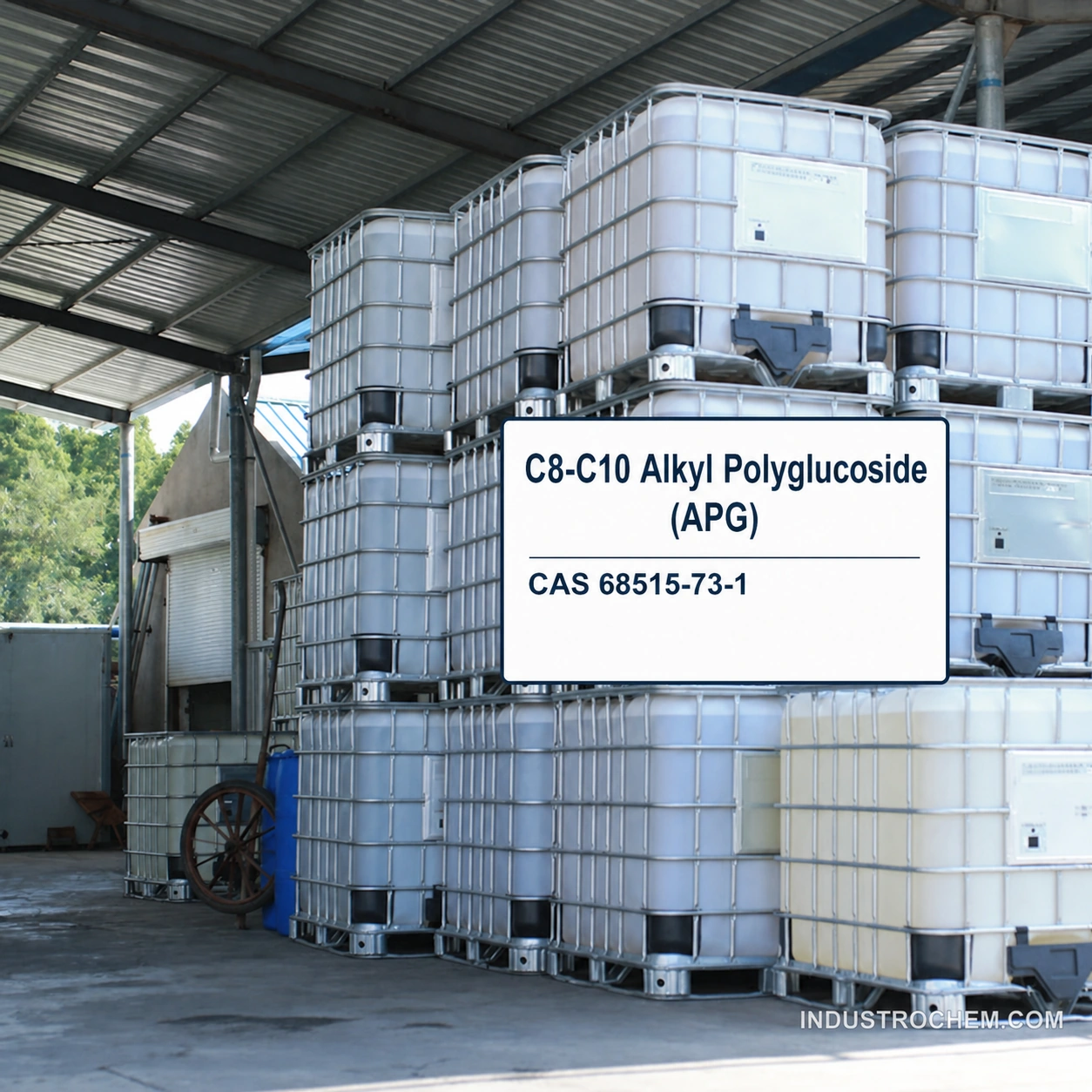
• Decyl Glucoside CAS 68515‑73‑1

Decyl Glucoside CAS 68515‑73‑1

Decyl Glucoside, identified by CAS 68515-73-1, is a non-ionic alkyl polyglucoside surfactant derived from the condensation of glucose with decanol, resulting in a stable and highly biodegradable surface-active agent. This fatty alcohol glucoside functions as a mild foaming agent and emulsifier, facilitating the reduction of surface tension and the stabilization of oil-in-water emulsions within diverse industrial formulations. As a robust glucose-based ether, it exhibits exceptional electrolytic stability and caustic compatibility, making it a critical component in the production of industrial cleaners, textile processing auxiliaries, and agricultural chemical adjuvants. Its chemical structure allows for synergistic performance when blended with other ionic surfactants to enhance wetting and soil removal properties. We provide this material with competitive factory pricing to ensure cost-effective industrial scaling, offering customized specifications to align with specific active matter concentrations. Every batch is supported by comprehensive technical documentation, including MSDS, TDS, COA, ensuring safety and quality assurance in bulk supply distribution.

  • CAS: 68515‑73‑1
  • Synonyms: Decyl d-glucoside, Alkyl polyglucoside, Caprylyl/Capryl glucoside, C10 alkyl glucoside
  • Einecs: 210-073-2‌
  • Molecular Formula: C16H22O11‌
  • Grade: Industrial grade 99%
  • Package: 200kg iron drum or 50kg plastic drum packaging
Request a quote
Share:

Product Description

Product Features
Alkyl glycoside Glucopon 650 EC Excellent emulsification ability
Alkyl glycoside Glucopon 650 EC Strong alkali resistance, strong alkaline cleaning agent Excellent solubilizer
Alkyl glycoside Glucopon 650 EC Foam properties are significantly better than aliphatic amine ethoxylates
Alkyl glycoside Glucopon 650 EC Excellent plastic compatibility, No stress fragmentation behavior
Alkyl glycoside Glucopon 650 EC has better wetting and film-forming properties than other surfactants
Alkyl glycoside Glucopon 650 EC has obvious anti-streak performance in residual applications
Alkyl glycoside Glucopon 650 EC has significantly less irritating properties than comparable nonionic surface activity, which can reduce the irritability of some surface active systems

Application Fields

Household fruits and vegetables, tableware detergent
Alkyl glycosides are widely used in melons, fruits, vegetables and pesticide removal with rich foam, strong cleaning power, safe and non-toxic and biodegradable.

Food processing equipment detergents
Alkyl glycosides have excellent alkali resistance and emulsification and degreasing ability. Particularly rich and long-lasting foaming properties are particularly suitable for open foam cleaning (COP) in food processing plants. It is also particularly suitable for oven cleaning with thick carbonized oil scale.

Fabric-related
Glucopon-based formulations (compound LAS) exhibit excellent washing properties at both high and low temperatures, especially against oily stains, but are very gentle on extreme stains.
Glucopon is suitable for low-temperature (e.g. 20 C) laundry formulations and can be compounded with fatty alcohols or as a single-use surface activity.
When not enough detergent is added during the washing process, Glucopon can still exert good cleaning power.

FAQ - Technical & Supply Chain

  • Q:

    How is the chemical identity of CAS 68515-73-1 verified regarding its surfactant class?

    A: Identity is confirmed through its classification as an alkyl polyglucoside (APG), specifically a C10 carbon chain length, which distinguishes its superior foaming profile and solubility from shorter-chain octyl glucosides or longer-chain lauryl derivatives.
  • Q:

    In what capacity is this chemical utilized in industrial detergent formulations?

    A: It is commonly used as a primary or co-surfactant in high-alkaline industrial degreasers and hard surface cleaners, where it provides excellent wetting power and remains chemically stable in the presence of high salt concentrations or extreme pH levels.
Documents

Documents and Product Support

For product review and sourcing evaluation, supporting documents can be coordinated according to the product type, inquiry stage, and order requirements.

  • COA for batch-based quality reference
  • TDS for key physical and chemical information
  • SDS / MSDS for handling, storage, and safety reference
  • Packing information for sample, trial, and bulk orders
  • Technical communication based on application and specification requirements
Quotation

Information to Confirm Before Quotation

Clear sourcing information helps reduce specification mismatch and allows a more accurate quotation before sample or bulk order discussion.

  • Product name and CAS number
  • Application or intended end use
  • Required purity, grade, or specification
  • Sample quantity, trial order, or bulk demand
  • Preferred packing form or net weight
  • Destination country or port
  • Required documents or compliance expectations
Storage & Handling

Packaging, Storage, and Handling Notes

Packaging form, storage conditions, shelf life, and shipment arrangements should be confirmed according to the product characteristics, package size, and destination requirements.

Before order confirmation, buyers are advised to review the corresponding product documents and confirm whether any special storage, labeling, or handling requirements apply.

Supply Support

Sample, Bulk Order and Repeat Supply Support

Support can be arranged for sample discussion, bulk supply planning, packaging confirmation, and routine sourcing communication based on the actual product and order requirements.

For repeat-use formulations or long-term procurement plans, buyers may discuss specification consistency, packaging preferences, delivery expectations, and document coordination in advance.

Contact Form

Use our contact form to send us your questions, suggestions or comments. We will respond as soon as possible.