










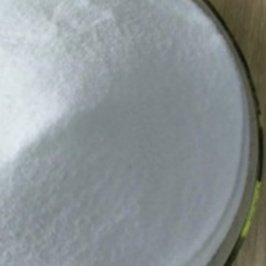
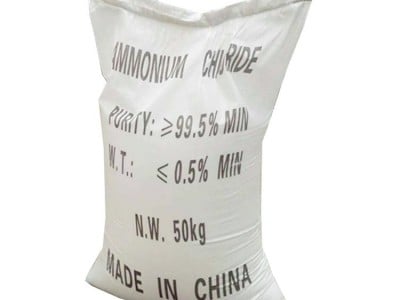
Ammonium Chloride, CAS 12125-02-9, is also known as sal ammoniac or ammonium muriate. It is a white crystalline inorganic ammonium salt used in electroplating, flux, fertilizer and industrial process applications. Confirm the required grade, physical form, analytical limits and intended technical use before requesting specifications and quotation.
Ammonium Chloride CAS 12125-02-9
- CAS: 12125-02-9
- Synonyms: Ammonium chloride; Sal ammoniac; Ammonium muriate
- Einecs: 235-186-4
- Molecular Formula: NH₄Cl
- Grade: Confirm the current product-specific specification.
- Package: Confirm packaging for the offered material and destination requirements.
Product Description
| Item | Current page status | Buyer confirmation |
| Chemical identity | Ammonium Chloride; CAS 12125-02-9 | Ammonium Chloride is not a generic name for other ammonium salts. The required grade and physical form must be specified separately. |
| Molecular formula | NH₄Cl | Specify the required physical form. |
| Prior test result | Not confirmed on this page | State the required analytical limits. |
| Grade and assay | Not confirmed on this page | Required grade or analytical standard |
| Packaging | Not confirmed on this page | State packaging and destination requirements. |
Confirm packaging for the offered material and destination requirements.
Use the current product-specific SDS and specification to review handling, storage and local regulatory suitability.
Ammonium Chloride, CAS 12125-02-9, is an inorganic ammonium salt. This page does not confirm a battery grade, an anti-caking treatment, a fixed package or a finished-use application.
FAQ - Technical & Supply Chain
-
Q:
Are Ammonium Chloride and NH4Cl the same salt?
A: Yes. Ammonium chloride and NH4Cl identify CAS 12125-02-9. They are not ammonium sulfate, ammonium bicarbonate or sodium chloride. The purchase order should state industrial, feed, food or other grade, because permitted impurity limits and documentation can differ. -
Q:
What is Ammonium Chloride used for?
A: Ammonium chloride is used in electroplating, flux, fertilizer and process applications. Suitability depends on the required grade and physical form, so state the intended process and any anti-caking, purity or particle-size requirements instead of assuming a single finished-use grade. -
Q:
Which specifications should be agreed for industrial Ammonium Chloride?
A: Set NH4Cl assay, moisture, pH, insoluble matter, iron, sulfate, heavy metals, particle size and caking tendency with the test methods. Electroplating, flux, fertilizer and process users may need different limits, so the specification should match the selected grade. -
Q:
Which physical form should be requested?
A: The required physical form must be specified separately, because ammonium chloride can be supplied in different crystal sizes, granulations or powder forms. Confirm the form, bulk density or particle-size target, and any anti-caking treatment required for storage and handling. -
Q:
What should be confirmed for packaging, storage and regulatory use?
A: Confirm packaging for the offered material and destination requirements, then review handling, storage and local regulatory suitability against the product-specific specification. The material is a white crystalline solid with density around 1.53 g/cm3 and sublimes rather than melting at normal pressure.
Ordering & Documentation
Key information for document requests, quotations, and supply planning.
Documents
Tell us which documents your procurement team needs. Before an order, we will check whether the quoted source can provide them for the offered lot.
Quotation
Send the CAS number, grade, quantity, packing preference and destination.
Sample & Supply
Ask whether samples, trial quantities or repeat orders are possible. We will check each request against the sourced product and current offer.
Storage & Shipping
Product-specific conditions are confirmed before order.