Chemical products
  • Acid Orange 67 CAS 12220-06-3

Acid Orange 67 CAS 12220-06-3

Acid Orange 67 CAS 61968-66-9 is a high-affinity anionic azo dye chemically defined as sodium 4-(4-((2,4-dimethylphenyl)azo)-5-hydroxy-3-methyl-1H-pyrazol-1-yl)benzenesulfonate , functioning primarily as a vibrant colorant for polyamide fibers and wool blends. Commercially recognized as Acid Yellowish Orange 3G or Acid Orange RXL, this yellow-orange powder is utilized to achieve excellent leveling and light fastness in the dyeing of nylon carpets, sportswear fabrics, and silk. We provide professional access to this material with competitive factory pricing and the ability to meet customized specifications (such as high-concentration crude or salt-free liquid grades) for various manufacturing requirements. Our commitment to technical transparency ensures that every shipment is accompanied by comprehensive MSDS, TDS, COA documentation to support your quality assurance protocols, and we maintain capacity for consistent bulk supply to facilitate large-scale industrial operations.

  • CAS: 12220-06-3
  • Synonyms: C.I. Acid Orange 67, C.I. 14172, Weak Acid Yellow RXL, Triacid Fast Milling Yellow 3RL, Kayanol Yellow N3R, Acid Yellow RXL
  • Einecs: 235-406-9
  • Molecular Formula: C26H21N4NaO8S2
  • Grade: Textile printing and dyeing chemicals
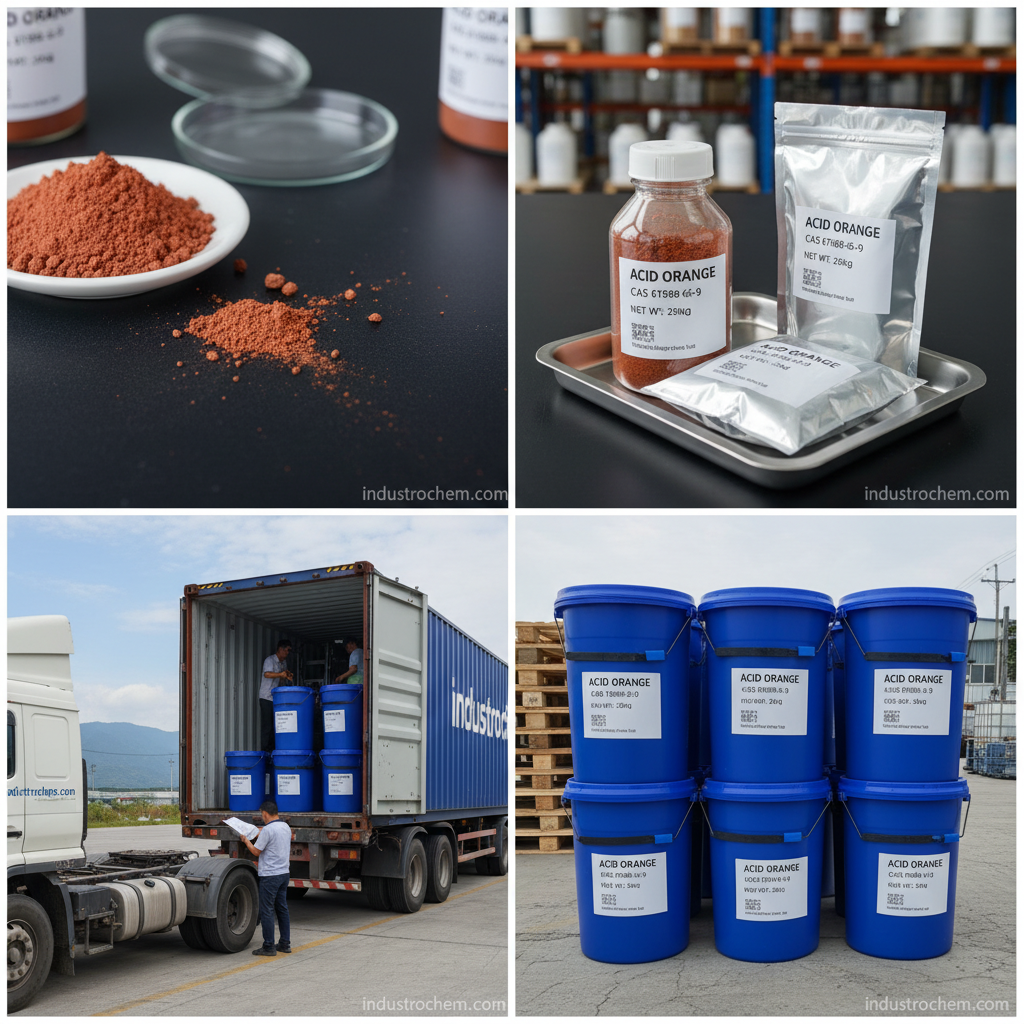
  • Package: 25kg/bag (Plastic woven bag with PE liner) or 500kg/1000kg Jumbo Bag.
Request a quote
Share:

Product Description

Physical & Chemical Properties

We understand that you need precise data to determine if this dye fits your current recipe or process. Below are the typical characteristics of our Acid Orange.

Property Specification
Chemical Name Acid Orange (Specific Azo/Metal Complex)
CAS Number 12220-06-3
Appearance Uniform Orange/Reddish-Orange Powder
Solubility Good solubility in water (Active at >80°C)
pH Stability Stable in acidic to neutral baths (pH 3.0 – 6.5)
Light Fastness High (Grade 5-6 typical)
Washing Fastness Excellent
Leveling Properties Very Good

Key Applications

Acid Orange (CAS 12220-06-3) is an anionic dye, meaning it bonds ionically with fibers in an acidic environment. Its molecular structure makes it particularly effective for protein fibers and synthetic polyamides.

1. Textile Dyeing (Nylon & Polyamide) This is the most common application. It is widely used in the production of swimwear, activewear, and hosiery where nylon is the dominant fiber. It provides excellent coverage and minimizes the “barré” effect (streaks) often seen in nylon.

2. Wool and Silk Processing For natural protein fibers, this dye offers a gentle affinity that preserves the soft hand-feel of the fabric while ensuring deep dye penetration. It is a staple for high-end wool yarns and silk garments.

3. Leather Dyeing It is also utilized in the leather industry for spray dyeing and drum dyeing, providing a rich, uniform base color for tanned leathers.

4. Blended Fabrics Ideally suited for Wool/Nylon blends (often found in carpet manufacturing), ensuring both fibers take up the color at similar rates for a uniform look.

Why Sourcing the Right Quality Matters

Not all dyes with the same Color Index (C.I.) number or CAS number perform the same. The difference lies in the manufacturing process—specifically in salt content and impurity removal.

  • High Solubility: Our product is processed to minimize insoluble impurities, preventing filter clogging in your dye machines.
  • Batch-to-Batch Consistency: We know that a slight shade variation can ruin a production run. We strictly control ΔEΔE values to ensure the orange you buy today matches the orange you buy next year.

Safety and Precautionary Measures

While widely used, this is a chemical substance and should be handled with care in an industrial setting.

  • Dust Control: Dye powders can be fine and dusty. Local exhaust ventilation is recommended to prevent inhalation.
  • Personal Protective Equipment (PPE): Operators should wear appropriate respiratory protection (dust mask), safety goggles, and rubber gloves to avoid staining skin and eye irritation.
  • Handling: Avoid eating, drinking, or smoking in the application area. Wash hands thoroughly after handling the dye.

For additional textile colorant options, see Disperse Violet 26 and Vat Blue 18.

Storage and Stability

To maximize the shelf life and ensure the powder remains free-flowing:

  • Keep it Dry: Hygroscopic tendencies mean moisture is the enemy. Store in tightly closed containers.
  • Temperature: Store in a cool, dry place away from extreme heat sources.
  • Packaging: Reseal the liner immediately after taking out the required quantity to prevent moisture absorption from the air.

FAQ - Technical & Supply Chain

  • Q:

    What is Acid Orange 67 CAS 12220-06-3?

    A: Acid Orange 67, also called C.I. Acid Orange 67 or C.I. 14172, is a water-soluble anionic azo dye with molecular formula C26H21N4NaO8S2 and EINECS 235-406-9. It is supplied as an orange to reddish-orange powder for textile and metal-finishing applications.
  • Q:

    Which fibers is Acid Orange 67 mainly used to dye?

    A: It is most often used on nylon and other polyamide fibers, including swimwear, activewear, hosiery, and similar textiles. It is also suitable for protein fibers such as wool and silk, where it provides even coverage and preserves a soft hand feel.
  • Q:

    Is Acid Orange 67 a leveling or milling acid dye?

    A: Acid Orange 67 is generally considered a weak acid or half-milling dye. It gives better wet fastness than simple leveling dyes, but normally needs a mildly acidic dye bath and a suitable leveling agent to achieve uniform exhaustion.
  • Q:

    Can Acid Orange 67 be used to color anodized aluminum?

    A: Yes. Acid dyes such as Acid Orange 67 can color anodized aluminum by penetrating the porous oxide layer created during anodizing. The dye is then sealed into the coating, producing a durable orange-gold finish.
  • Q:

    What pH and fastness conditions suit Acid Orange 67?

    A: It is stable in acidic to neutral dye baths, typically around pH 3.0-6.5, and performs well at elevated dyeing temperatures. Light fastness is commonly around ISO 5-6, with moderate to good washing fastness, depending on substrate and dyeing method.

Ordering & Documentation

Key information for document requests, quotations, and supply planning.

Documents

COA, TDS, SDS/MSDS and packing details are available on request.

Quotation

Send the CAS number, grade, quantity, packing preference and destination.

Sample & Supply

Support is available for samples, trial orders, bulk and repeat supply.

Storage & Shipping

Product-specific conditions are confirmed before order.

Contact Form

Use our contact form to send us your questions, suggestions or comments. We will respond as soon as possible.