










Talc, CAS 14807-96-6, is also known as hydrated magnesium silicate or talcum powder. It is a naturally occurring hydrated magnesium silicate mineral used as an industrial filler and processing aid. State particle, mineralogical, brightness, moisture, quantity, packaging, destination and document requirements when requesting a quotation.
Talc CAS 14807-96-6
- CAS: 14807-96-6
- Synonyms: Talc; Hydrated magnesium silicate; Talcum powder
- Einecs: 238-877-9
- Molecular Formula: Mg₃H₂(SiO₃)₄ (idealized talc composition)
- Grade: Confirm the current product-specific specification.
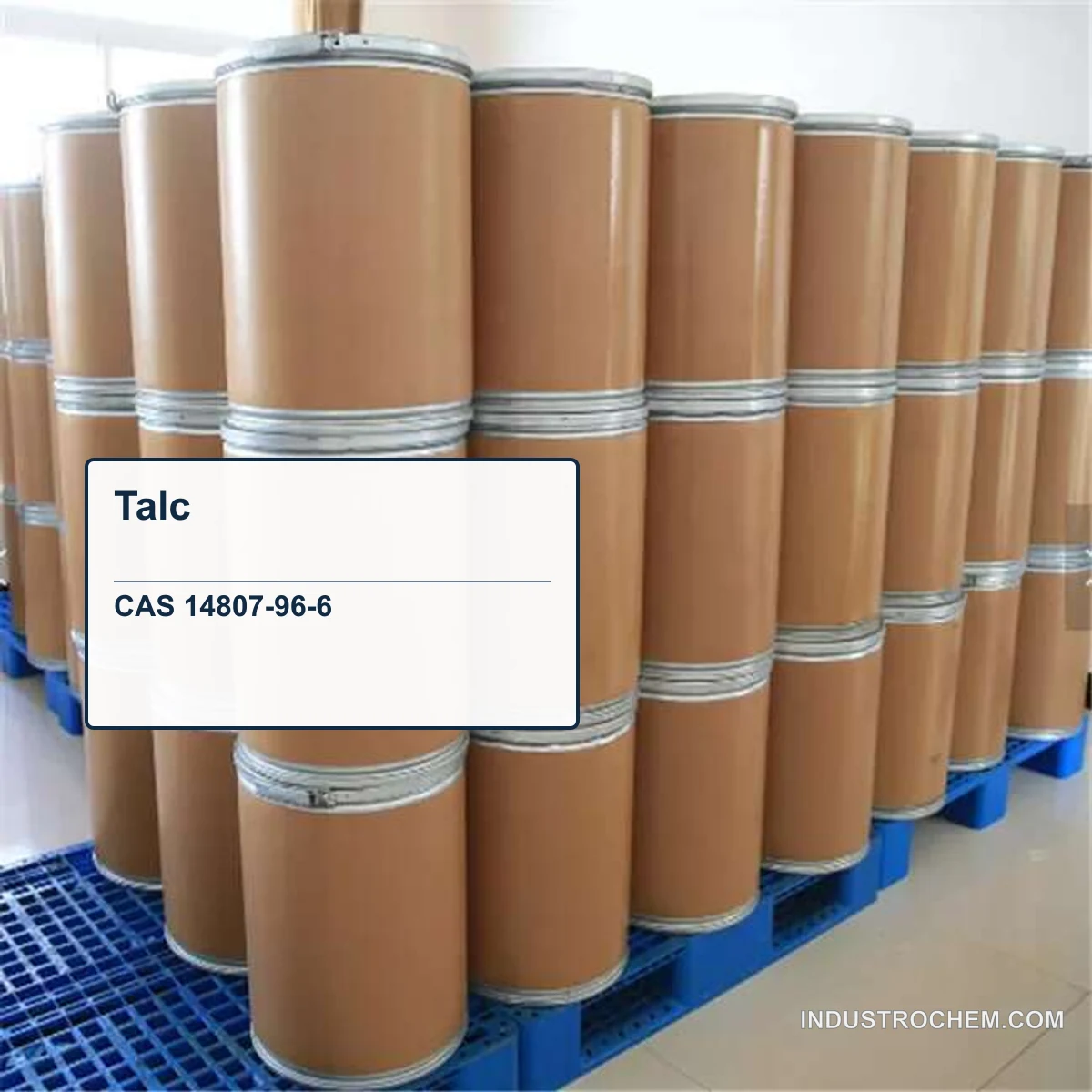
- Package: Confirm packaging for the offered material and destination requirements.
Product Description
Talc is a naturally occurring hydrated magnesium silicate mineral. Commercial suitability depends on the current product-specific mineralogical and particle specification.
Typical use: talc is evaluated as a mineral filler and processing aid in plastics, rubber, paper, and coating formulations. Confirm particle and mineralogical requirements.
Material characteristics: Talc has a layered mineral structure. Confirm particle shape, mineralogy, and physical performance requirements for the offered material rather than relying on generic consumer talcum-powder wording.
FAQ - Technical & Supply Chain
-
Q:
What is Talc used for?
A: Talc is a naturally occurring hydrated magnesium silicate used as an industrial filler and processing aid in plastics, paints, coatings, rubber, ceramics, paper, sealants and cable compounds. It can also be used as a flatting, antiblocking or anticaking agent, but the grade and mineralogy must match the end use. -
Q:
Does CAS 14807-96-6 define one Talc grade?
A: No. CAS 14807-96-6 identifies Talc as a mineral, not one fixed particle size, brightness or mineralogical composition. Natural talc varies with the deposit and may contain associated minerals such as chlorite, dolomite, calcite, magnesite, quartz or iron-bearing phases, so the CAS number alone is insufficient for lot approval. -
Q:
Which specifications and physical properties matter for industrial Talc?
A: Review particle-size distribution, brightness or whiteness, moisture, bulk density, oil absorption, surface area, mineralogical composition, acid-soluble matter and heavy metals. Talc is normally a soft, platy white to off-white powder with Mohs hardness about 1 and density commonly in the 2.6-2.8 g/cm3 range, but commercial grades vary by application. -
Q:
How should Talc be stored and handled?
A: Store Talc in a cool, dry area in tightly closed bags or containers to prevent contamination and moisture pickup. Avoid generating airborne dust during transfer and follow the current product-specific safety information for dust control, personal protection and local regulatory requirements.
Ordering & Documentation
Key information for document requests, quotations, and supply planning.
Documents
Tell us which documents your procurement team needs. Before an order, we will check whether the quoted source can provide them for the offered lot.
Quotation
Send the CAS number, grade, quantity, packing preference and destination.
Sample & Supply
Ask whether samples, trial quantities or repeat orders are possible. We will check each request against the sourced product and current offer.
Storage & Shipping
Product-specific conditions are confirmed before order.