









Chemical products
  • Oxidized Polyethylene Wax (OPE Wax) CAS 68441-17-8
  • Oxidized Polyethylene Wax (OPE Wax) CAS 68441-17-8

Oxidized Polyethylene Wax (OPE Wax) CAS 68441-17-8

Oxidized Polyethylene Wax, commonly called OPE Wax, CAS 68441-17-8, is a functional wax supplied for PVC processing, coatings, inks and wax-dispersion formulations. Confirm the required grade, then request a quotation with COA/TDS/SDS for bulk supply.

  • CAS: 68441-17-8
  • Synonyms: Oxidized polyethylene wax; OPE wax; Oxidized PE wax
  • Einecs: Not specified (polymeric product)
  • Molecular Formula: Not specified (oxidized polymeric wax)
  • Grade: Industrial oxidized wax grade; select by acid value, drop point, viscosity and physical form
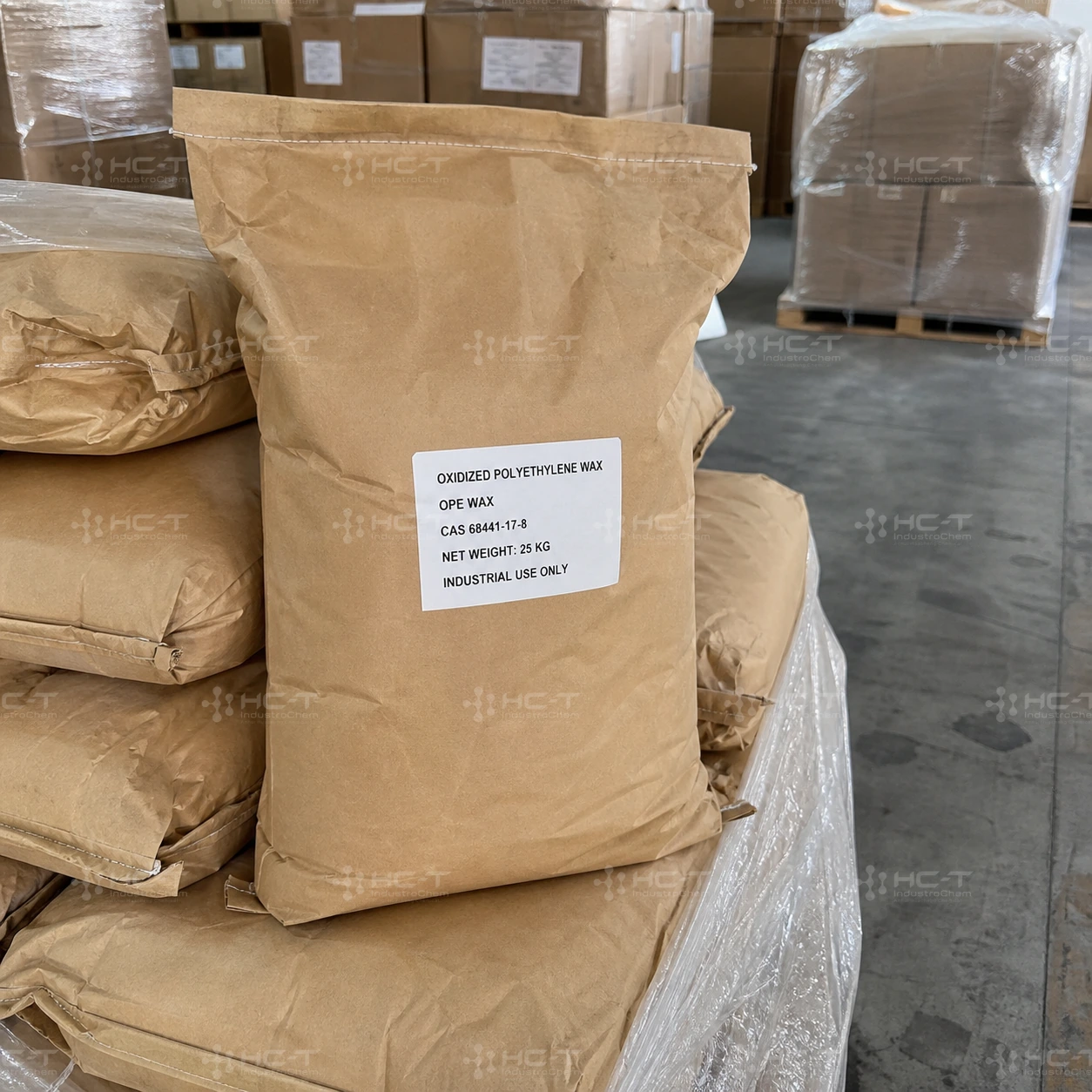
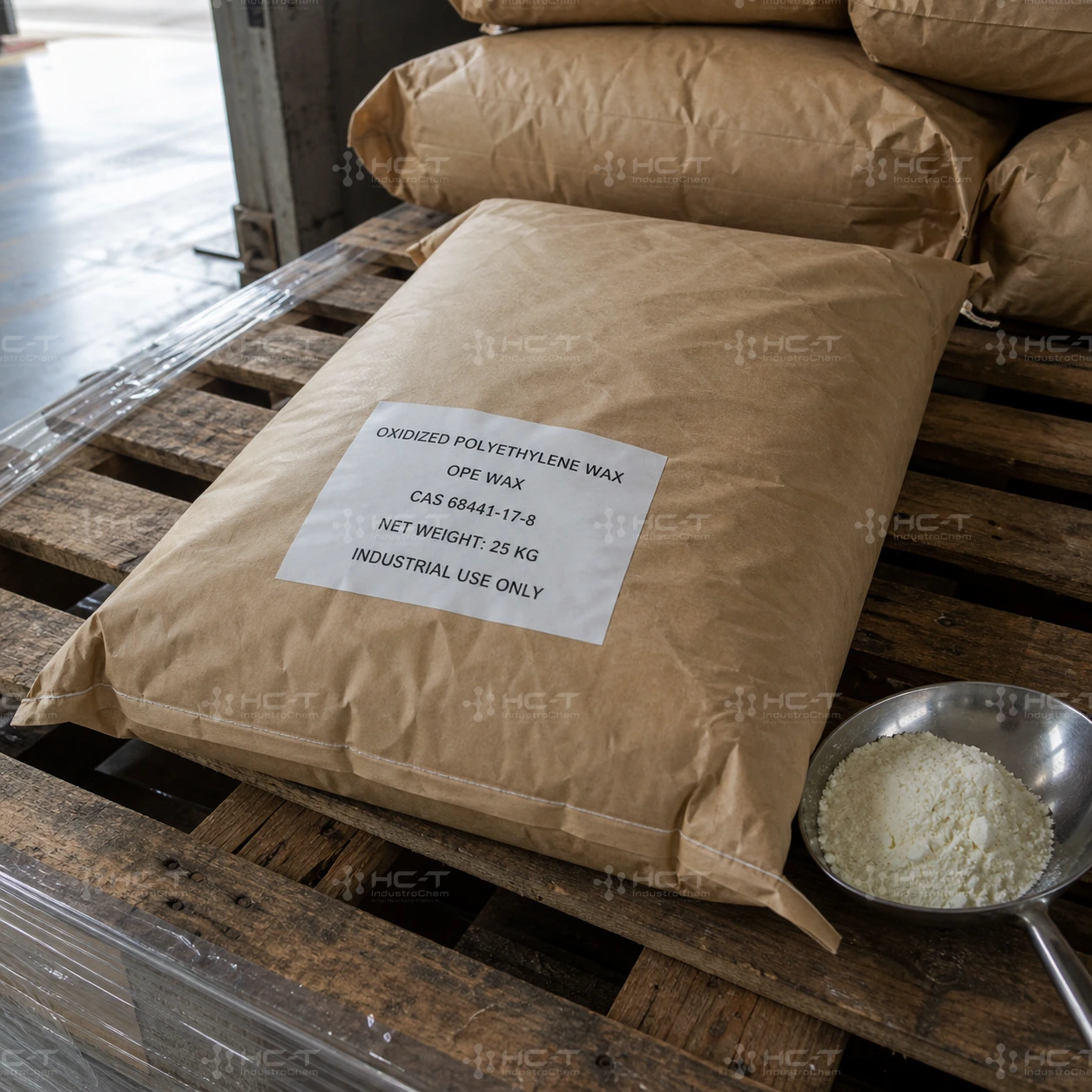
  • Package: 25 kg bags for flakes, powder or granules; larger packs available subject to agreed grade and shipment requirements
Request a quote
Share:

Product Description

Oxidized Polyethylene Wax (OPE Wax) CAS 68441-17-8 is a low-molecular-weight polyethylene wax functionalized by controlled oxidation.

Synonyms: Oxidized polyethylene wax; OPE wax; oxidized PE wax.

CAS: 68441-17-8.

Molecular formula: Not specified (oxidized polymeric wax).

It is supplied as flakes, powder or granules.

Oxidation introduces polar carboxyl, carbonyl and hydroxyl groups.

It improves wetting and compatibility with resins, pigments and fillers compared with non-oxidized PE wax.

It is used as an internal or external lubricant in PVC processing.

It is used as a pigment and filler dispersant in masterbatches, and as a slip, anti-scratch or rub-resistance additive in coatings, inks and polishes.

Acid value is a direct measure of oxygen-containing functionality and strongly influences polarity, dispersion and interaction with PVC, coatings and inks.

For many grades, acid value is roughly 5-35 mg KOH/g.

Grades are selected by acid value, drop point and viscosity.

For purchasing, confirm acid value, drop point or softening range, viscosity, density, physical form and particle-size requirement.

Keep containers closed and follow the current SDS for storage and handling.

Use suitable PPE and exposure controls when handling the material.

Confirm acid value, drop point, viscosity and physical form on the COA.

Confirm grade, packaging, and specification as required.

The page is an RFQ entry point and does not state stock, price, MOQ, or fixed lead time.

For an RFQ, state the intended application, required grade, quantity, packaging, destination, and document needs.

FAQ - Technical & Supply Chain

  • Q:

    What is Oxidized Polyethylene Wax (OPE Wax) CAS 68441-17-8?

    A: Oxidized Polyethylene Wax, commonly called OPE wax or oxidized PE wax, is a low-molecular-weight polyethylene wax that has been functionalized by controlled oxidation. The oxidation introduces polar carboxyl, carbonyl and hydroxyl groups, which makes it useful as a lubricant, dispersing agent and surface modifier in polar systems.
  • Q:

    How does oxidation change the way OPE wax behaves in a formulation?

    A: Oxidation makes the wax more polar and improves wetting and compatibility with resins, pigments and fillers compared with non-oxidized PE wax. It also tends to raise acid value and can reduce melt viscosity, change hardness and improve adhesion, dispersibility or emulsion stability depending on the grade.
  • Q:

    Why is acid value the key control point when selecting OPE wax?

    A: Acid value is a direct measure of the oxygen-containing functionality created during oxidation, so it strongly influences polarity, dispersion and interaction with PVC, coatings, inks and fillers. For many OPE wax grades the acid value is roughly 5-35 mg KOH/g; the target should be matched to the resin system and performance requirement rather than assumed from product name alone.
  • Q:

    Where is OPE wax used, and how does the choice differ between PVC and coatings?

    A: OPE wax is used as an internal or external lubricant in PVC processing, as a pigment and filler dispersant in masterbatches, and as a slip, anti-scratch or rub-resistance additive in coatings, inks and polishes. In PVC, drop point, viscosity and lubrication balance are often critical, while in coatings and inks the wax may be added directly or converted into a wax dispersion, making particle size and polarity especially important.
  • Q:

    Is OPE wax interchangeable with ordinary polyethylene wax?

    A: Not automatically. OPE wax has polar functional groups and an acid value, while standard PE wax is essentially non-polar; the two grades can behave differently in wetting, dispersion, adhesion and melt flow. A direct substitution should be tested in the target formulation, and the acid value, drop point and viscosity should be compared.

Ordering & Documentation

Key information for document requests, quotations, and supply planning.

Documents

Tell us which documents your procurement team needs. Before an order, we will check whether the quoted source can provide them for the offered lot.

Quotation

Send the CAS number, grade, quantity, packing preference and destination.

Sample & Supply

Ask whether samples, trial quantities or repeat orders are possible. We will check each request against the sourced product and current offer.

Storage & Shipping

Product-specific conditions are confirmed before order.

Contact Form

Use our contact form to send us your questions, suggestions or comments. We will respond as soon as possible.
For a quotation, please include the product name or CAS number, quantity, grade or application, and destination country or port. Tell us if you need a sample, COA, TDS or SDS.