










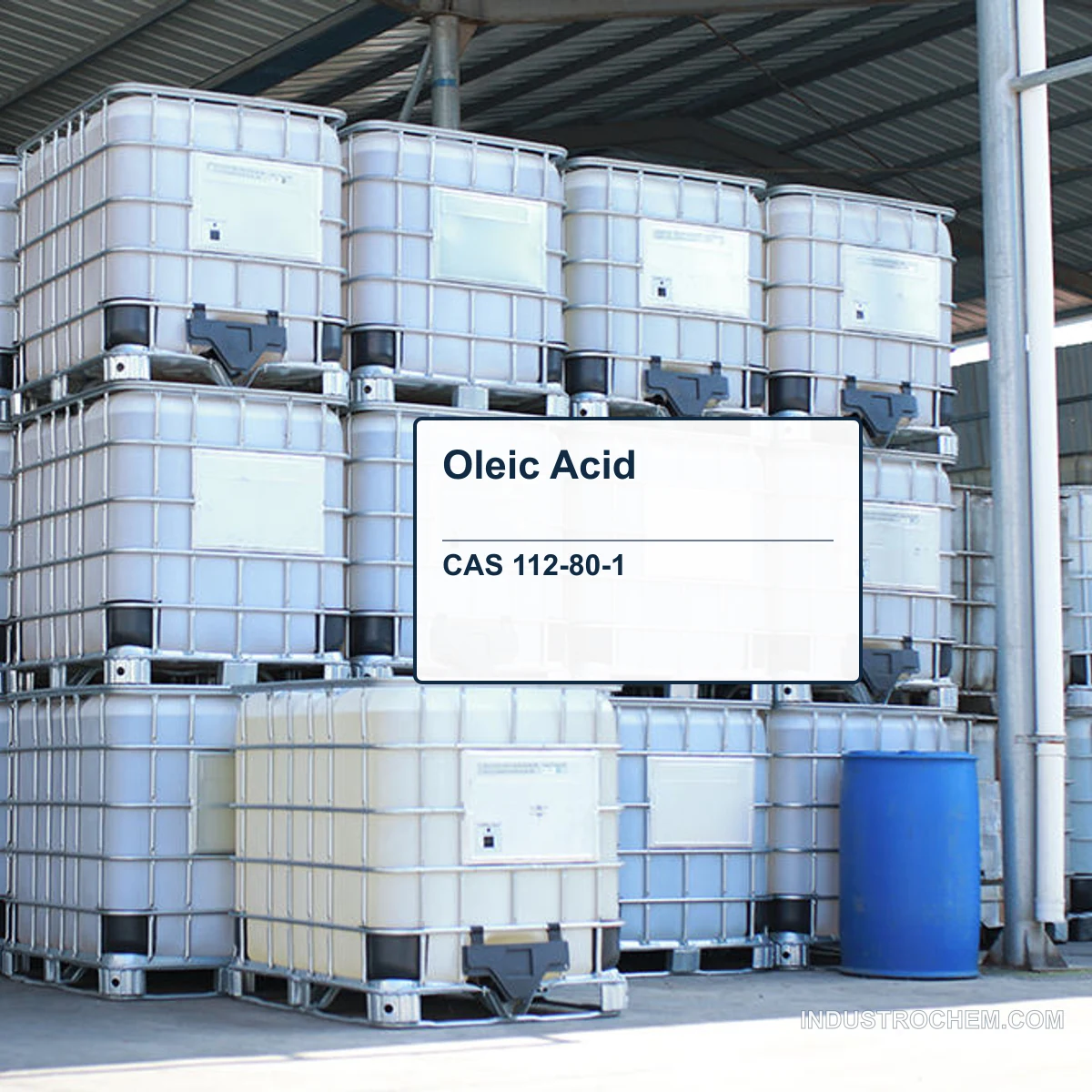
Oleic Acid, identified by CAS 112-80-1, is a long-chain monounsaturated omega-9 fatty acid and carboxylic acid characterized by a single cis-double bond at the C-9 position. This organic lipid functions as a versatile chemical intermediate and lubricating agent, facilitating the synthesis of metallic oleates, specialized esters, and surface-active derivatives within large-scale industrial manufacturing. As a fundamental fatty acid chain, 9-octadecenoic acid serves as a critical raw material in the production of industrial soaps, textile softeners, and metalworking fluids where high oxidative stability and solvency are required. Its unique molecular structure allows it to act as an effective emulsifier and dispersion stabilizer in oil-in-water systems for construction and coating applications. We provide this material with competitive factory pricing to support continuous chemical production, offering customized specifications to meet specific titer and iodine value requirements. Comprehensive technical support is integrated into our service, providing MSDS, TDS, COA with every shipment to ensure regulatory compliance in bulk supply operations.
Oleic Acid CAS 112-80-1
- CAS: 112-80-1
- Synonyms: Oleic Acid, cis-9-Octadecenoic Acid, Octadecenoic Acid, (Z)-9-Octadecenoic Acid
- Einecs: 204-007-1
- Molecular Formula: C18H34O2
- Grade: Industrial grade 99%
- Package: 200kg iron drum or 50kg plastic drum packaging
Product Description
Product Properties:
The color is lighter, and the color of the product is better; pure vegetable oil, only fragrant vegetable oil taste, no peculiar smell;
high C18:1 content, good lubrication, higher output;
low turbidity, more convenient to use, high stability;
Saponification value: 197~207
Acid value: 195~205
Iodine value: 115~120
1. It is mainly used to prepare plastic plasticizers butyl epoxy oleate and octyl epoxy oleate. Used in the wool textile industry for the preparation of antistatic agents and lubricating softeners. It is used in the wood industry to prepare water-resistant paraffin emulsions. Azelaic acid can be prepared by oxidation, which is the raw material for making polyamide resin. It can also be used to manufacture emulsifiers, printing and dyeing auxiliaries, industrial solvents, mineral flotation agents and release agents. It can also be used to prepare carbon paper, typewriter, ballpoint pen oil and various oleates.
2. It can be used as a lubrication and seizing agent for drilling mud. The sodium or potassium salt of oleic acid is a component of soap. Pure sodium oleate has good decontamination ability, can be used as a surfactant such as emulsifier, and can be used for cholelithiasis. Other metal salts of oleic acid can also be used in waterproof fabrics, lubricants, polishes, etc.
3. Used for biochemical analysis and gas chromatography reference materials.
4. It is used to prepare plastic plasticizers, emulsifiers, lubricants, ointments, ore flotation agents, etc.
5. It is used as a raw material for detergents, fatty acid soap bases, cosmetics, chemical fiber oils, and textile auxiliaries. Refined oleic acid is used as a raw material for plastics, engineering plastics, nylon 8 and nylon 9.
It is mainly used to prepare plastic plasticizers butyl epoxy oleate or octyl epoxy oleate. The wool textile industry is used in the preparation of antistatic agents and lubricating softeners. The wood industry is used to prepare water-resistant paraffin emulsions. azelaic acid is prepared by oxidation, which is the raw material of polyamide resin (nylon). It can also be used as pesticide emulsifier, printing and dyeing auxiliaries, industrial solvents, metal mineral flotation agents, release agents, oil hydrolysis, and used to prepare carbon paper, typing paper, ballpoint pen oil and various oleates. As a chemical reagent, used as chromatographic comparison samples and used in biochemical research, calcium, ammonia, copper, magnesium, sulfur, etc.
FAQ - Technical & Supply Chain
-
Q:
How is the chemical identity of CAS 112-80-1 verified against saturated fatty acids like Stearic Acid?
A: Identity is confirmed through iodine value testing and gas chromatography, which detect the presence of the characteristic carbon-carbon double bond, distinguishing its liquid state and higher reactivity from the saturated, solid profile of stearic acid. -
Q:
What is the common functional role of this chemical in industrial lubricant manufacturing?
A: It is typically applied as a friction modifier and corrosion inhibitor in metalworking and drilling fluid formulations, where its polar head group anchors to metal surfaces to provide a stable, protective lubricating film.
Documents and Product Support
For product review and sourcing evaluation, supporting documents can be coordinated according to the product type, inquiry stage, and order requirements.
- COA for batch-based quality reference
- TDS for key physical and chemical information
- SDS / MSDS for handling, storage, and safety reference
- Packing information for sample, trial, and bulk orders
- Technical communication based on application and specification requirements
Information to Confirm Before Quotation
Clear sourcing information helps reduce specification mismatch and allows a more accurate quotation before sample or bulk order discussion.
- Product name and CAS number
- Application or intended end use
- Required purity, grade, or specification
- Sample quantity, trial order, or bulk demand
- Preferred packing form or net weight
- Destination country or port
- Required documents or compliance expectations
Packaging, Storage, and Handling Notes
Packaging form, storage conditions, shelf life, and shipment arrangements should be confirmed according to the product characteristics, package size, and destination requirements.
Before order confirmation, buyers are advised to review the corresponding product documents and confirm whether any special storage, labeling, or handling requirements apply.
Sample, Bulk Order and Repeat Supply Support
Support can be arranged for sample discussion, bulk supply planning, packaging confirmation, and routine sourcing communication based on the actual product and order requirements.
For repeat-use formulations or long-term procurement plans, buyers may discuss specification consistency, packaging preferences, delivery expectations, and document coordination in advance.


