










Chemical products
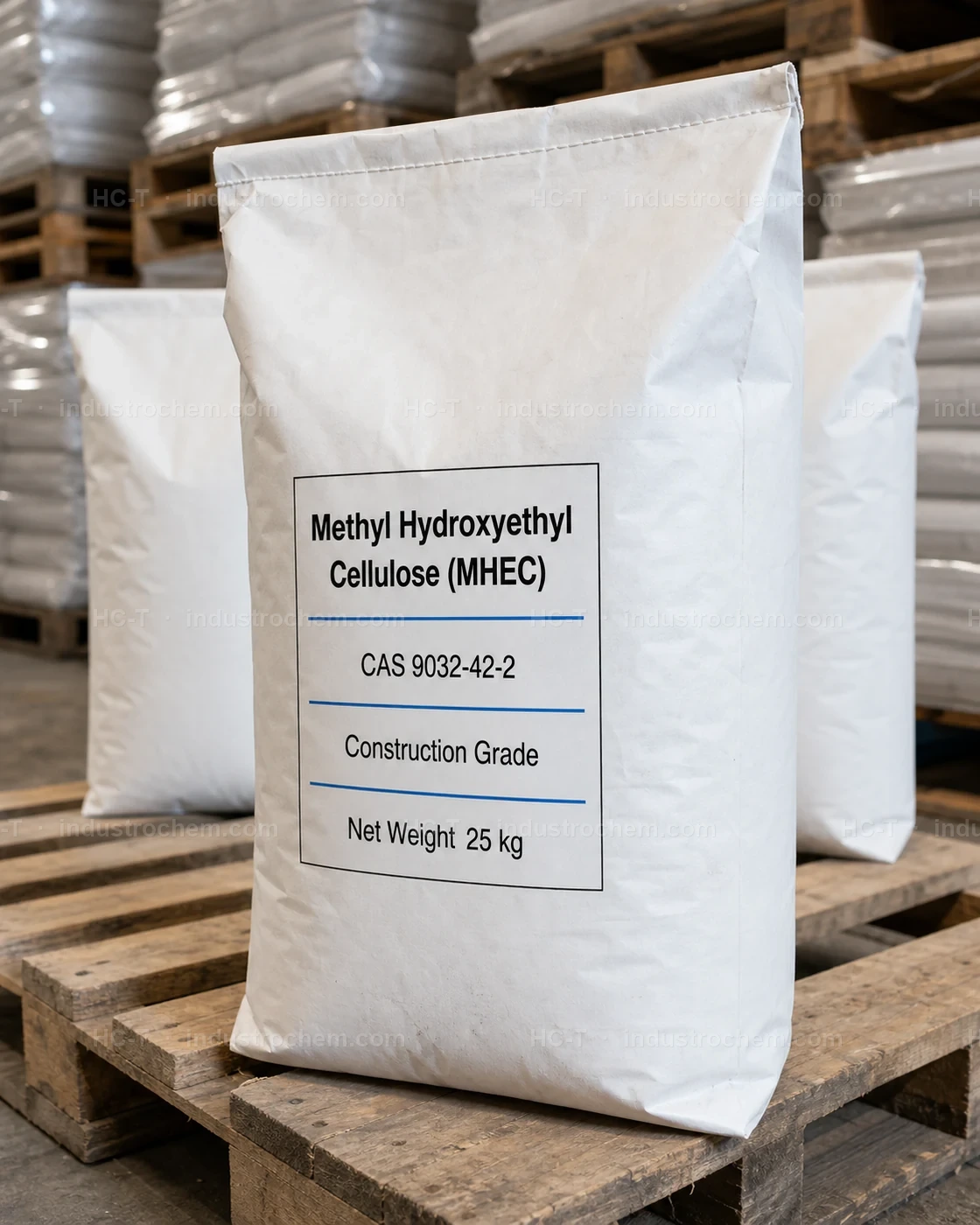
  • Methyl Hydroxyethyl Cellulose (MHEC) CAS 9032-42-2

Methyl Hydroxyethyl Cellulose (MHEC) CAS 9032-42-2

Methyl hydroxyethyl cellulose (MHEC), also called HEMC, CAS 9032-42-2, is a non-ionic cellulose ether for dry-mix mortar, tile adhesive, plaster and waterborne coatings. Construction grades are defined by viscosity and dissolution profile, with COA, TDS and SDS for the agreed product.

  • CAS: 9032-42-2
  • Synonyms: Methyl hydroxyethyl cellulose; Hydroxyethyl methylcellulose; MHEC; HEMC
  • Einecs: Not specified (cellulose ether polymer)
  • Molecular Formula: Not specified (cellulose ether polymer)
  • Grade: Construction grade; viscosity, substitution and dissolution profile specified by formulation
  • Package: Moisture-protected 25 kg bags; pallet and liner configuration confirmed for the destination
  • Appearance: White to off-white powder
  • Ionic type: Non-ionic cellulose ether
  • Viscosity: Selected by grade, solution concentration and test method
  • Key performance inputs: Water retention, dissolution profile, rheology and workability
  • Moisture and particle form: Confirmed against the agreed construction grade
Request a quote
Share:

Product Description

Methyl hydroxyethyl cellulose (MHEC/HEMC, CAS 9032-42-2) is a non-ionic cellulose ether used as a rheology and water-retention additive. In dry-mix construction products, the relevant grade is defined by the formulation target, not simply by the polymer name: viscosity measurement method, substitution profile, particle treatment and dissolution behaviour all affect the final mortar.

Applications

  • Tile adhesives, cementitious skim coats and wall putties that require controlled workability and water retention.
  • Cement and gypsum plasters, renders and repair mortars where open time and trowelling response matter.
  • EIFS/ETICS and masonry-mortar formulations that use cellulose ether as a functional additive.
  • Waterborne paint and coating systems requiring thickening, suspension or application-rheology control.

Specification points

State the target formulation, viscosity method and concentration, water-retention target, particle-size or surface-treatment requirement, moisture limit and dissolution expectation. HPMC and HEC are related cellulose ethers, but their substitution chemistry and best-fit formulation behaviour differ.

Commercial form

MHEC is normally supplied as a dry powder. Storage should keep the material sealed and dry so that free-flow, dissolution and viscosity are maintained until use.

FAQ - Technical & Supply Chain

  • Q:

    How does MHEC differ from HPMC?

    A: Both are non-ionic cellulose ethers, but MHEC contains hydroxyethyl substitution while HPMC contains hydroxypropyl substitution. Their dissolution, thermal-gelation and mortar behaviour can differ, so the finished formulation should determine the grade selection.
  • Q:

    Which data are needed to compare MHEC grades?

    A: Compare viscosity at the same solution concentration and test method, then review water retention, particle treatment, moisture, dissolution time and the target dry-mix formulation. A viscosity number without the test conditions is not enough for a reliable comparison.
  • Q:

    Is one MHEC grade suitable for all mortar products?

    A: No. Tile adhesive, skim coat, gypsum plaster, cement render and waterborne coatings can require different viscosity and dissolution profiles. The product should be screened in the intended formulation before a grade is fixed.

Ordering & Documentation

Key information for document requests, quotations, and supply planning.

Documents

COA, TDS, SDS/MSDS and packing details are available on request.

Quotation

Send the CAS number, grade, quantity, packing preference and destination.

Sample & Supply

Support is available for samples, trial orders, bulk and repeat supply.

Storage & Shipping

Product-specific conditions are confirmed before order.

Contact Form

Use our contact form to send us your questions, suggestions or comments. We will respond as soon as possible.