









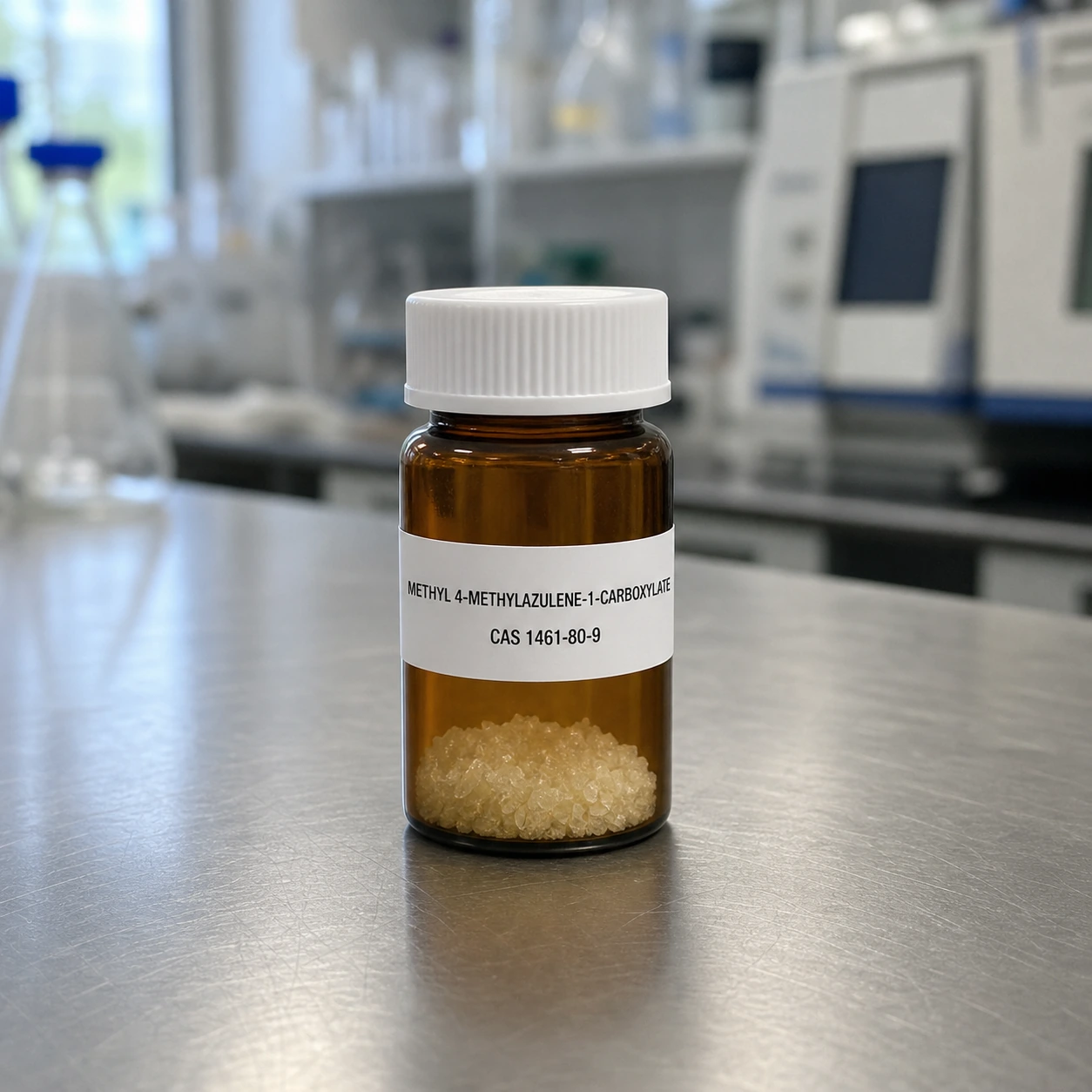
Methyl 4‑methylazulene‑1‑carboxylate is an aromatic ester derived from the azulene framework, featuring a methyl substituent at the 4‑position and a methyl carboxylate group at the 1‑position of the bicyclic aromatic system. This defined substitution pattern classifies it as a specialty azulene derivative supplied through professional chemical supply chains. Methyl 4‑methylazulene‑1‑carboxylate (CAS 1461‑80‑9) is handled as a discrete molecular substance in regulated industrial and research environments, where accurate identification, documentation, and compliance are essential.
Methyl 4‑methylazulene‑1‑carboxylate CAS 1461‑80‑9
- CAS: 1461‑80‑9
- Synonyms: Methyl 4-methylazulene-1-carboxylate, 4-Methylazulene-1-carboxylic acid methyl ester, Azulene carboxylate ester
- Molecular Formula: C13H12O2
- Grade: Industrial grade 99%
- Package: 200kg iron drum or 50kg plastic drum packaging
Product Description
Physicochemical properties
| Property | Value |
|---|---|
| IUPAC Name | Methyl 4-methylazulene-1-carboxylate |
| CAS Number | 1461‑80‑9 |
| Molecular Formula | C13H12O2 |
| Molecular Weight | 200.23 g/mol (approximate) |
| Heavy Atom Count | 15 |
| Complexity | 237 |
| Solubility | Solubility in common organic solvents is likely, but specific data is not readily available. |
| Appearance | Specific appearance (e.g., color, form) is not readily available in the provided references. |
| Storage Conditions | Specific storage conditions are not readily available, but it is generally recommended to store organic compounds in a cool, dry place away from light and incompatible substances. |
Application Areas
Organic Synthesis and Medicinal Chemistry
As a derivative of azulene, it may be used to synthesize drug molecules with anti-inflammatory, antioxidant, or antibacterial activities.
As an intermediate in photosensitive materials or dye chemistry, it is used to develop new functional materials.
material science
May be used in the research of organic semiconductors, fluorescent probes, or optoelectronic materials, as their conjugated structures may possess special optoelectronic properties.
Storage conditions
Environmental conditions: Store at -20 ° C to 4 ° C (refrigerated or frozen), away from light (wrapped in brown glass bottles or aluminum foil), to prevent photolysis or oxidation. Long term storage is recommended to seal with an inert gas (such as nitrogen or argon).
Container selection: Use glass bottles with good sealing properties (to prevent impurities from dissolving out of plastic containers), lined with polytetrafluoroethylene (PTFE) gaskets.
Stability precautions: prone to oxidation or photodegradation, regular purity and decomposition checks are necessary.
Safety precautions
Health hazards: May be irritating to the skin and eyes, protective gloves and goggles should be worn during operation.
Leakage treatment: Small leaks can be adsorbed with inert materials, while large leaks need to be isolated in contaminated areas and professionally disposed of.
Explosion risk: There is no clear explosion report, but it is necessary to stay away from open flames and strong oxidants
FAQ - Technical & Supply Chain
-
Q:
Does CAS 1461‑80‑9 specifically correspond to methyl 4‑methylazulene‑1‑carboxylate?
A: Yes. CAS 1461‑80‑9 is assigned specifically to methyl 4‑methylazulene‑1‑carboxylate. -
Q:
Is this CAS number associated with a mixture or a single compound?
A: It refers to a single, well‑defined azulene derivative with a fixed molecular structure.
Documents and Product Support
For product review and sourcing evaluation, supporting documents can be coordinated according to the product type, inquiry stage, and order requirements.
- COA for batch-based quality reference
- TDS for key physical and chemical information
- SDS / MSDS for handling, storage, and safety reference
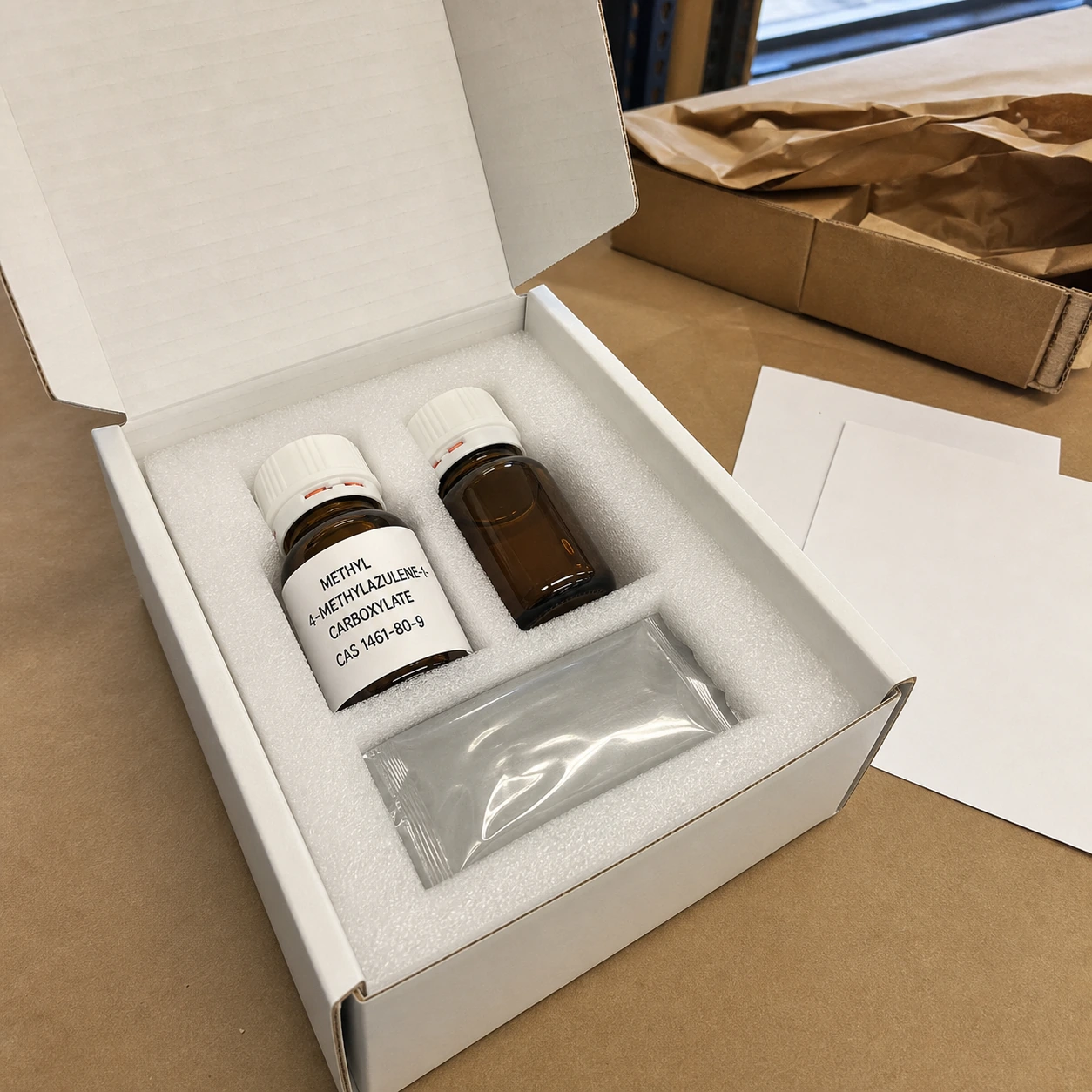
- Packing information for sample, trial, and bulk orders
- Technical communication based on application and specification requirements
Information to Confirm Before Quotation
Clear sourcing information helps reduce specification mismatch and allows a more accurate quotation before sample or bulk order discussion.
- Product name and CAS number
- Application or intended end use
- Required purity, grade, or specification
- Sample quantity, trial order, or bulk demand
- Preferred packing form or net weight
- Destination country or port
- Required documents or compliance expectations
Packaging, Storage, and Handling Notes
Packaging form, storage conditions, shelf life, and shipment arrangements should be confirmed according to the product characteristics, package size, and destination requirements.
Before order confirmation, buyers are advised to review the corresponding product documents and confirm whether any special storage, labeling, or handling requirements apply.
Sample, Bulk Order and Repeat Supply Support
Support can be arranged for sample discussion, bulk supply planning, packaging confirmation, and routine sourcing communication based on the actual product and order requirements.
For repeat-use formulations or long-term procurement plans, buyers may discuss specification consistency, packaging preferences, delivery expectations, and document coordination in advance.