










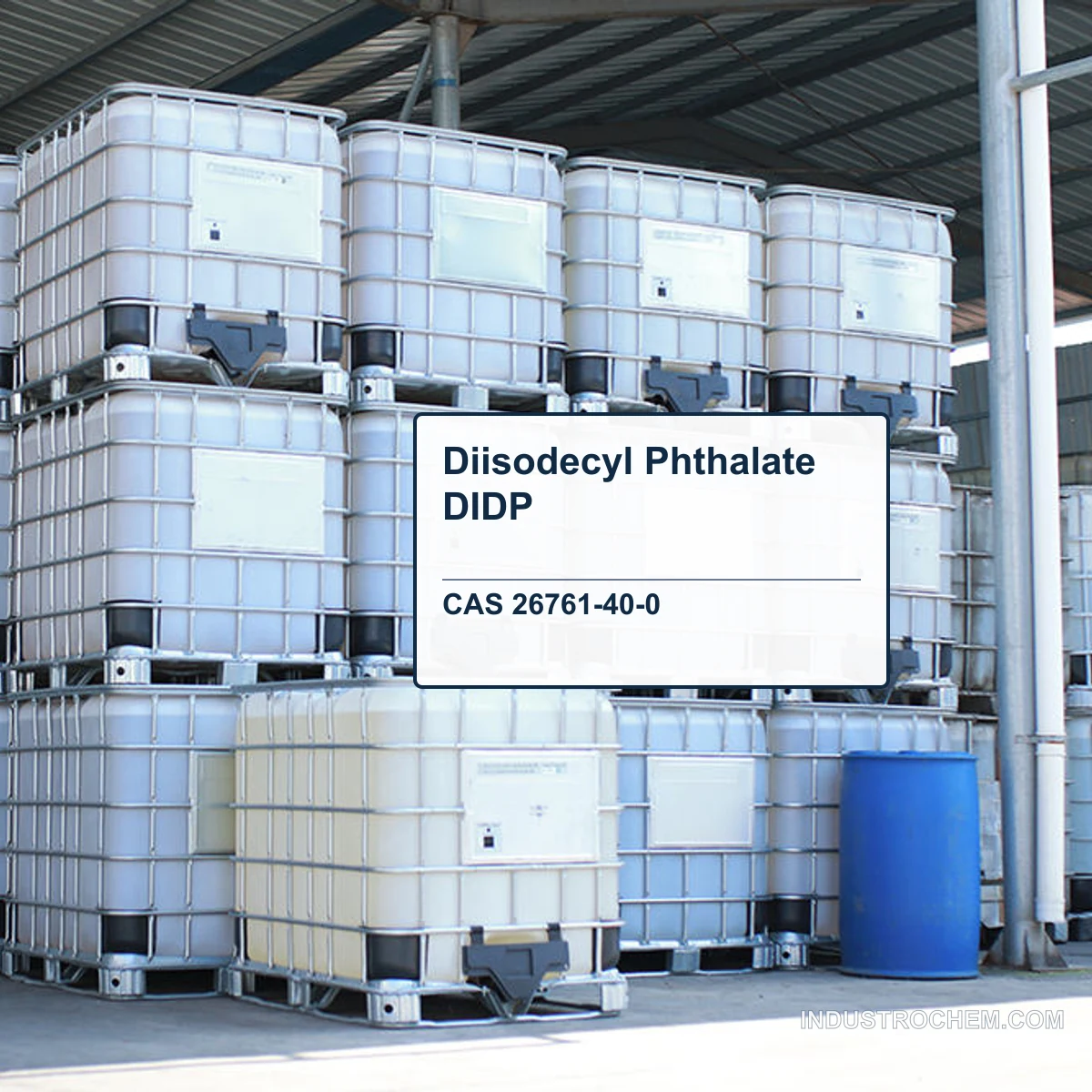
• Diisodecyl Phthalate CAS 26761-40-0
  • Diisodecyl Phthalate CAS 26761-40-0

Diisodecyl Phthalate CAS 26761-40-0

Diisodecyl Phthalate (CAS 26761-40-0) is a high-molecular-weight phthalate ester and viscous oily liquid, primarily utilized as a primary plasticizer for polyvinyl chloride (PVC) applications requiring superior volatility resistance and high-temperature stability. This 1,2-Benzenedicarboxylic acid, diisodecyl ester compound functions as a durable softening agent in Bis(isodecyl) phthalate based formulations, imparting excellent flexibility and electrical insulation properties to automotive cables, roofing membranes, and heavy-duty synthetic leathers where lower-molecular-weight plasticizers might migrate or evaporate. To support industrial-scale requirements, we provide bulk supply with competitive factory pricing and ensure rigorous quality control through customized specifications alongside standard technical documentation, including MSDS, TDS, COA.

  • CAS: 26761-40-0
  • Synonyms: 1,2-Benzenedicarboxylic acid diisodecyl ester, Bis(isodecyl) phthalate, DIDP plasticizer, Diisodecyl ester phthalic acid, Phthalic acid bis(isodecyl) ester
  • Einecs: 247-977-1
  • Molecular Formula: C28H46O4
  • Grade: Industrial grade 99%
  • Package: 200kg iron drum or 50kg plastic drum packing
Request a quote
Share:

Product Description

Diisodecyl phthalate (DIDP), isPhthalates(ie.)Phthalates) is a variety of liquid at room temperature, and is often used in industry for resin orPlastic plasticizers(Plasticizers), especially for products with high heat resistance or insulation requirements, such as UL 90 degree Celsius cables. DIDP is not accepted in phthalatesEuropean UnionVarieties restricted by the testing standard. Because DIDP has a long carbon chain in common phthalates with industrial value,Relative molecular weightIt is larger, has a high flash point, a high boiling point, and is less toxic, so it is also commonly known as a variety of environmentally friendly plasticizers.

Physical characteristics

Key Ingredients: Pure

Boiling point (°C): 420

Flash point (°C): 232

Relative Density (Water=1): 0.97 (20°C)

Relative vapor density (air=1): 15.4

Solubility: Insoluble in water, miscible in most organic solvents.

Chemical properties:It is flammable in open flame and high heat. It is mainly used as a plasticizer.

Usage:

DIDP It is the main plasticizer with excellent high temperature resistance and aging resistance. It has good volatilization resistance, migration resistance, extraction resistance, electrical insulation, good mechanical properties and little change of softness with temperature, and is suitable for products with a wide temperature range. Due to its good high temperature resistance, low volatility and electrical insulation properties, it is widely used in high-temperature (75°C) cables, automobile interior decoration materials, transportation belts and other products. This product can be used to add plasticizing paste to give the paste good flow length and small change in viscosity during storage. This product can also be used as synthetic rubber plasticizer, which has no effect on the vulcanization of the compound.

FAQ - Technical & Supply Chain

  • Q:

    Is Diisodecyl Phthalate (CAS 26761-40-0) interchangeable with DOP (Dioctyl Phthalate)?

    A: While both are phthalate plasticizers (C28H46O4 vs DOP), DIDP offers lower volatility, better heat stability, and superior resistance to extraction by soapy water, making it more suitable for long-life products like outdoor cables and automotive interiors compared to standard DOP.
  • Q:

    What is the primary advantage of DIDP in wire and cable insulation?

    A: It acts as a non-volatile plasticizer that maintains the mechanical flexibility of the PVC insulation over time, even when exposed to the sustained high temperatures typical of automotive engine compartments or electrical wiring.
Documents

Documents and Product Support

For product review and sourcing evaluation, supporting documents can be coordinated according to the product type, inquiry stage, and order requirements.

  • COA for batch-based quality reference
  • TDS for key physical and chemical information
  • SDS / MSDS for handling, storage, and safety reference
  • Packing information for sample, trial, and bulk orders
  • Technical communication based on application and specification requirements
Quotation

Information to Confirm Before Quotation

Clear sourcing information helps reduce specification mismatch and allows a more accurate quotation before sample or bulk order discussion.

  • Product name and CAS number
  • Application or intended end use
  • Required purity, grade, or specification
  • Sample quantity, trial order, or bulk demand
  • Preferred packing form or net weight
  • Destination country or port
  • Required documents or compliance expectations
Storage & Handling

Packaging, Storage, and Handling Notes

Packaging form, storage conditions, shelf life, and shipment arrangements should be confirmed according to the product characteristics, package size, and destination requirements.

Before order confirmation, buyers are advised to review the corresponding product documents and confirm whether any special storage, labeling, or handling requirements apply.

Supply Support

Sample, Bulk Order and Repeat Supply Support

Support can be arranged for sample discussion, bulk supply planning, packaging confirmation, and routine sourcing communication based on the actual product and order requirements.

For repeat-use formulations or long-term procurement plans, buyers may discuss specification consistency, packaging preferences, delivery expectations, and document coordination in advance.

Contact Form

Use our contact form to send us your questions, suggestions or comments. We will respond as soon as possible.