










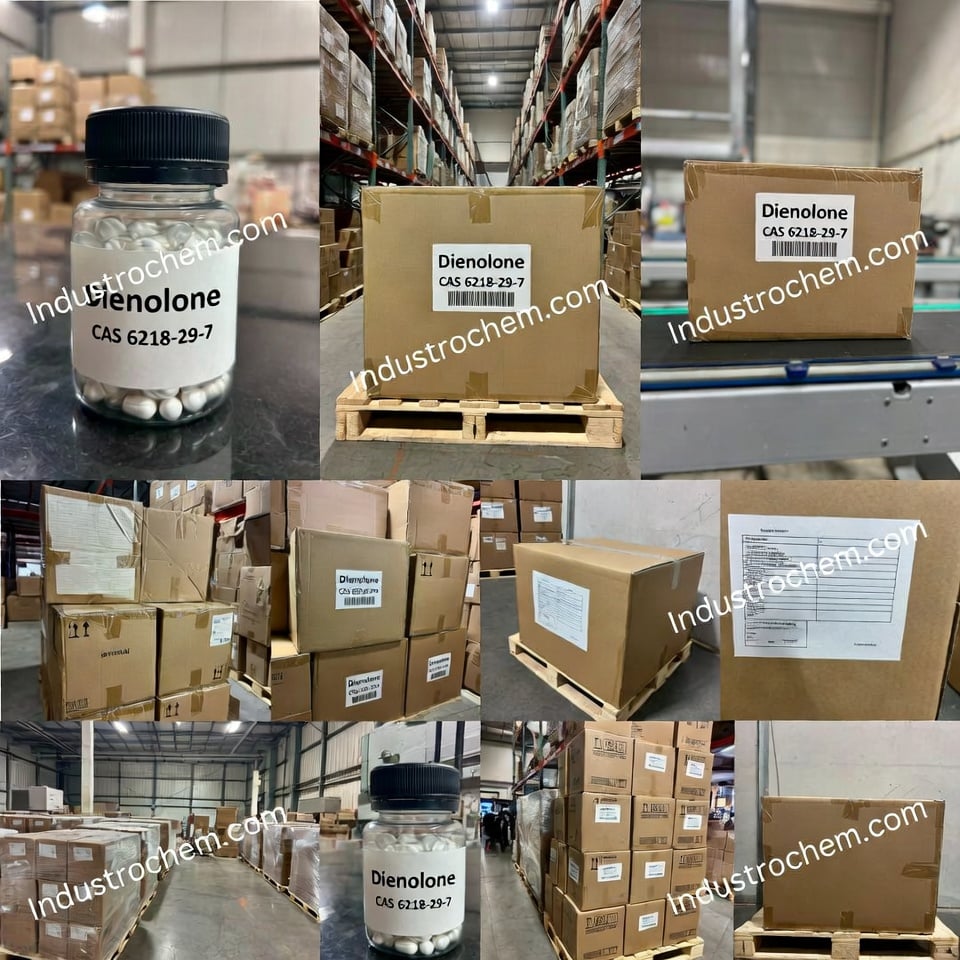
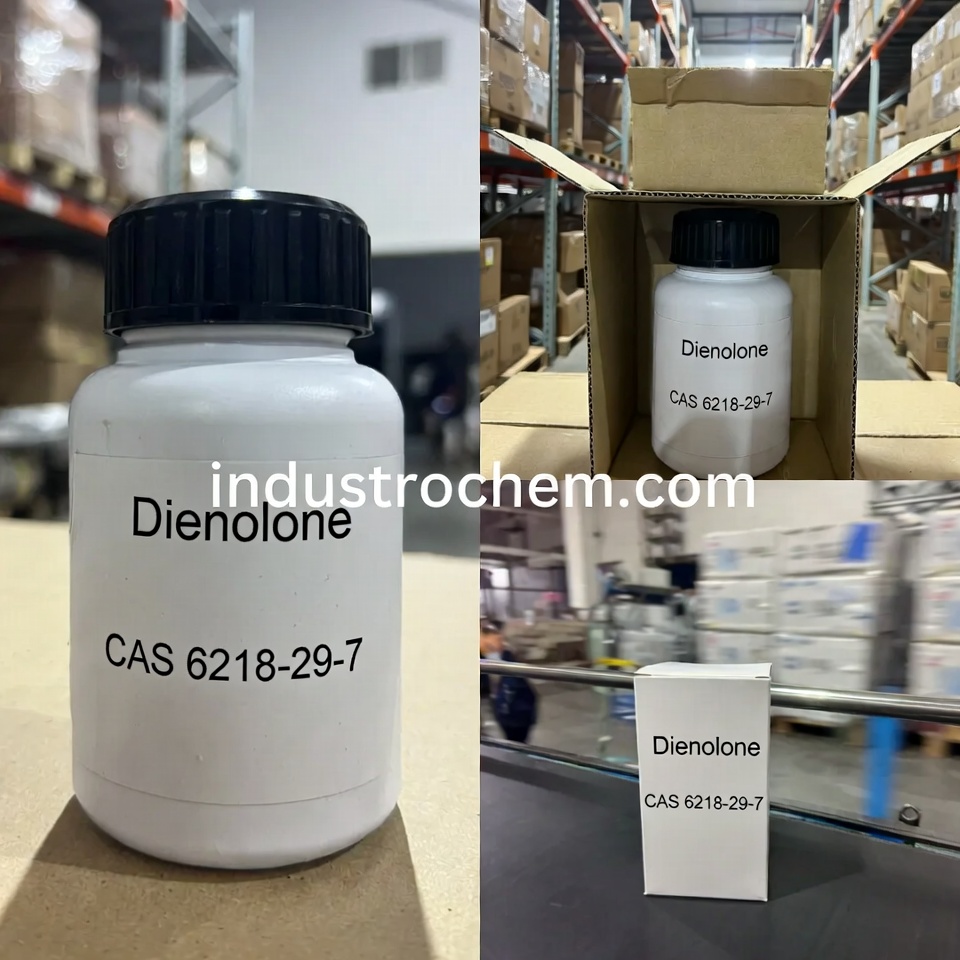
Dienolone is a synthetic steroidal compound classified as a chemical used primarily as a steroid synthesis intermediate in controlled pharmaceutical and chemical manufacturing processes. Structurally identified as 17β-Hydroxyestra-4,9-dien-3-one (CAS 6218-29-7), it functions as a defined estrane-based framework suitable for further chemical modification, esterification, or structural derivatization in steroid chemistry pathways. Industrial availability includes competitive factory pricing, support for customized specifications, and complete documentation such as MSDS, TDS, COA, enabling reliable bulk supply for regulated industrial use.
Dienolone CAS 6218-29-7
- CAS: 6218-29-7
- Synonyms: Dienolone, 17β-Hydroxyestra-4,9-dien-3-one, 17β-Hydroxyestra-4,9-dienone, Hydroxyestra-4,9-dien-3-one
- Einecs: 612-953-5
- Molecular Formula: C₁₈H₂₄O₂
- Grade: Industrial grade 99%
- Package: 200kg iron drum or 50kg plastic drum packaging
Product Description
Physicochemical properties
| Property | Description |
|---|---|
| Name | Dienolone |
| CAS Number | 6218-29-7 |
| Molecular Formula | C₁₈H₂₄O₂ |
| Molecular Weight | 272.38 g/mol |
| Appearance | Powder crystal |
| Color | Light yellow to yellow to orange |
| Melting Point | 190°C (lit.) |
| Boiling Point | 466.8 ± 45.0 °C (Predicted) |
| Density | 1.17 ± 0.1 g/cm³ (Predicted) |
| Solubility | Soluble in methanol; water solubility: 53 mg/L at 20°C |
| pKa (Acidity Coefficient) | 15.00 ± 0.40 (Predicted) |
| LogP | 2.4 (at 25°C) |
| Refractive Index | 1.585 (Predicted) |
| Flammability | Flash point: 198.6 ± 21.3 °C (Predicted) |
| Chemical Structure | Contains a hydroxyl group (-OH) and a ketone group (C=O) on a steroid backbone, with double bonds at positions 4 and 9 of the estra structure. |
| Stability | Not specified in available sources (stability may depend on conditions such as temperature and pressure) |
| Reactivity | Not specified in available sources (reactivity may depend on functional groups and chemical environment) |
Application Areas
Pharmaceutical intermediates: used for synthesizing steroid hormone drugs
Organic synthesis: as an intermediate for synthesizing other organic compounds
Storage conditions
Environmental requirements
It should be stored in a cool, well ventilated dedicated warehouse, away from sources of fire, heat, and direct sunlight.
The storage container should be strictly sealed to avoid mixing with oxidants, strong acids and bases.
It is recommended to use fire-resistant warehouses or explosion-proof storage cabinets, and equip them with secondary leak proof containers.
Temperature control and zoning
Maintain stable temperature in the storage area to avoid volatilization or decomposition caused by high temperatures.
Store according to the classification standards for hazardous chemicals, avoiding adjacent substances with conflicting properties
Safety precautions
Operation protection
Operators are required to wear dust masks, anti-seepage gloves, and goggles, as well as anti-static work clothes.
The operating area should be equipped with a local exhaust system to prevent the accumulation of dust or steam.
Fire Protection and Monitoring
Explosion proof fire extinguishers (such as dry powder or carbon dioxide fire extinguishers) need to be installed in the warehouse.
Regularly check the integrity of storage containers and monitor the concentration of combustible gases in the environment
FAQ - Technical & Supply Chain
-
Q:
Do Dienolone and 17β-Hydroxyestra-4,9-dien-3-one refer to the same substance?
A: Yes. These names describe the same molecular structure and correspond to a single CAS registration, indicating identical substance identity. -
Q:
Is Dienolone typically used as an industrial intermediate rather than a finished pharmaceutical product?
A: It is commonly intended for use as a chemical intermediate in steroid synthesis and related industrial chemical processes, not as a finished dosage form.
Documents and Product Support
For product review and sourcing evaluation, supporting documents can be coordinated according to the product type, inquiry stage, and order requirements.
- COA for batch-based quality reference
- TDS for key physical and chemical information
- SDS / MSDS for handling, storage, and safety reference
- Packing information for sample, trial, and bulk orders
- Technical communication based on application and specification requirements
Information to Confirm Before Quotation
Clear sourcing information helps reduce specification mismatch and allows a more accurate quotation before sample or bulk order discussion.
- Product name and CAS number
- Application or intended end use
- Required purity, grade, or specification
- Sample quantity, trial order, or bulk demand
- Preferred packing form or net weight
- Destination country or port
- Required documents or compliance expectations
Packaging, Storage, and Handling Notes
Packaging form, storage conditions, shelf life, and shipment arrangements should be confirmed according to the product characteristics, package size, and destination requirements.
Before order confirmation, buyers are advised to review the corresponding product documents and confirm whether any special storage, labeling, or handling requirements apply.
Sample, Bulk Order and Repeat Supply Support
Support can be arranged for sample discussion, bulk supply planning, packaging confirmation, and routine sourcing communication based on the actual product and order requirements.
For repeat-use formulations or long-term procurement plans, buyers may discuss specification consistency, packaging preferences, delivery expectations, and document coordination in advance.


