









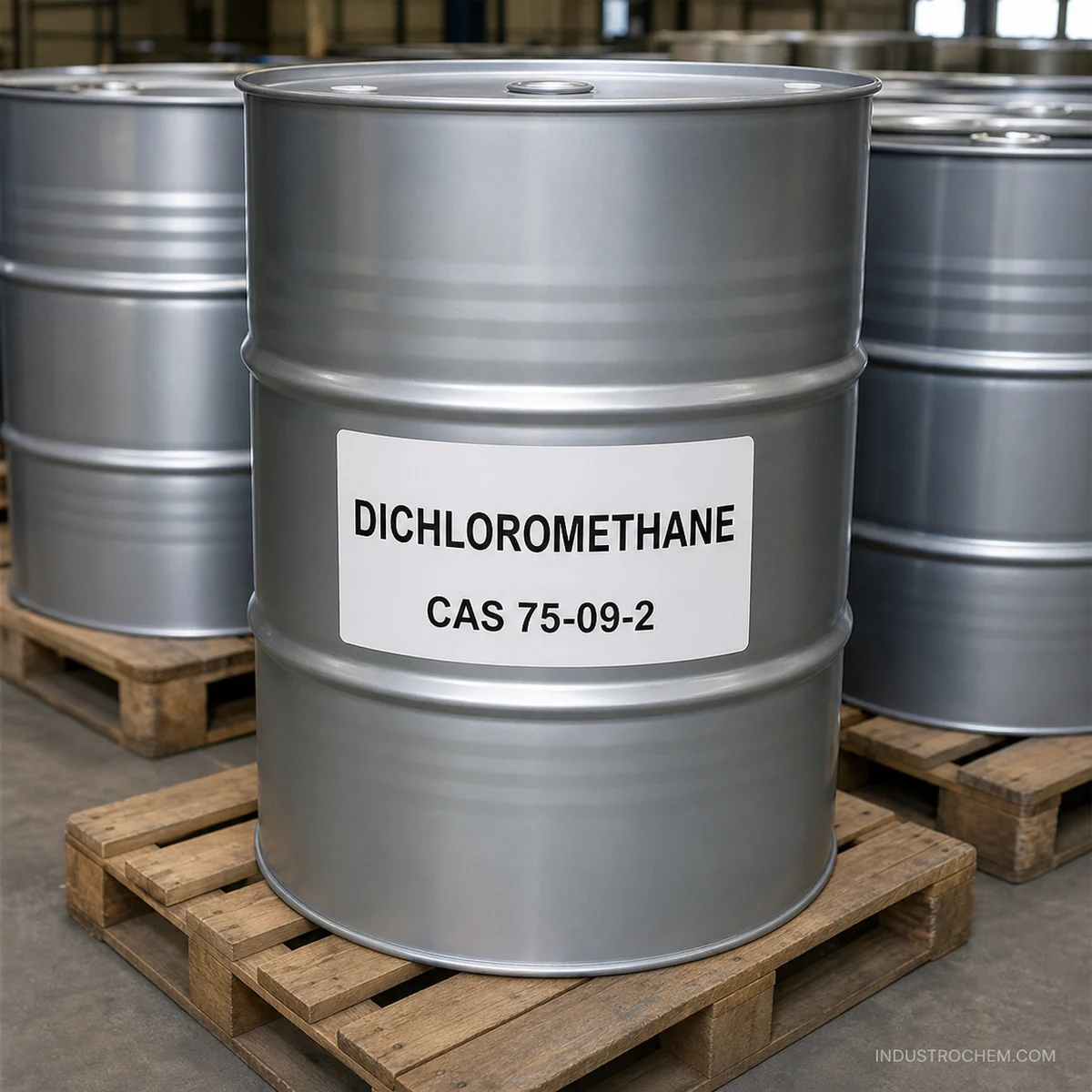
Dichloromethane, also known as methylene chloride, is a chlorinated hydrocarbon characterized by moderate polarity and high volatility, enabling efficient dissolution of a wide range of organic compounds. Its physical properties support rapid evaporation and effective solvency under controlled conditions. Dichloromethane (CAS 75-09-2) is typically used as an industrial solvent, where it supports extraction, formulation, and processing operations in regulated industrial environments. For industrial users, the material is supplied with competitive factory pricing, customized specifications, and complete documentation including MSDS, TDS, COA, supporting bulk supply requirements.
Dichloromethane CAS 75-09-2
- CAS: 75-09-2
- Synonyms: Dichloromethane, Methylene Chloride, DCM, Methane Dichloride
- Einecs: 200-838-9
- Molecular Formula: CH2Cl2
- Grade: Industrial grade 99%
- Package: 200kg iron drum or 50kg plastic drum packaging
Product Description
Dichloromethane is a compound produced by the substitution of two hydrogen atoms in the methane molecule by chlorine, with the molecular formula CH2Cl2. It is a colorless, transparent, heavier than water, volatile liquid, with an ether-like smell and sweetness, non-combustible, methylene chloride is slightly soluble in water, miscible with most commonly used organic solvents, and can also be miscible with other chlorine-containing solvents, ether, ethanol and N,N-dimethylformamide in any proportion. Relative density 1.3266 (20/4°C). Melting point -95.1°C. Boiling point 40°C. Non-flammable low boiling point solvents are commonly used to replace flammable petroleum ether, ethers, etc., and can be used as refrigerants and fire extinguishing agents.
Product name: Dichloromethane
Another name:Methylene chloride, DCM chemical formula CH2Cl2
Molecular weight: 84.93
CAS accession number: 75-09-2
EINECS accession number: 200-838-9
Melting point: -97 °C
Boiling point: 39.75 °C at 760 mm Hg
Water soluble: insoluble in water
Density: 1.325 g/mL at 25 °C(lit.)
Appearance: colorless and transparent volatile liquid
FAQ - Technical & Supply Chain
-
Q:
Do dichloromethane and methylene chloride refer to the same chemical substance?
A: Yes. Dichloromethane and methylene chloride are different names for the same chemical substance and correspond to the same CAS number. -
Q:
Is dichloromethane commonly used as an industrial solvent?
A: Yes. Dichloromethane is commonly used as an industrial solvent due to its solvency characteristics and volatility under controlled use conditions.
Documents and Product Support
For product review and sourcing evaluation, supporting documents can be coordinated according to the product type, inquiry stage, and order requirements.
- COA for batch-based quality reference
- TDS for key physical and chemical information
- SDS / MSDS for handling, storage, and safety reference
- Packing information for sample, trial, and bulk orders
- Technical communication based on application and specification requirements
Information to Confirm Before Quotation
Clear sourcing information helps reduce specification mismatch and allows a more accurate quotation before sample or bulk order discussion.
- Product name and CAS number
- Application or intended end use
- Required purity, grade, or specification
- Sample quantity, trial order, or bulk demand
- Preferred packing form or net weight
- Destination country or port
- Required documents or compliance expectations
Packaging, Storage, and Handling Notes
Packaging form, storage conditions, shelf life, and shipment arrangements should be confirmed according to the product characteristics, package size, and destination requirements.
Before order confirmation, buyers are advised to review the corresponding product documents and confirm whether any special storage, labeling, or handling requirements apply.
Sample, Bulk Order and Repeat Supply Support
Support can be arranged for sample discussion, bulk supply planning, packaging confirmation, and routine sourcing communication based on the actual product and order requirements.
For repeat-use formulations or long-term procurement plans, buyers may discuss specification consistency, packaging preferences, delivery expectations, and document coordination in advance.


