









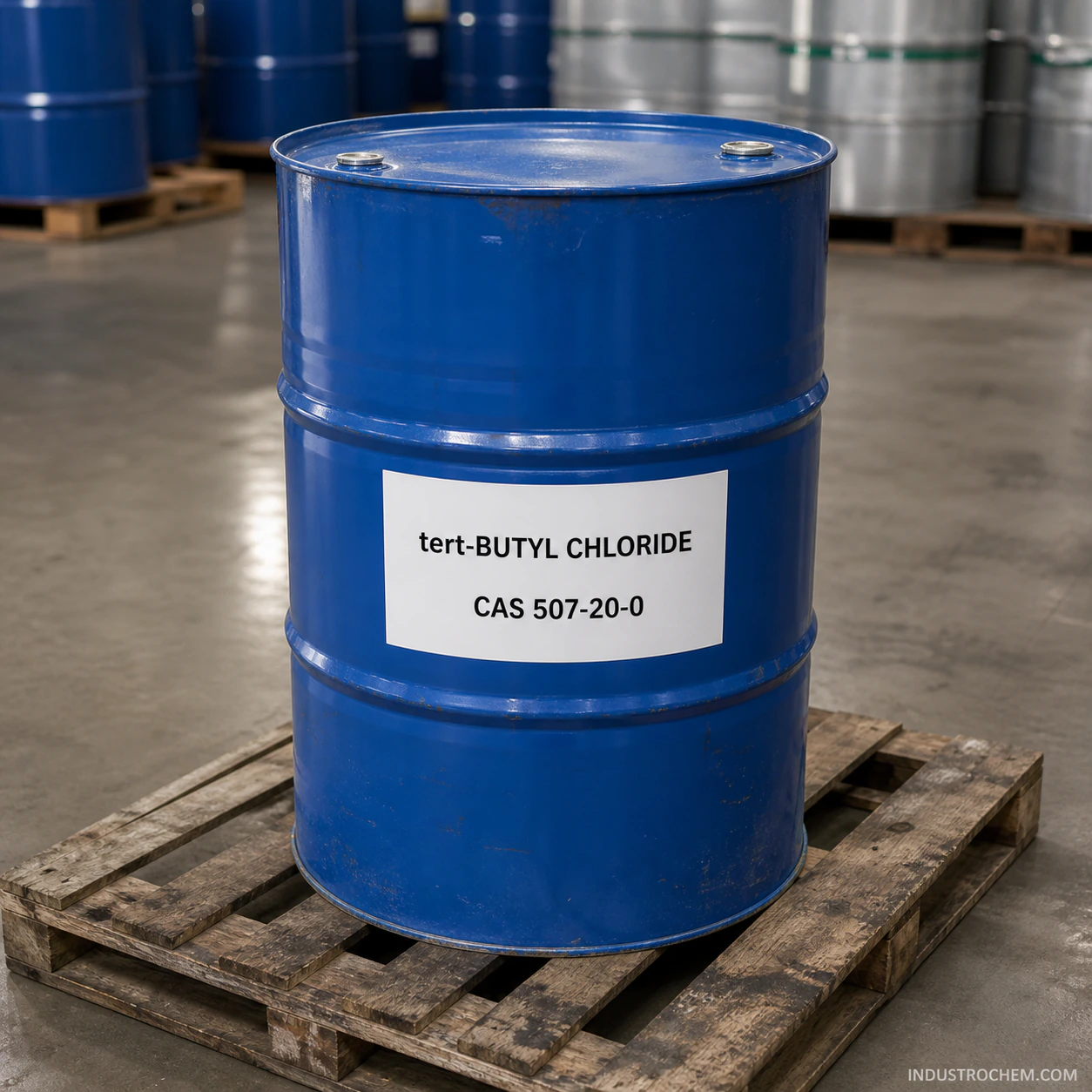
tert-Butyl Chloride, CAS 507-20-0, is also known as 2-chloro-2-methylpropane. Confirm the exact isomer, required analytical limits and intended synthesis context before requesting specifications and quotation.
tert-Butyl Chloride CAS 507-20-0
- CAS: 507-20-0
- Synonyms: tert-Butyl chloride; 2-Chloro-2-methylpropane
- Einecs: 208-066-4
- Molecular Formula: C₄H₉Cl
- Grade: Confirm the current product-specific specification.
- Package: Confirm packaging for the offered material and destination requirements.
Product Description
tert-Butyl Chloride, CAS 507-20-0, is 2-chloro-2-methylpropane. Molecular formula: C₄H₉Cl; EC Number: 208-066-4. tert-Butyl Chloride is not n-butyl chloride or isobutyl chloride; the requested isomer must be identified by name and CAS. This page does not confirm a fixed grade, package, stock position, transport condition or application claim. For an RFQ, state the exact isomer, required analytical limits and intended synthesis context, quantity, packaging, destination and document requirements; use the current product-specific SDS and specification for safety review.
FAQ - Technical & Supply Chain
-
Q:
Are tert-Butyl Chloride and t-Butyl Chloride the same material?
A: Yes. tert-butyl chloride, t-butyl chloride and 2-chloro-2-methylpropane identify CAS 507-20-0. They are not n-butyl chloride, isobutyl chloride or sec-butyl chloride. State the exact isomer, CAS number and analytical limits on the order. -
Q:
What is tert-Butyl Chloride used for?
A: It is used as a tertiary alkyl chloride intermediate in controlled organic synthesis. State the intended synthesis context, required assay and impurity limits, because performance can depend on the presence of isobutylene, tert-butanol or other chlorinated impurities. -
Q:
Which specifications should be agreed for industrial tert-Butyl Chloride?
A: Set assay by GC, water, acidity, colour, nonvolatile residue and limits for isobutylene, tert-butanol and other chlorinated impurities. Because the compound is volatile and moisture-sensitive, define pressure, density and sampling conditions where applicable. -
Q:
What safety and handling points should be reviewed?
A: Confirm the compound's high volatility and flammability, with a boiling point around 51-52 degrees C and low flash point. Use suitable ventilation, container compatibility, static control and disposal procedures before sampling or transfer, and avoid treating it as interchangeable with other butyl chlorides. -
Q:
What information should an RFQ include for tert-Butyl Chloride?
A: State the exact isomer and CAS, required analytical limits, intended synthesis context, quantity, packaging, destination and document requirements. Confirm packaging for the offered material and destination before quotation.
Ordering & Documentation
Key information for document requests, quotations, and supply planning.
Documents
Tell us which documents your procurement team needs. Before an order, we will check whether the quoted source can provide them for the offered lot.
Quotation
Send the CAS number, grade, quantity, packing preference and destination.
Sample & Supply
Ask whether samples, trial quantities or repeat orders are possible. We will check each request against the sourced product and current offer.
Storage & Shipping
Product-specific conditions are confirmed before order.