









Cetrimonium Chloride is a quaternary ammonium cationic surfactant mainly used as a formulation ingredient in conditioning and antistatic systems. It is commonly selected for hair care and related formulations where smooth feel, easier wet combing, antistatic performance, and cationic surface activity are required. From a supply perspective, it may be offered in different active-content forms depending on formulation needs, with standard export packaging and routine documentation such as COA, TDS, and SDS available on request.
Cetrimonium Chloride CAS 112-02-7
- CAS: 112-02-7
- Synonyms: Cetrimonium Chloride; Cetyltrimethylammonium Chloride; Hexadecyltrimethylammonium Chloride; CTAC
- Einecs: 203-928-6
- Molecular Formula: C19H42ClN
- Grade: Typically supplied for formulation use; exact active content and product grade should be confirmed against the supplier specification.
- Package: Available in standard export packaging. Packaging can be arranged according to supply form, concentration, and order volume.
Product Description
Physicochemical Properties
| Item | Typical Description |
|---|---|
| Appearance | Usually supplied as a clear to pale yellow liquid solution; concentrated or neat form may also appear waxy or semi-solid depending on temperature and active content. |
| Odor | Mild characteristic odor. |
| Ionic Character | Cationic surfactant. |
| Molecular Formula | C19H42ClN. |
| Molecular Weight | 320.00 g/mol. |
| Water Behavior | Generally water-soluble or water-dispersible depending on supply form and concentration. |
| Formulation Compatibility | Typically used in cationic conditioning systems; compatibility should be evaluated in the target formulation, especially in the presence of anionic materials. |
| Surface Activity | Provides conditioning, antistatic, and emulsifying contribution in suitable systems. |
Typical Applications
- Hair conditioning formulations where improved combing, softer feel, and reduced static are required.
- Conditioning rinses, creams, and related cationic personal care systems.
- Formulation systems requiring cationic surface activity and deposition performance.
- Selected emulsified systems where a cationic conditioning effect is desired.
Specific end uses, use levels, and claim language should be evaluated according to local regulatory requirements and the intended formulation type.
Packaging
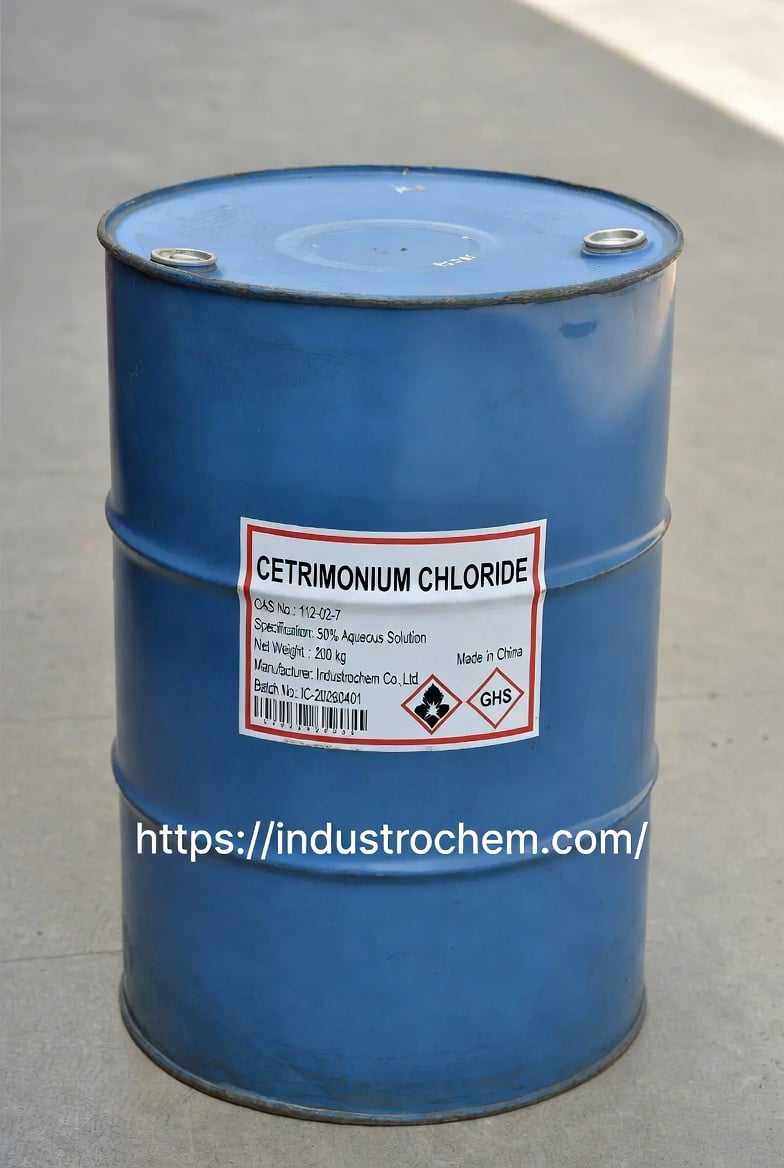
Cetrimonium Chloride is typically supplied in sealed containers suitable for liquid or solution-form material handling. Standard export packaging can be arranged according to active content, supply form, and order quantity. Clean container condition, sealed closure, and protection during storage and transport are important to maintain product consistency. For regular orders and bulk supply programs, packaging can be coordinated according to customer logistics requirements.
Storage
Store in a cool, dry, and well-ventilated place in tightly closed original containers. Keep away from excessive heat, direct sunlight, and sources of contamination. Maintain package integrity during storage and transport. For materials supplied in solution form, storage conditions should be managed to preserve uniformity and handling stability.
FAQ
1. What type of product is Cetrimonium Chloride?
It is a quaternary ammonium cationic surfactant commonly supplied as a formulation ingredient for conditioning and antistatic applications.
2. What are the main use directions for CTAC?
It is mainly used in conditioning systems, especially where smooth feel, easier combing, and reduced static are required.
3. Is this product supplied as a pure solid or as a solution?
Supply form can vary by specification. Many commercial offers are provided as liquid solutions, while appearance may vary with concentration and temperature.
4. Can packaging be arranged for different order volumes?
Yes. Standard export packaging is available, and packaging can be arranged according to supply form and order quantity.
5. What documents are usually available for B2B supply?
Routine supply documentation may include COA, TDS, and SDS upon request.
6. Are all end uses suitable without review?
No. Final end-use suitability, dosage, and compliance should be assessed against the target formula and local regulatory requirements.
FAQ - Technical & Supply Chain
Documents and Product Support
For product review and sourcing evaluation, supporting documents can be coordinated according to the product type, inquiry stage, and order requirements.
- COA for batch-based quality reference
- TDS for key physical and chemical information
- SDS / MSDS for handling, storage, and safety reference
- Packing information for sample, trial, and bulk orders
- Technical communication based on application and specification requirements
Information to Confirm Before Quotation
Clear sourcing information helps reduce specification mismatch and allows a more accurate quotation before sample or bulk order discussion.
- Product name and CAS number
- Application or intended end use
- Required purity, grade, or specification
- Sample quantity, trial order, or bulk demand
- Preferred packing form or net weight
- Destination country or port
- Required documents or compliance expectations
Packaging, Storage, and Handling Notes
Packaging form, storage conditions, shelf life, and shipment arrangements should be confirmed according to the product characteristics, package size, and destination requirements.
Before order confirmation, buyers are advised to review the corresponding product documents and confirm whether any special storage, labeling, or handling requirements apply.
Sample, Bulk Order and Repeat Supply Support
Support can be arranged for sample discussion, bulk supply planning, packaging confirmation, and routine sourcing communication based on the actual product and order requirements.
For repeat-use formulations or long-term procurement plans, buyers may discuss specification consistency, packaging preferences, delivery expectations, and document coordination in advance.