









Chemical products
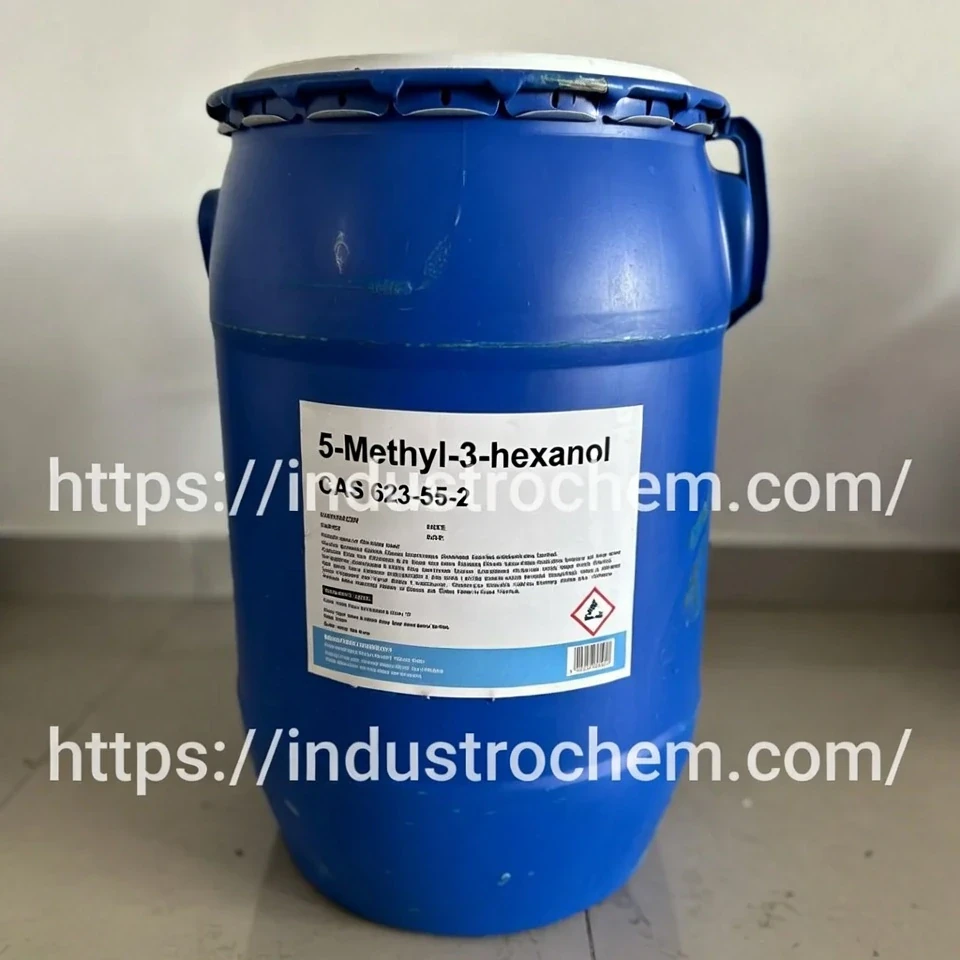
  • 5-Methyl-3-hexanol CAS 623-55-2

5-Methyl-3-hexanol CAS 623-55-2

5-Methyl-3-hexanol, also called 5-methylhexan-3-ol or 3-hydroxy-5-methylhexane, CAS 623-55-2, is a branched secondary alcohol with molecular formula C₇H₁₆O and molecular weight 116.20 g/mol. The hydroxyl-bearing C3 carbon is stereogenic, so a standard commercial grade may be racemic unless a stereochemical specification states otherwise. Buyers should define identity, GC assay, constitutional isomers, water, acid value and residual precursors, then qualify esterification, oxidation or substitution performance in the intended route.

  • CAS: 623-55-2
  • Synonyms: 5-Methyl-3-hexanol, 5-Methylhexan-3-ol, 3-Hexanol 5-methyl-, 3-Hydroxy-5-methylhexane
  • Molecular Formula: C₇H₁₆O
  • Grade: Confirm identity, assay method, water or residual solvents, product-specific impurities and physical form against the current COA; no end-use grade is assumed.
  • Package: State required quantity and destination; confirm the current container, light or moisture protection, net weight, storage conditions and transport requirements against the current COA and SDS.
Request a quote
Share:

Product Description

Identity and physicochemical profile

ItemTechnical guidance
Product identity5-Methyl-3-hexanol; 5-methylhexan-3-ol
CAS number623-55-2
Formula / molecular weightC₇H₁₆O / 116.20 g/mol
Stereochemical boundaryC3 is stereogenic; enantiomeric composition is not controlled unless specified and tested
Key purchase controlsIdentity, GC assay, positional isomers, water, acid value, residual ketone or hydrocarbon precursors and color

Applications and grade selection

5-Methyl-3-hexanol may be evaluated in esterification, oxidation, substitution and other controlled synthesis routes. Process value depends on isomer profile, water, acidity and downstream stereochemical needs, so broad fragrance, solvent or intermediate claims should be supported by application testing.

  • Define whether racemic material is acceptable or a stereochemically controlled grade is required.
  • Set limits for GC assay, positional isomers, residual precursors, water and acid value.
  • Compare conversion, selectivity, work-up and final-product impurity carryover at small scale.

Storage and handling

Keep tightly closed in compatible packaging away from heat, ignition sources, oxidizers and moisture under the current SDS and COA. Record sampling and storage history during qualification.

Safety, documentation and procurement

Handle as a combustible organic liquid using suitable ventilation, gloves and eye protection. Procurement should state the reaction, specification, stereochemical needs, quantity, packaging, destination and documents.

FAQ - Technical & Supply Chain

  • Q:

    Does 5-Methyl-3-hexanol CAS 623-55-2 specify one enantiomer?

    A: No. Carbon 3, which bears the hydroxyl group, is stereogenic, but the name and CAS number do not by themselves define optical composition. If stereochemistry affects the route, specify racemic or single-enantiomer material, the required enantiomeric ratio, chiral method and acceptance limit.
  • Q:

    Which specifications should be agreed for 5-Methyl-3-hexanol?

    A: Define GC assay, constitutional isomers, water, acid value, color or appearance and any residual precursor limits relevant to the process. Where useful, include density, refractive index and boiling range as supporting controls. State quantity, packing and the reaction or formulation acceptance criteria in the inquiry.

Ordering & Documentation

Key information for document requests, quotations, and supply planning.

Documents

COA, TDS, SDS/MSDS and packing details are available on request.

Quotation

Send the CAS number, grade, quantity, packing preference and destination.

Sample & Supply

Support is available for samples, trial orders, bulk and repeat supply.

Storage & Shipping

Product-specific conditions are confirmed before order.

Contact Form

Use our contact form to send us your questions, suggestions or comments. We will respond as soon as possible.
For a quotation, please include the product name or CAS number, quantity, grade or application, and destination country or port. Tell us if you need a sample, COA, TDS or SDS.