









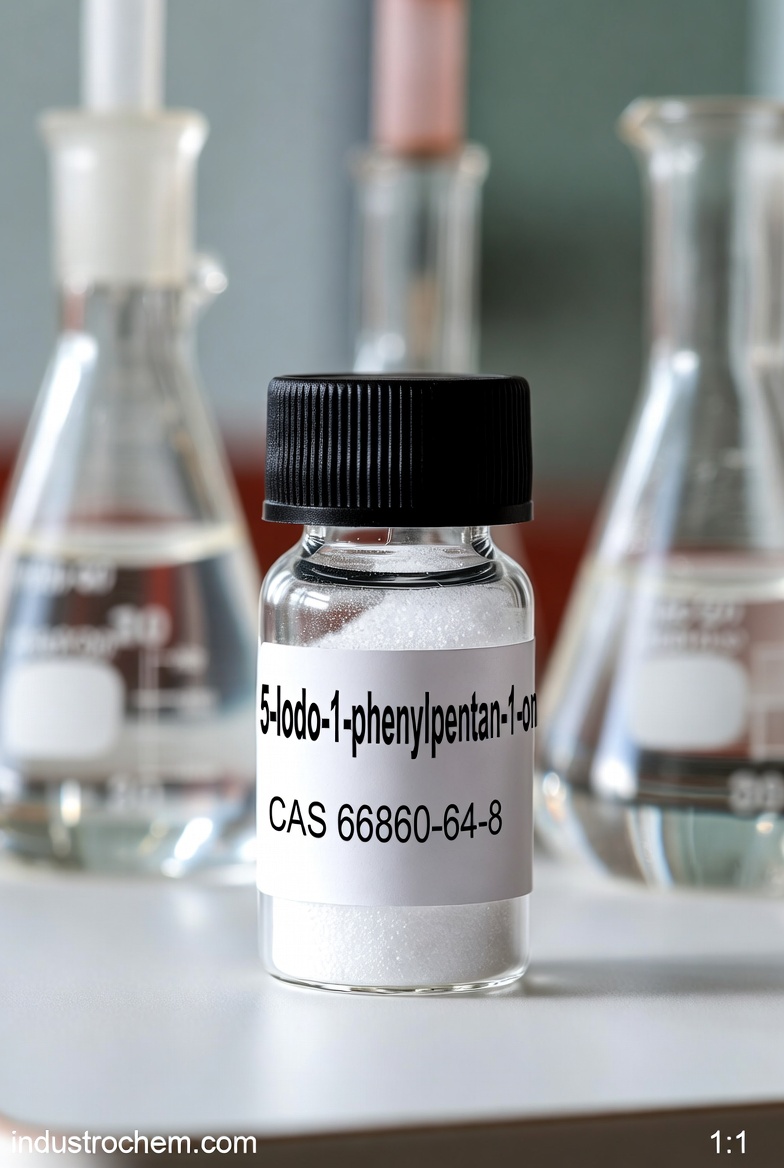
• 5-Iodo-1-phenylpentan-1-one CAS 66860-64-8

5-Iodo-1-phenylpentan-1-one CAS 66860-64-8

5-Iodo-1-phenylpentan-1-one, also known as 5-iodovalerophenone, is an iodinated aromatic ketone used as an organic synthesis intermediate in fine chemical and pharmaceutical-related synthesis pathways. Featuring both a reactive iodoalkyl chain and a phenyl ketone moiety (CAS 66860-64-8), it serves as a suitable precursor for substitution, coupling, and carbon–carbon bond-forming reactions where halogen-functional intermediates are required. Industrial availability includes competitive factory pricing, support for customized specifications, and complete documentation such as MSDS, TDS, COA, enabling consistent bulk supply for standardized industrial applications.

  • CAS: 66860-64-8
  • Synonyms: 5-Iodo-1-phenylpentan-1-one, 5-Iodovalerophenone, Iodovalerophenone, 5-Iodophenylpentanone
  • Molecular Formula: C₁₁H₁₃IO
  • Grade: Industrial grade 99%
  • Package: 200kg iron drum or 50kg plastic drum packaging
Request a quote
Share:

Product Description

Physicochemical properties

PropertyDescription
CAS Number66860-64-8
Molecular FormulaC₁₁H₁₃IO
Molecular Weight288.12 g/mol
IUPAC Name1-Pentanone, 5-iodo-1-phenyl-
Other Names4-Iodo-1-benzoylbutane; ω-Iodovalerophenone
Density(No specific density value provided in references, but similar compounds may have densities around 1.0-1.5 g/cm³)
Boiling Point(No specific boiling point value provided in references, but similar compounds may have boiling points in the range of 200-400°C)
Flash Point(No specific flash point value provided in references, but similar compounds may have flash points above 100°C)
Solubility(No specific solubility data provided in references, but similar compounds may be insoluble or sparingly soluble in water and soluble in organic solvents)
StabilityStable under normal conditions, but avoid contact with strong oxidizers, acids, or bases

Application Areas

Organic synthesis intermediates
Used for synthesizing complex organic molecules containing iodine or ketone groups, such as drugs, pesticides, fragrances, etc.
Iodine atoms can serve as active sites and participate in nucleophilic substitution, elimination, or coupling reactions (such as Suzuki reactions).
Ketone groups can be reduced to alcohols or oxidized to carboxylic acids, further expanding the synthesis pathway.
material science
As a functional monomer, it is used to prepare iodine containing polymers or organic metal framework materials (MOFs).
The introduction of iodine may endow materials with special optical, electrical, or catalytic properties.

Storage conditions

Temperature: Room temperature (15-25 ℃) or lower to avoid decomposition caused by high temperatures.
Light exposure: Store in the dark (iodine compounds are sensitive to light).
Humidity: Dry environment (humidity<50%) to prevent moisture absorption or hydrolysis.
Isolation: Store separately, away from strong oxidants, strong acids, strong alkalis, and flammable materials.

Safety precautions

Personal protective equipment (PPE): Operate in a fume hood or wear a gas mask (anti organic vapor type).
Operation standard: All operations should be carried out in a fume hood to avoid steam accumulation.
Leakage treatment: Absorb with inert materials such as vermiculite and sand to avoid direct contact with the leaked material.
Waste disposal: Entrust professional institutions for disposal, or incinerate according to local regulations (temperature control is required to prevent iodine volatilization).

FAQ - Technical & Supply Chain

  • Q:

    Do 5-Iodo-1-phenylpentan-1-one and 5-Iodovalerophenone refer to the same substance?

    A: Yes. These names describe the same molecular structure and correspond to a single CAS registration, indicating identical substance identity.
  • Q:

    Is 5-Iodo-1-phenylpentan-1-one typically used as an industrial intermediate rather than a finished product?

    A: It is commonly intended for use as an intermediate in organic and fine chemical synthesis, where iodinated ketones act as reactive building blocks.
Documents

Documents and Product Support

For product review and sourcing evaluation, supporting documents can be coordinated according to the product type, inquiry stage, and order requirements.

  • COA for batch-based quality reference
  • TDS for key physical and chemical information
  • SDS / MSDS for handling, storage, and safety reference
  • Packing information for sample, trial, and bulk orders
  • Technical communication based on application and specification requirements
Quotation

Information to Confirm Before Quotation

Clear sourcing information helps reduce specification mismatch and allows a more accurate quotation before sample or bulk order discussion.

  • Product name and CAS number
  • Application or intended end use
  • Required purity, grade, or specification
  • Sample quantity, trial order, or bulk demand
  • Preferred packing form or net weight
  • Destination country or port
  • Required documents or compliance expectations
Storage & Handling

Packaging, Storage, and Handling Notes

Packaging form, storage conditions, shelf life, and shipment arrangements should be confirmed according to the product characteristics, package size, and destination requirements.

Before order confirmation, buyers are advised to review the corresponding product documents and confirm whether any special storage, labeling, or handling requirements apply.

Supply Support

Sample, Bulk Order and Repeat Supply Support

Support can be arranged for sample discussion, bulk supply planning, packaging confirmation, and routine sourcing communication based on the actual product and order requirements.

For repeat-use formulations or long-term procurement plans, buyers may discuss specification consistency, packaging preferences, delivery expectations, and document coordination in advance.

Contact Form

Use our contact form to send us your questions, suggestions or comments. We will respond as soon as possible.