










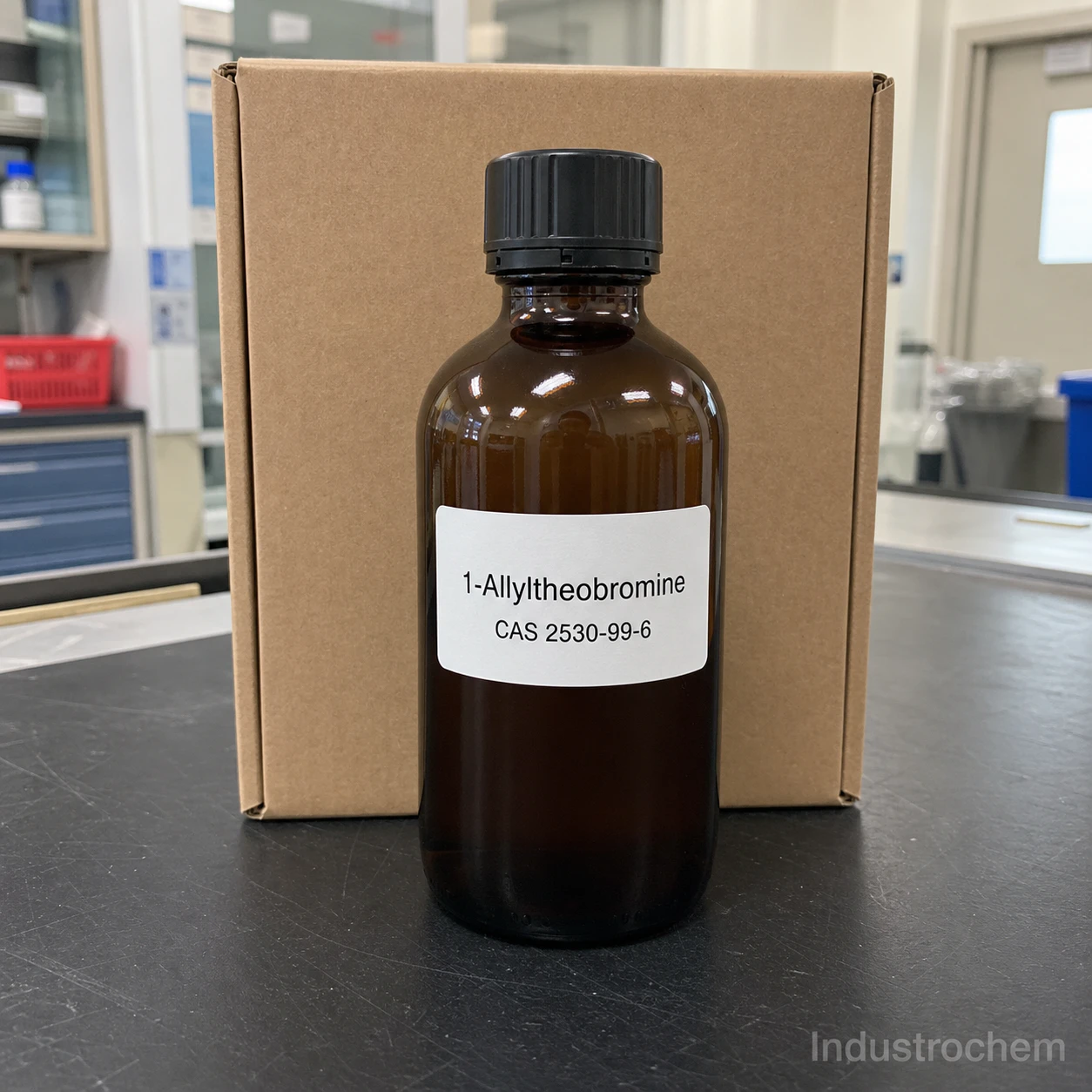
1‑Allyltheobromine is a substituted xanthine derivative in which an allyl group is bonded at the N‑1 position of the theobromine core. This defined substitution pattern determines its classification as a specialty heterocyclic organic compound within professional chemical supply chains. 1‑Allyltheobromine (CAS 2530-99-6) is supplied as a discrete molecular substance for regulated industrial and research environments, where accurate identification, documentation, and compliance are required.
The material is provided with standardized specifications and complete technical documentation, including MSDS, TDS, and COA, supporting traceability and regulatory conformity.
1‑Allyltheobromine CAS 2530-99-6
- CAS: 2530-99-6
- Synonyms: 1-Allyltheobromine, N1-Allyltheobromine, Allyl theobromine
- Molecular Formula: C10H12N4O2
- Grade: Industrial grade 99%
- Package: 200kg iron drum or 50kg plastic drum packaging
Product Description
Physicochemical properties
| Property | Value |
|---|---|
| IUPAC Name | 1-Allyl-3,7-dimethylxanthine |
| CAS Number | 2530-99-6 |
| Molecular Formula | C10H12N4O2 |
| Molecular Weight | 220.23 g/mol |
| Melting Point | 147 °C |
| Boiling Point | 361.16 °C (rough estimate) |
| Density | 1.2387 (rough estimate) |
| Refractive Index | 1.6500 (estimate) |
| Acidity Coefficient (pKa) | 0.47 ± 0.70 (Predicted) |
| LogP | -0.38030 |
| Polar Surface Area (PSA) | 58.44 |
| Solubility | Specific solubility data is not readily available, but it is likely soluble in organic solvents such as ethanol and DMSO. |
| Stability | Stable under normal conditions, but specific storage conditions (e.g., temperature, light exposure) are not readily available. |
Application Areas
Medicinal chemistry research: As a derivative of methylxanthine compounds, its structure is similar to caffeine, theobromine, etc. It has been studied to explore the pharmacological activities of the central nervous system and cardiovascular system, such as potential bronchiectasis, smooth muscle relaxation, or neural regulation.
Organic synthesis intermediates: used as precursors for the synthesis of other complex xanthine derivatives in fine chemicals, for the development of compounds with specific biological activities (such as antiviral and anti-inflammatory candidate drugs).
Storage conditions
Environmental conditions: Store in a cool, dry, and dark place, with a recommended temperature of 2-8 ° C (refrigerated). Long term storage can be kept at -20 ° C. Inert gas protection (such as nitrogen) can reduce the risk of oxidation.
Container selection: Use brown glass bottles or opaque containers, seal and store to avoid moisture absorption or contact with air.
Stability Attention: May be sensitive to light and heat, and requires regular purity testing (such as HPLC or TLC)
Safety precautions
Respiratory protection: Wear a dust mask (N95) when handling powders to avoid inhalation.
Skin protection: Wear nitrile gloves and lab coats to prevent direct contact.
Eye protection: Use chemical goggles, especially when weighing or transferring.
Operation standard: Handle in a fume hood to avoid dust dispersion.
Leakage treatment: Cover with inert adsorbent material (such as diatomaceous earth) and dispose of as hazardous waste.
FAQ - Technical & Supply Chain
-
Q:
Is 1‑allyltheobromine supplied as a mixture or formulated product under this CAS number?
A: No. Under CAS 28141-61-9, it is supplied as a single, well‑defined xanthine derivative for professional handling.
Documents and Product Support
For product review and sourcing evaluation, supporting documents can be coordinated according to the product type, inquiry stage, and order requirements.
- COA for batch-based quality reference
- TDS for key physical and chemical information
- SDS / MSDS for handling, storage, and safety reference
- Packing information for sample, trial, and bulk orders
- Technical communication based on application and specification requirements
Information to Confirm Before Quotation
Clear sourcing information helps reduce specification mismatch and allows a more accurate quotation before sample or bulk order discussion.
- Product name and CAS number
- Application or intended end use
- Required purity, grade, or specification
- Sample quantity, trial order, or bulk demand
- Preferred packing form or net weight
- Destination country or port
- Required documents or compliance expectations
Packaging, Storage, and Handling Notes
Packaging form, storage conditions, shelf life, and shipment arrangements should be confirmed according to the product characteristics, package size, and destination requirements.
Before order confirmation, buyers are advised to review the corresponding product documents and confirm whether any special storage, labeling, or handling requirements apply.
Sample, Bulk Order and Repeat Supply Support
Support can be arranged for sample discussion, bulk supply planning, packaging confirmation, and routine sourcing communication based on the actual product and order requirements.
For repeat-use formulations or long-term procurement plans, buyers may discuss specification consistency, packaging preferences, delivery expectations, and document coordination in advance.


