









Chemical products
  • PolyDADMAC CAS 26062-79-3

PolyDADMAC CAS 26062-79-3

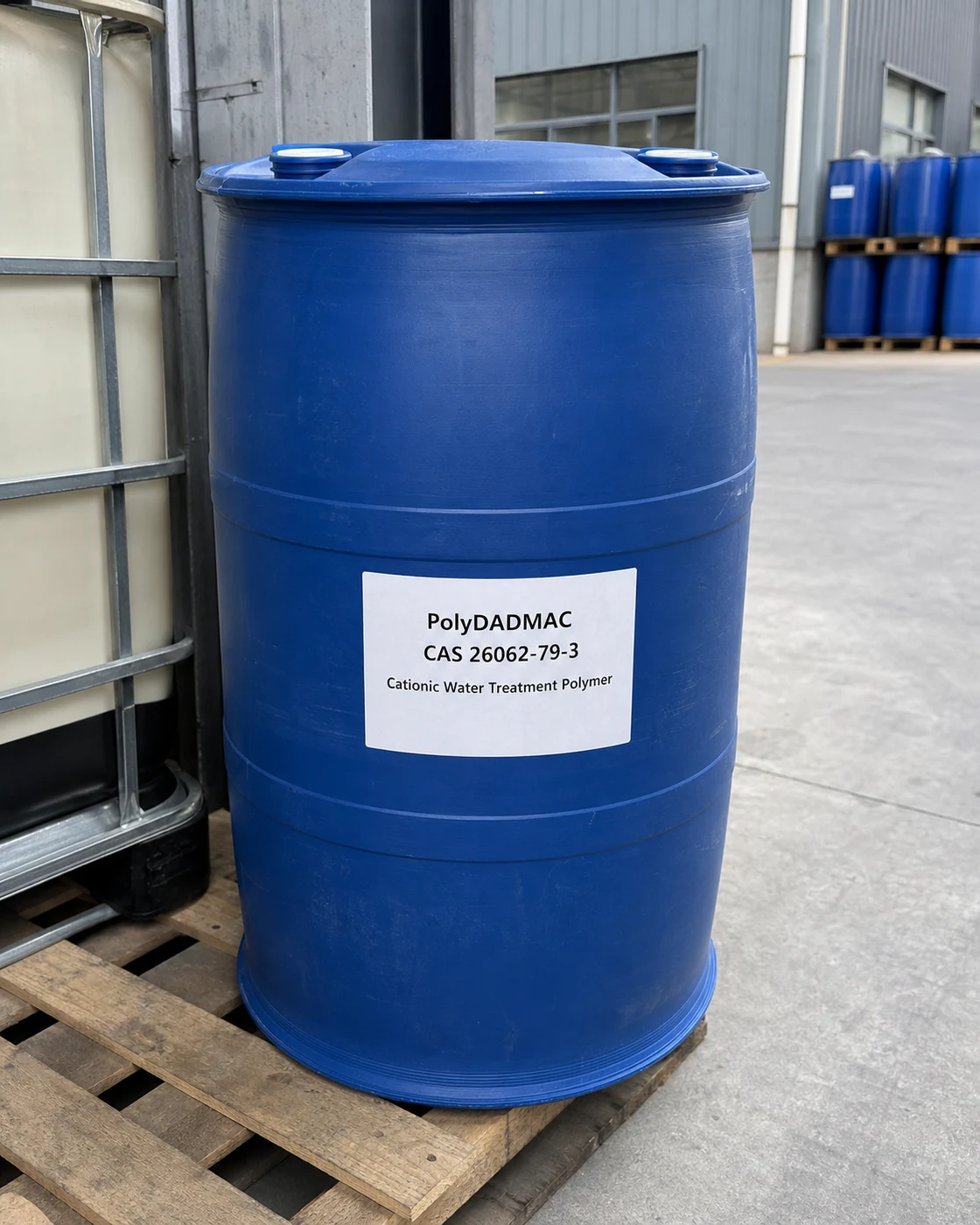
PolyDADMAC (PDADMAC), CAS 26062-79-3, is a cationic water-treatment polymer for clarification, filter-aid and sludge-conditioning programmes. Liquid grades are specified by active solids and viscosity, with COA, TDS and SDS for the agreed product.

  • CAS: 26062-79-3
  • Synonyms: Poly(diallyldimethylammonium chloride); PDADMAC; PolyDADMAC; Diallyldimethylammonium chloride polymer
  • Einecs: Not specified (polymeric product)
  • Molecular Formula: (C8H16ClN)n
  • Grade: Industrial water-treatment grade; solids and viscosity selected for the treatment line
  • Package: HDPE drums or IBCs for liquid grades; final pack depends on solids concentration and shipment requirements
  • Appearance: Colourless to pale-yellow aqueous liquid, grade dependent
  • Ionic type: Strong cationic polymer
  • Active solids: Commonly supplied in application-specific solution grades
  • Viscosity: Selected by grade and test method
  • Primary controls: Active content, viscosity, pH and batch appearance
Request a quote
Share:

Product Description

PolyDADMAC (poly(diallyldimethylammonium chloride), CAS 26062-79-3) is a water-soluble cationic polymer used where negatively charged colloids, organic matter or fine solids need to be destabilised before separation. It is normally purchased as an aqueous grade, with active solids and viscosity chosen around the treatment train rather than by CAS number alone.

Applications

  • Raw-water and industrial-wastewater clarification as a primary coagulant or coagulant aid.
  • Sludge conditioning before dewatering, where charge demand and feed solids determine the working grade.
  • Filter-aid use and colour/organic removal programmes where jar-test results support the selection.
  • Paper and mineral-processing systems that need a cationic polymer with controlled solution properties.

Specification points

For a meaningful quotation, specify the target application, feed-water analysis or sludge type, active-solids range, viscosity band, pH window and any potable-water or local compliance requirement. Polyacrylamide products are often assessed alongside PolyDADMAC, but charge type and dosing behaviour are not interchangeable.

Supply documentation

Batch identity, active content, viscosity method and appearance should be confirmed on the COA. Handling, storage temperature and compatibility with oxidants or other process chemicals should follow the applicable SDS and the treatment programme.

FAQ - Technical & Supply Chain

  • Q:

    Which PolyDADMAC grade should be specified for a clarification line?

    A: The important inputs are influent quality, target turbidity or colour, active-solids preference, dosing equipment and viscosity limit. A jar test or site comparison is normally needed before selecting a grade; the CAS number alone does not define dosing performance.
  • Q:

    Can PolyDADMAC replace a mineral coagulant?

    A: It may be used as a primary coagulant or as a coagulant aid, depending on the raw water and process design. The replacement ratio, sludge response and downstream filtration should be verified under the actual treatment conditions.
  • Q:

    What documents should accompany an industrial PolyDADMAC order?

    A: The useful batch records are a COA showing the agreed active content and viscosity method, a TDS describing the selected grade and an SDS for storage and handling. Drinking-water approvals must be confirmed for the destination and intended use.

Ordering & Documentation

Key information for document requests, quotations, and supply planning.

Documents

COA, TDS, SDS/MSDS and packing details are available on request.

Quotation

Send the CAS number, grade, quantity, packing preference and destination.

Sample & Supply

Support is available for samples, trial orders, bulk and repeat supply.

Storage & Shipping

Product-specific conditions are confirmed before order.

Contact Form

Use our contact form to send us your questions, suggestions or comments. We will respond as soon as possible.